
A Simple Move with Big Benefits
|
By: Mindy Eisenberg, MHSA, C-IAYT, ERYT-500 with Bettyanne Hodges, Director of Marketing, YMMS Did you know one simple movement can help you build strength, improve balance, and boost your confidence? Chair Pose is more than just a position—it’s a powerful tool to help people feel strong and grounded. It is also a pose that can be practiced in different ways, so it works for everyone—whether you’re sitting in a chair, standing, or using the wall for support. Chair Pose (called Utkatasana in Sanskrit) strengthens your:
Chair Pose helps with:
For people with Parkinson’s disease, MS, or other neuromuscular diseases, this kind of movement is important. Muscles can feel stiff or weak, affecting balance and make everyday movements—like getting up from a chair—more challenging. Practicing Chair Pose regularly can help keep your body strong and your movements steady. |
|
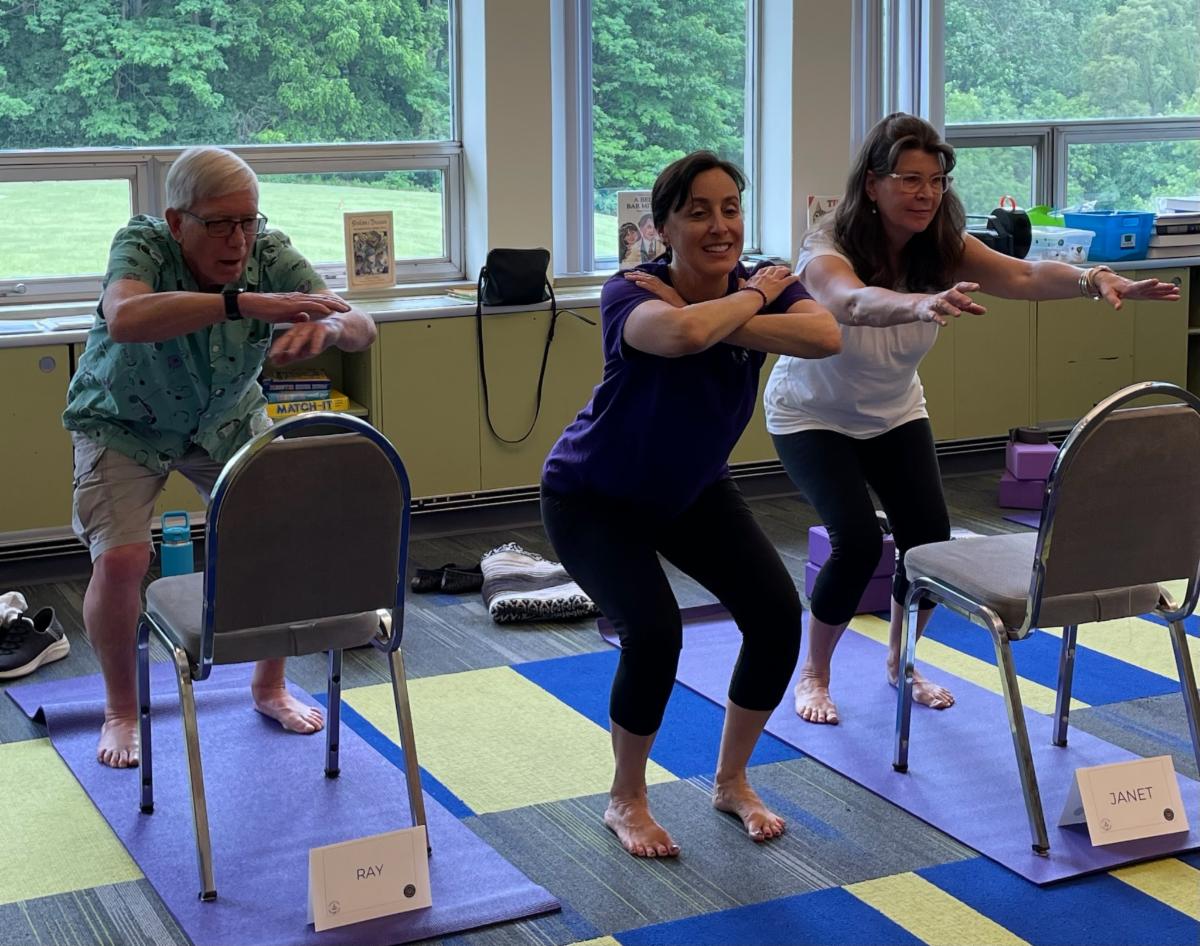
| Variations of Chair Pose:
1. Seated Chair Pose (This variation is perfect if you’re working on posture or want to strengthen muscles safely while seated.)
2.Standing Chair Pose (This is great if you’re comfortable standing and want to build strength and endurance)
3. Chair Pose Using a Wall (This version helps you feel supported while still working your legs and core)
|
| Adaptive yoga meets you where you are. Whether you’re living with Parkinson’s, MS, or recovering from an injury, Chair Pose can be modified so it’s safe, effective, and enjoyable. You don’t have to “do it perfectly”—you just have to do it with awareness and care. “Yoga is not about the pose. It’s about how the pose makes you feel,” Mindy Eisenberg. So if Chair Pose helps you feel grounded, strong, and energized—that’s what matters.
Join Us for the Sit to Stand Challenge – April 11, 2025, to celebrate World Parkinson’s Day. Here’s what to do:
Every sit-to-stand movement is a celebration of strength, progress, and community. Whether you’re living with Parkinson’s or supporting someone who is, your movement makes a difference. To learn more about Mindy Eisenberg, Director of Yoga Moves MS and Bettyanne Hodges, Director of Marketing, or to learn more about our specialized classes for students with MS, Parkinson’s Disease, and related conditions go to Yoga Moves MS Website. To order Mindy’s book or adaptive yoga cards Adaptive Yoga Moves Any Body and Adaptive Yoga Cards. (Click the link to order). “Adaptive yoga meets the body where it is, offering a safe space to practice compassion, both mentally and physically.” – Mindy Eisenberg |