Why Twists Matter

Why Twists Matter Small Movement. Big Impact.

Twists may look simple, but they offer powerful benefits for the body and nervous system. The spine is designed to rotate—not just bend forward and back—yet many people lose that mobility over time, leading to stiffness and imbalance. Gentle twists restore rotation in the thoracic spine, helping reduce strain on the lower back and ease discomfort.

Twists enhance breathing by mobilizing the ribs and intercostal muscles (muscles between the ribs), allowing the rib cage to expand more fully—supporting easier breaths, improved energy, and sharper focus.

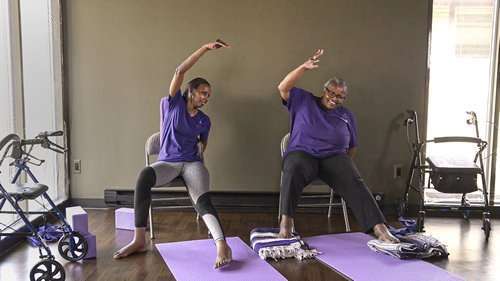
Twists support balance and coordination by training rotation, which requires your eyes, head, spine, and core to work together. Slow, supported twists help retrain clear communication between the brain and body, and even a simple seated twist in a chair can improve midline crossing, core engagement, movement control, and the skills needed for walking, reaching, and everyday tasks.

Slow, breath-led twists activate the parasympathetic response to calm the nervous system, reduce stress, and improve mobility, breathing, and overall balance. For those living with chronic conditions or neuromuscular disorders, safe, supported twists can enhance spinal mobility, support breathing, build coordination, reduce tension, and promote a greater sense of calm.

The goal is gentle rotation, not extreme depth—healing can begin with something as simple as turning slightly to one side and taking a slow, steady breath. Remember:

  • Movements should be slow and controlled.
  • Keep the range of motion comfortable and pain-free.
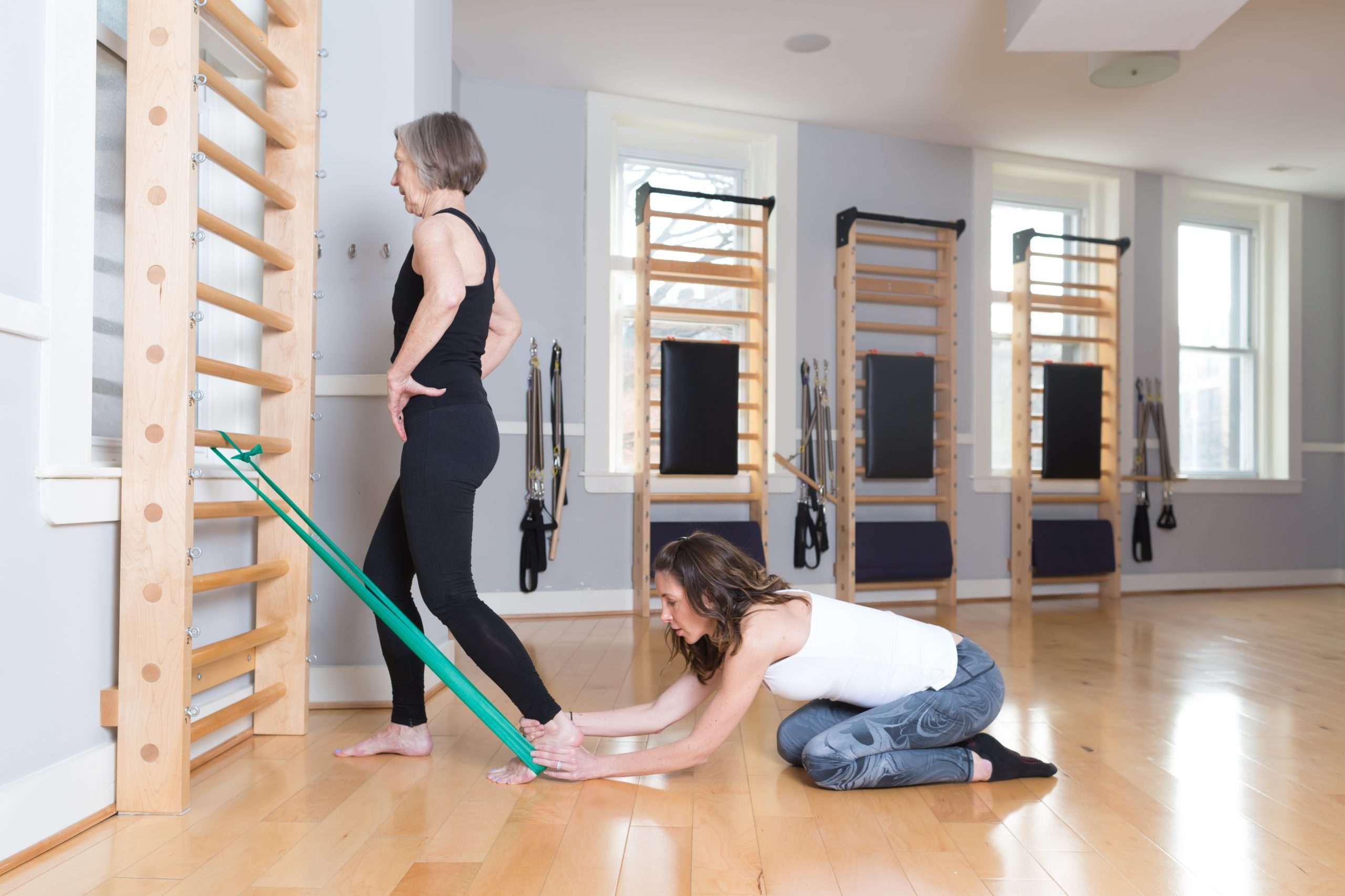
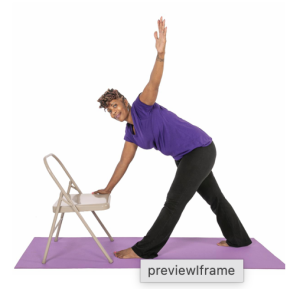
  • Use support (chairs, bolsters, walls) whenever needed for stability and safety.
  • Even the smallest twist—just turning the head and shoulders slightly—can be meaningful.
  • There should be no forcing or pulling, only ease and awareness.

Ready to start twisting? Join us live on line, in person or at your convenience: https://yogamovesanybody.org/yoga-anywhere-classes/

Movement is Medicine

Live Online Yoga Classes

Movement Is Medicine—For Your Body and Your Mind

At Yoga Moves Any Body we understand that living with a chronic condition like MS, Parkinson’s or other neuromuscular challenges can make movement feel complicated, even out of reach. That’s why our approach is different.

We believe movement is medicine for both the body and the mind. Whether you’re experiencing stiffness, fatigue, brain fog, or changes in mobility, we’re here to offer something that meets you exactly where you are.

Through our online adaptive yoga classes—available both live and on-demand—you can practice in the comfort and safety of your own space, on your time, and at your pace.

Our classes can help you:

  • Reduce stiffness and support smoother movement
  • Improve balance, coordination, and breath awareness
  • Calm the nervous system and ease anxiety
  • Boost mood, focus, and confidence
  • Reconnect with your body in a way that feels safe and empowering

Our experienced instructors understand chronic conditions and teach with compassion, creativity, and flexibility. Every practice offers options. Every body is welcome.

So if you’re looking for something to support your physical health and your mental well-being—something grounded, sustainable, and real—you’re in the right place.

Join us online—live or recorded—and discover how movement can meet you right where you are.

To learn more about our specialized classes go to Yoga Moves Any Body Website

“Adaptive yoga meets the body where it is, offering a safe space to practice compassion, both mentally and physically.” – Mindy Eisenberg

Boost Your Immune System This Winter

There are several small (but powerful) ways to boost your immune system naturally this winter!

1. Nourish Your Body with Real Food!

Your immune system needs fuel to work well. And the best fuel? Whole foods — colorful fruits, leafy greens, whole grains, and healthy fats. Try adding a few of these each day:

  • Oranges, berries, or kiwis (full of vitamin C!)
  • Leafy greens like spinach or kale
  • Garlic and onions (they help fight germs)
  • Yogurt or kefir (great for gut health)

2. Get the Sleep Your Body Needs!

When you sleep, your body repairs itself. That includes your immune system. Most people need 7 to 9 hours of sleep per night – even grown-ups! Resting is not being lazy, it is refueling. Try these tips to fall asleep faster:

  • Turning off screens an hour before bed
  • Doing some slow, gentle yoga or breathing exercises
  • Listening to calming music or nature sounds

3. Move Gently and Often!

Gentle movement – like yoga, walking, or chair stretches – can boost circulation and help your body fight off illness. At Yoga Moves Anybody, we offer classes for all bodies and abilities. From seated yoga to slow flows, movement can meet you right where you are. Even just 10 minutes of stretching can make a big difference.

4. Vitamin D Please!

Sunshine helps your body make vitamin D, a nutrient that supports your immune system. Even on cloudy days, a few minutes outside can help your body and mind. Bundle up if it’s cold, step outside, and take a few deep breaths. Can’t get outside? Talk to a doctor about a vitamin D supplement during the darker months.

5. Mental Health Matters!

Stress affects your whole body — including your immune system. If you’re constantly worried, rushed, or overwhelmed, your body stays in “fight or flight” mode. That makes it harder to stay well. To reduce stress, try:

  • Breathing in for 4 counts, and out for 6 (it really works!)
  • Writing down 3 things you’re grateful for
  • Talking to a friend or therapist
  • Joining a yoga or meditation class (online or in-person)

Be consistent, eat real food, move your body, sleep, breathe and connect. At Yoga Moves Any Body, we’re here to remind you that wellness is for every body. Want to try a class? Explore our upcoming classes at Class Schedule and give your immune system a little extra love this season.

To learn more about Mindy Eisenberg, Director of Yoga Moves Any Body and Bettyanne Hodges, Director of Marketing, or to learn more about our specialized classes for students with MS, Parkinson’s Disease, and related conditions go to Yoga Moves Any Body Website

To order Mindy’s book or adaptive yoga cards Adaptive Yoga Moves Any Body and Adaptive Yoga Cards. (Click the link to order).

“Adaptive yoga meets the body where it is, offering a safe space to practice compassion, both mentally and physically.” – Mindy Eisenberg

Muscle Loss

Have you ever noticed how people seem to get weaker as they get older? Many people think it’s just a normal part of aging, but muscle loss doesn’t happen just because of age. It happens because people stop moving in ways that keep their muscles active and strong.

Your body was designed to move in lots of different ways. You can twist, bend, reach, squat, and stretch. But most adults stop doing these movements. When you don’t use your muscles, they stop working properly. This isn’t just about lifting weights. It’s about moving your body every single day!

Doctors used to say that muscles get smaller and weaker because of something called “atrophy.” That just means the muscles shrink when they aren’t used. While that’s true, there’s more to it. Research shows that muscles don’t just shrink — they “forget” how to work. The nerve connections to your muscles get weaker. That’s why you might feel stiff, tired, or clumsy as you get older. The good news? You can wake those muscles up again!

Yoga: The Secret Weapon Against Muscle Loss. One of the best ways to keep your muscles strong is by practicing yoga. Yoga helps your body move in all directions:

  • You stretch and lengthen muscles that get tight.
  • You hold poses that increase your muscle enduance and stability.
  • You balance, which builds strength in places you didn’t even know were weak.
  • You twist and reach, keeping your spine and muscles flexible and strong.

Plus, yoga focuses on breathing, which helps your nervous system stay calm and your muscles stay relaxed. When your body feels good, you’re more likely to move more.

Worried you can’t do yoga because you’re not flexible? Try adaptive yoga! You can practice yoga sitting in a chair, lying on the floor, or even in bed and use props to help you with the poses. Yoga is for everybody — no matter your age or ability.

Stay Strong, Stay Moving! The most important thing to remember is muscle loss isn’t just part of getting older. It’s part of moving less. Move your body in different ways, every day! Yoga makes this easy. It helps you move smarter, feel stronger, and stay flexible.

Ready to start building muscles? Check out our On Demand Library!

To learn more about Mindy Eisenberg, Director of Yoga Moves MS and Bettyanne Hodges, Director of Marketing, or to learn more about our specialized classes for students with MS, Parkinson’s Disease, and related conditions go to Yoga Moves Any Body Website

To order Mindy’s book or adaptive yoga cards Adaptive Yoga Moves Any Body and Adaptive Yoga Cards. (Click the link to order).

“Adaptive yoga meets the body where it is, offering a safe space to practice compassion, both mentally and physically.” – Mindy Eisenberg

2026 Southfield Exhibit Hall

Thank You TG Therapeutics

Thanks to TG Therapeutics for being our top sponsor for the Hybrid Chicago Holistic Health and Wellness Forum for MS on October, 15, 2025!

By: Mindy Eisenberg, MHSA, C-IAYT, ERYT-500 with Bettyanne Hodges, Director of Marketing, YMMS

TG Therapeutics: Advancing MS Care and Supporting Community Wellness

At Yoga Moves MS, we believe in the power of combining science with self-care. That’s why we’re excited to recognize TG Therapeutics for being the top sponsor for the Yoga Moves MS Chicago Holistic Health and Wellness Forum for MS in Skokie, Illinois.

Thanks to TG Therapeutics’ generous support, we’re able to offer this important event to people both in-person and virtually, making it easier for those living with multiple sclerosis (MS) and other chronic conditions to access expert insights and holistic resources.

TG Therapeutics is a biopharmaceutical company working to improve the lives of people with B-cell diseases like MS. Their latest treatment, BRIUMVI® (ublituximab-xiiy), is a new medication for people living with relapsing forms of MS. It’s part of a group of treatments called anti-CD20 therapies, which work by targeting specific immune cells that may be causing damage in the nervous system. One of the standout features of BRIUMVI is its quick 1-hour infusion time, which makes the treatment process shorter and more convenient for patients.

We’re proud to work alongside a company that shares our belief: managing MS is about more than medication. It’s about movement, mindset, and meaningful support. TG Therapeutics’ sponsorship helps us expand our reach and deepen our impact.

To learn more about TG Therapeutics visit their website!

To learn more about Mindy Eisenberg, Director of Yoga Moves MS and Bettyanne Hodges, Director of Marketing, or to learn more about our specialized classes for students with MS, Parkinson’s Disease, and related conditions go to Yoga Moves Any Body Website

To order Mindy’s book or adaptive yoga cards Adaptive Yoga Moves Any Body and Adaptive Yoga Cards. (Click the link to order).

“Adaptive yoga meets the body where it is, offering a safe space to practice compassion, both mentally and physically.” – Mindy Eisenberg

Lower Blood Pressure Naturally with Yoga

By: Mindy Eisenberg, MHSA, C-IAYT, ERYT-500 with Bettyanne Hodges, Director of Marketing, YMMS

High blood pressure is serious. It’s linked to heart disease, stroke, and other health problems. But here’s the good news: you can take steps to lower it. And it doesn’t have to involve more pills. One powerful tool? Meditation.

Meditation is just the act of sitting still, breathing, and letting your thoughts come and go without holding on to them. That’s it. Dr. Herbert Benson, a Harvard doctor, studied what happens when people meditate. He discovered something called the “Relaxation Response.” It’s the opposite of stress. When you relax deeply, your body changes. Your heart slows down. Your breathing becomes easier. And your blood pressure drops—sometimes by 10 to 20 points.

Yoga + Meditation = a calm body and mind. Yoga isn’t just about stretching. It includes breathing exercises, slow movements, and moments of stillness that help your brain and body calm down. People who do yoga regularly often say they sleep better, feel more focused, and yes—have lower blood pressure. Even 5 minutes of meditation a day can make an impact.

When you do yoga or meditate:

  • Your muscles relax.
  • Your heart rate slows.
  • Your stress hormones go down.
  • Your blood vessels open up.
  • And your blood pressure can start to fall.

Want to feel calmer? Breathe easier? Lower your blood pressure naturally? Simply follow the steps below or try a gentle yoga class. Mandy offers “Yoga Snack” on the floor or bed followed by meditation. You can join Mandy live online on Wednesdays from 9:30am to 10:30am ET, or you can find recordings with Mandy in our on demand library. In person, virtual or on demand, Yoga Moves Any Body has the perfect class for you. Your heart will thank you. Check out our On Demand Library!

Try this:

  1. Sit comfortably.
  2. Close your eyes.
  3. Take a deep breath in through your nose.
  4. Breathe out slowly through your mouth.
  5. Repeat for five minutes.

To learn more about Mindy Eisenberg, Director of Yoga Moves MS and Bettyanne Hodges, Director of Marketing, or to learn more about our specialized classes for students with MS, Parkinson’s Disease, and related conditions go to Yoga Moves Any Body Website

To order Mindy’s book or adaptive yoga cards Adaptive Yoga Moves Any Body and Adaptive Yoga Cards. (Click the link to order).

“Adaptive yoga meets the body where it is, offering a safe space to practice compassion, both mentally and physically.” – Mindy Eisenberg

Brain Fog in MS

By: Mindy Eisenberg, MHSA, C-IAYT, ERYT-500 with Bettyanne Hodges, Director of Marketing, YMMS


Have you ever walked into a room and forgotten why you went there? Or stared at your phone, struggling to remember what you were about to do? That cloudy feeling is called brain fog—and it’s a very real part of life for many people. Simple tools like yoga, mindfulness, and breathing can help lift that fog.

Brain fog isn’t the same as being tired or forgetful. It’s a mix of symptoms that make it hard to think clearly. It can be frustrating, even scary. You might feel:

  • Slower than usual
  • Easily distracted
  • Foggy or forgetful
  • Mentally tired after doing just a little

People with neuromuscular conditions often deal with brain fog for a few reasons:

  • The nervous system is affected, which can change how your brain processes information.
  • Fatigue is common and can drain your brain power.
  • Sleep problems, stress, and medications also play a role.

Yoga connects your body and mind, helping to sharpen your thinking. Yoga, including Adaptive Yoga, helps clear the fog by:

  • Getting more oxygen and blood flowing to your brain
  • Moving your body in ways that wake up your nervous system
  • Helping your brain focus on the present moment instead of racing thoughts

Breathing might seem simple. We do it all day without thinking. But when you breathe on purpose, your brain gets a boost. Slow, deep breathing calms the nervous system. It also helps bring more oxygen to your brain, which can improve focus and clear thinking.

Try this and notice how your mind starts to feel more steady and clear:

  1. Breathe in through your nose for 3 to 4 counts.
  2. Hold for 2 counts.
  3. Breathe out through your nose 3 to 4 counts.
  4. Repeat 3 times.

Mindfulness means paying attention to what’s happening right now—without judgment. Practicing mindfulness helps you let go of the noise and focus on what matters. Over time, this can improve memory, attention, and even mood. It can be as simple as:

  • Noticing your breath
  • Listening to the sounds around you
  • Feeling your feet on the ground

You don’t have to live in a fog. Living with a neuromuscular condition is already challenging. Brain fog adds another layer—but you can take small steps to feel more clear and focused. Yoga, breathing, and mindfulness won’t erase every symptom. But they can give you back something powerful: a sense of clarity, calm, and control. Even five minutes a day can help. Your mind is strong. Let’s give it a little space to shine!

Check out our On Demand Library and start clearing the fog!

To learn more about Mindy Eisenberg, Director of Yoga Moves MS and Bettyanne Hodges, Director of Marketing, or to learn more about our specialized classes for students with MS, Parkinson’s Disease, and related conditions go to Yoga Moves Any Body Website

To order Mindy’s book or adaptive yoga cards Adaptive Yoga Moves Any Body and Adaptive Yoga Cards. (Click the link to order).

“Adaptive yoga meets the body where it is, offering a safe space to practice compassion, both mentally and physically.” – Mindy Eisenberg

What Causes Falling

By: Mindy Eisenberg, MHSA, C-IAYT, ERYT-500 with Bettyanne Hodges, Director of Marketing, YMMS

Falling is something we all try to avoid. But as we get older or face health challenges, it can become a serious risk. There are ways to reduce the risk, and one powerful tool is yoga!

What causes falls—and how can yoga help people feel more steady, strong, and confident? Falling doesn’t just “happen.” There are many reasons why a person might lose their balance or trip. Here are some common causes:

1. Weak Muscles: As we age or face illness, our muscles can lose strength. That makes it harder to stay upright, especially when standing, walking, or turning.

2. Poor Balance: Balance is the body’s ability to stay centered and stable. Conditions like Multiple Sclerosis, Parkinson’s Disease, or even lack of exercise can affect balance over time.

3. Trouble Walking: Changes in the way we walk can make us more likely to stumble. This might be caused by joint pain, nerve damage, or neuromuscular conditions.

4. Vision Problems: Eyes help us stay balanced by showing us where we are in space. If your vision is blurry or limited, it’s easier to misstep or trip.

5. Certain Medications: Some medicines can cause dizziness, fatigue, or low blood pressure. That can throw off your balance without warning.

6. Fear of Falling: Fear can make falling more likely. People who are afraid to fall may move too carefully or stop being active—weakening their muscles.

Yoga is not just for young or flexible people. In fact, adaptive yoga is designed for people with all kinds of bodies and abilities. How can yoga lower the risk of falling:

1. Builds Strength: Yoga uses your own body to make muscles stronger. Even small movements—like lifting your leg in a chair or standing in a supported pose—can help.

2. Improves Balance: Practicing yoga helps your body learn how to stay steady. Movements that shift your weight, challenge your posture, or focus on the breath improve balance over time.

3. Boosts Flexibility: Tight muscles and stiff joints make it harder to move safely. Yoga gently stretches the body, helping you bend, twist, and reach with more ease.

4. Teaches Body Awareness: Yoga helps people listen to their bodies. You become more aware of how you move and where you are in space. That makes you more mindful—and less likely to trip or slip.

5. Reduces Fear: Yoga also works on the mind. Breathing exercises and meditation help calm anxiety, which can reduce the fear of falling. Feeling more confident makes you move with more security!

Yoga Moves Any Body is all about making yoga work for you. Whether you sit in a chair, use props, or move with support, yoga can meet you where you are. It’s not about doing the perfect pose—it’s about feeling better in your body. For people with neurological conditions, limited mobility, or who are just feeling unsteady, adaptive yoga offers real tools for strength, steadiness, and peace of mind. Yoga is more than stretching—it’s a path back to balance.

Want to start improving balance today? Check out our On Demand Library!

To learn more about Mindy Eisenberg, Director of Yoga Moves MS and Bettyanne Hodges, Director of Marketing, or to learn more about our specialized classes for students with MS, Parkinson’s Disease, and related conditions go to Yoga Moves Any Body Website

To order Mindy’s book or adaptive yoga cards Adaptive Yoga Moves Any Body and Adaptive Yoga Cards. (Click the link to order).

“Adaptive yoga meets the body where it is, offering a safe space to practice compassion, both mentally and physically.” – Mindy Eisenberg

Cucumber Mint Water

By: Mindy Eisenberg, MHSA, C-IAYT, ERYT-500 with Bettyanne Hodges, Director of Marketing, YMMS

When your body feels overheated or tired, sometimes plain water isn’t enough. You need something that feels cool, calming, and a little more special. This easy drink does more than taste good—it actually helps cool your body from the inside out.

Both cucumber and mint are known for their natural cooling properties. Cucumber is packed with water and helps hydrate your body quickly. Mint contains menthol, which creates a cooling sensation in your mouth and can help lower your internal temperature. Together, they make perfect heat-fighting combo—no sugar, no caffeine, and no stress on your system.

Cooling your body doesn’t have to be complicated. A few deep breaths (See the previous blog to review the cooling breath). A few sips. A few moments of calm. Try pairing this refreshing drink with the Cooling Breath technique for a simple routine that supports your body, mind, and mood—especially in the heat.

Want to learn more tools like this? Join us at YogaMovesAnyBody.org for virtual classes, resources, and community support.

To learn more about Mindy Eisenberg, Director of Yoga Moves MS and Bettyanne Hodges, Director of Marketing, or to learn more about our specialized classes for students with MS, Parkinson’s Disease, and related conditions go to Yoga Moves Any Body Website

To order Mindy’s book or adaptive yoga cards Adaptive Yoga Moves Any Body and Adaptive Yoga Cards. (Click the link to order).

“Adaptive yoga meets the body where it is, offering a safe space to practice compassion, both mentally and physically.” – Mindy Eisenberg

Cooling Techniques

By: Mindy Eisenberg, MHSA, C-IAYT, ERYT-500 with Bettyanne Hodges, Director of Marketing, YMMS


Feeling hot, tired, or overwhelmed? Whether it’s a warm room, a stressful day, or a body that feels “on edge,” sometimes we just need to cool off—inside and out. Try the Cooling Breath. This gentle breathing practice can help lower your body temperature, calm your nervous system, and quiet your mind. It’s easy to do and works for every body—whether you’re standing, sitting, or lying down.

Cooling Breath is a simple breathing technique used in yoga to refresh the body and relax the mind. You might hear it called Sitali or Sitkari (sih-TAH-lee or sit-CAR-ee). Both styles help bring cool air into your body. It feels a little like sipping in fresh air through a straw. As you breathe, your nervous system begins to settle, your muscles soften, and your energy becomes more balanced. As you breathe, you may feel the air cool your mouth and throat. That’s a good sign—it means the breath is working!

Sitali (Tongue Curl)

  1. Sit tall and comfortably.
  2. Roll your tongue into a “taco” shape (if you can).
  3. Inhale gently through your curled tongue, like sipping through a straw.
  4. Close your mouth and exhale through your nose.
  5. Repeat for 5–10 rounds.

Sitkari (Teeth Sip) If you can’t roll your tongue—no worries! Try this instead:

  1. Gently press your tongue behind your teeth.
  2. Inhale through your teeth with lips slightly open.
  3. Close your mouth and exhale through your nose.
  4. Repeat slowly, 5–10 rounds.

Cooling your body doesn’t have to be complicated. A few deep breaths. A few moments of calm.

At Yoga Moves Any Body we teach that movement is important—but so is stillness. Breath is the bridge between body and mind. It helps you shift from tension to calm. From hot to cool. From busy to grounded. Cooling Breath is just one of many techniques we use to help you feel more in control of your energy and at home in your body—whether you’re living with MS, Parkinson’s, or simply navigating life’s ups and downs.

Want to learn more calming tools like this? Join us at Yoga Moves Any Body for virtual classes, resources, and community support. You don’t have to be flexible—just willing to breathe.

To learn more about Mindy Eisenberg, Director of Yoga Moves MS and Bettyanne Hodges, Director of Marketing, or to learn more about our specialized classes for students with MS, Parkinson’s Disease, and related conditions go to Yoga Moves Any Body Website

To order Mindy’s book or adaptive yoga cards Adaptive Yoga Moves Any Body and Adaptive Yoga Cards. (Click the link to order).

“Adaptive yoga meets the body where it is, offering a safe space to practice compassion, both mentally and physically.” – Mindy Eisenberg

Laughter Is Good For You!

By: Mindy Eisenberg, MHSA, C-IAYT, ERYT-500 with Bettyanne Hodges, Director of Marketing, YMMS

Living with a chronic illness like Multiple Sclerosis (MS) or Parkinson’s disease is tough. It’s hard to find joy when your body isn’t doing what you want it to. But even in the middle of challenges, one thing can help more than you might think: laughter. Laughter will not cure a disease, but it can lift your spirit, ease your stress, and even help your body feel better.

When you laugh, your brain releases endorphins—those “feel-good” chemicals that help relieve pain and lower stress. It also reduces cortisol, which is the hormone your body produces when you’re anxious or tense. Think of laughter as a mini-vacation for your nervous system. Even if you’re only laughing for a minute or two, your body gets a much-needed break.

Believe it or not, laughing can give your abs, diaphragm, and even your heart a gentle workout. It improves blood flow, boosts your immune system, and helps your muscles relax. That means less tension, fewer headaches, and maybe even better sleep. For people with neuromuscular conditions, laughter also gets the body moving in small, healthy ways. It can loosen stiff muscles and help you breathe more deeply—without even realizing it!

When you laugh with someone else—even through a screen—you feel connected. That sense of connection is powerful. It reminds you that you are not alone in what you’re going through.

That’s why this year’s Holistic Health and Wellness Forum for MS featured Damian Washington, a humorous  and inspiring speaker who lives with MS. Damian uses humor to talk about real struggles. He proves that even serious topics can be handled with a smile—and that sometimes, laughter is the best medicine. The link to his talk is below…enjoy!

To learn more about Mindy Eisenberg, Director of Yoga Moves MS and Bettyanne Hodges, Director of Marketing, or to learn more about our specialized classes for students with MS, Parkinson’s Disease, and related conditions go to Yoga Moves MS Website. 

To order Mindy’s book or adaptive yoga cards Adaptive Yoga Moves Any Body and Adaptive Yoga Cards. (Click the link to order).

“Adaptive yoga meets the body where it is, offering a safe space to practice compassion, both mentally and physically.” – Mindy Eisenberg

I Love You…Massage for Constipation

By: Mindy Eisenberg, MHSA, C-IAYT, ERYT-500 with Bettyanne Hodges, Director of Marketing, YMMS

Constipation can be uncomfortable, frustrating, and even painful. Whether it’s caused by a health condition like Multiple Sclerosis, Parkinson’s disease, medication side effects, or just daily stress—it can leave you feeling stuck, bloated, and sluggish.

Did you know your hands, your breath, and a little self-care can make a big difference? One gentle way to help your body is something called the “I Love You” abdominal massage….which helps move things along in your digestive system. It’s called the “I Love You” massage because of the way your hand moves in the shape of those three letters across your belly. It follows the natural direction of your colon, helping with elimination. It’s easy to learn and only takes a few minutes.

Massage helps your digestive system by:

  • Stimulating the muscles of the colon
  • Encouraging peristalsis (the wave-like motion that moves food and waste)
  • Reducing gas and bloating
  • Calming your nervous system, which plays a big role in digestion

If you’ve ever taken an adaptive yoga class with Yoga Moves Any Body, you know that movement, breath, and awareness are powerful tools. This massage works the same way: gentle, thoughtful care that supports your whole body.

You can do this massage lying down or sitting in a chair. Make sure your belly is relaxed. You may want to warm your hands by rubbing them together first. Use light to medium pressure. Breathe deeply as you move your hand. Let your belly soften.

  1. Draw the “I”: Using your right hand, gently stroke down the left side of your belly, just inside your hip bone to your rib cage. Do this 3–5 times. (This follows the descending colon.)
  2. Draw the “L”: Start at the lower right belly. Move your hand across the top of your belly (just under the ribs), then down the left side. This makes an L-shape. Repeat 3–5 times. (This moves waste across the transverse and descending colon.)
  3. Draw the “U”: Begin in the lower right belly, move your hand up the right side, across the top, and down the left side—forming a U. Repeat slowly, 3–5 times. (This full stroke traces your entire large intestine.)

The “I Love You” massage is a simple way to connect with your body and support your digestion. Paired with other gentle practices—like seated yoga twists, deep breathing, and hydration—it can become part of a healthy routine.

And remember, you’re not alone. Whether you live with Parkinson’s, MS, or just want to feel better in your belly, Yoga Moves Any Body is here for you. Our adaptive yoga classes and wellness resources help you move, relax, and thrive—one breath, one pose, one massage at a time.

To learn more about Mindy Eisenberg, Director of Yoga Moves MS and Bettyanne Hodges, Director of Marketing, or to learn more about our specialized classes for students with MS, Parkinson’s Disease, and related conditions go to Yoga Moves MS Website. 

To order Mindy’s book or adaptive yoga cards Adaptive Yoga Moves Any Body and Adaptive Yoga Cards. (Click the link to order).

“Adaptive yoga meets the body where it is, offering a safe space to practice compassion, both mentally and physically.” – Mindy Eisenberg

Finding Balance

By: Mindy Eisenberg, MHSA, C-IAYT, ERYT-500 with Bettyanne Hodges, Director of Marketing, YMMS

As we age, it’s common to feel a little less steady. That’s normal—but also something you can improve. Balance isn’t just about standing on one leg. It’s a skill your body uses every day—when you walk, stand up, or reach for something. Good balance helps you move safely, stay confident, and remain independent.

Balance relies on several systems working together:

  • Your eyes help with orientation
  • Your inner ears sense motion
  • Your muscles and joints keep you upright
  • Your brain processes all of it and adjusts your posture

Over time, these systems naturally slow down. If you live with Parkinson’s disease, MS, or another condition, changes in balance might happen sooner or feel more intense. But here’s the good news: balance can be trained—just like a muscle—and yoga can help!

Adaptive yoga, like the kind taught by Yoga Moves Any Body, is designed for all bodies and abilities. Whether seated, standing, or using a chair, yoga can help you:

  • Strengthen stabilizing muscles
  • Improve posture and coordination
  • Build confidence
  • Calm the mind (balance isn’t just physical—it’s mental too)

Here are a few simple balance exercises to try at home (use a wall or chair for safety):

  1. Sit-to-Stand – Slowly rise from a chair and sit back down (5x)
  2. Heel-to-Toe Walk – Walk in a straight line, heel to toe (5 steps each way)
  3. Heal lifts – Place your fingers on the back of a chair with a light touch in Mountian Pose. Lift your heals and practice balancing on your toes. Practice balance for 2 to 5 breaths and lower your heals down. (refer to the video below)
  4. Seated Spinal Balance – While sitting tall, lift one knee up toward you and take the opposite arm out to the side. (hold for 2 to 5 breaths and alternate sides)

Don’t forget to breathe! Deep breaths calm your body and help you feel more steady. Inhale… exhale… try again.

Balance takes time—and support. That’s why Yoga Moves Any Body offers a safe, welcoming space for people of all abilities to move, grow, and feel strong. Whether you live with MS, Parkinson’s, or just want to stay steady as you age, join us! Start building better balance today—your future self will thank you.

For a quick introduction to heel lifts using balance concepts,

watch the short video below.

Click this link for a 30 minute balancing class

You can find more videos like this in our On Demand Library.

To learn more about Mindy Eisenberg, Director of Yoga Moves MS and Bettyanne Hodges, Director of Marketing, or to learn more about our specialized classes for students with MS, Parkinson’s Disease, and related conditions go to Yoga Moves MS Website. 

To order Mindy’s book or adaptive yoga cards Adaptive Yoga Moves Any Body and Adaptive Yoga Cards. (Click the link to order).

“Adaptive yoga meets the body where it is, offering a safe space to practice compassion, both mentally and physically.” – Mindy Eisenberg

Foot Care


By: Mindy Eisenberg, MHSA, C-IAYT, ERYT-500 with Bettyanne Hodges, Director of Marketing, YMMS


When we think about self-care, we often think about yoga, stretching, or eating healthy. But there’s one important part of the body we sometimes forget—our feet!

Your feet carry you through life. Whether you’re walking, standing, or even sitting in a chair, your feet help with balance, support, and movement. If you’re living with Multiple Sclerosis (MS), Parkinson’s disease, or another condition that affects mobility, taking care of your feet is extra important. Two tools – toe separators and a massage ball—can make a big difference.

Your feet have 26 bones, 33 joints, and over 100 muscles, tendons, and ligaments. When your feet are stiff, sore, or weak, it can affect your whole body. You might feel off-balance, have pain in your knees or hips, or struggle with simple movements. For people with neuromuscular conditions, foot issues can also lead to fatigue or poor posture. Caring for your feet means more than comfort—it’s about stability, strength, and better movement.

Toe separators are soft, flexible devices that gently spread your toes apart. You can wear them while seated, relaxing, or during certain yoga stretches. Wearing toe separators for just a few minutes a day can help undo the effects of tight shoes or curled toes. Over time, you may notice your feet feel more open and supported. Try 5–10 minutes at first, then increase as your feet get used to the stretch.Toe separators help:

  • Improve alignment of the toes
  • Increase blood flow
  • Reduce foot cramping or stiffness
  • Stretch the small muscles and fascia in the feet

A massage ball (also called a therapy or myofascial release ball) is a small, firm ball you can roll under your feet. It might feel a little tender at first, but it’s worth it! You can use it while seated—just place it under your foot and roll slowly from heel to toe. You control the pressure. Use a spiky ball for deeper pressure, or a smooth one for gentler massage. Massage ball benefits include:

  • Releasing tight muscles in the arches and heels
  • Improving circulation
  • Helping with nerve sensitivity
  • Increasing foot flexibility

At Yoga Moves Any Body, we believe that small movements lead to big changes. That includes foot care! Gentle foot stretches, massage, and awareness exercises are often part of our adaptive yoga practice. When your feet feel good, you feel more grounded, balanced, and confident. Foot care is foundational!

Try This Quick Foot Care Routine (10–15 minutes a few times a week makes a difference)


  1. Sit comfortably in a chair with both feet flat on the floor.
  2. Roll a massage ball under each foot for 1–2 minutes.
  3. Slide on toe separators and sit for 5–10 minutes while breathing deeply.
  4. Gently flex and point your toes and ankles to finish.

To learn more about Mindy Eisenberg, Director of Yoga Moves MS and Bettyanne Hodges, Director of Marketing, or to learn more about our specialized classes for students with MS, Parkinson’s Disease, and related conditions go to Yoga Moves MS Website. 

To order Mindy’s book or adaptive yoga cards Adaptive Yoga Moves Any Body and Adaptive Yoga Cards. (Click the link to order).

“Adaptive yoga meets the body where it is, offering a safe space to practice compassion, both mentally and physically.” – Mindy Eisenberg

Thank You To Our Top Sponsor for the 2025 Southfield Holistic Health and Wellness Forum for MS, TG Therapeutics

By: Mindy Eisenberg, MHSA, C-IAYT, ERYT-500 with Bettyanne Hodges, Director of Marketing, YMMS

Multiple sclerosis, or MS, is a disease that affects the brain and spinal cord. It can cause problems with movement, balance, and thinking. Living with MS can be hard — but companies like TG Therapeutics are working to make life easier for people with this condition.

TG Therapeutics is a biopharmaceutical company based out of North Carolina. They focus on creating new medicines for diseases that affect the immune system, especially B-cell diseases, which include cancers like leukemia and lymphomas, as well as MS. TG Therapeutics scientists and doctors work hard to find better ways to treat these illnesses.

One of their newest treatments is a medicine called Briumvi® (pronounced BREE-um-vee). It’s approved by the FDA for people with relapsing forms of MS. This type of MS causes symptoms that come and go, with periods of recovery in between. Briumvi® works by targeting B cells, a part of the immune system that plays a role in MS. The goal is to reduce relapses, slow down disease progression, and help people feel better over time.

But TG Therapeutics is doing more than just making medicine. They are helping the MS community in other important ways.

This year, and the past 4 years, TG Therapeutics was a proud sponsor of the Yoga Moves MS Wellness Forum. This year’s event, held on May 21st, brought together people with MS, caregivers, yoga instructors, top doctors, therapists and wellness experts to share helpful information. It was also an amazing night full of learning and even some laughter.

By sponsoring the forum, TG Therapeutics is supporting a whole-person approach to wellness. That means they believe in taking care of the body, the mind, and the spirit — not just treating the disease.

TG Therapeutics generous support helps make this amazing event free. It also shows that they care deeply about the people they serve. TG Therapeutics is committed to building a brighter future for those living with MS — through science, support, and compassion.

Thanks to companies like TG Therapeutics, people with MS have more tools, more choices, and more reasons to stay hopeful.

To learn more about Mindy Eisenberg, Director of Yoga Moves MS and Bettyanne Hodges, Director of Marketing, or to learn more about our specialized classes for students with MS, Parkinson’s Disease, and related conditions go to Yoga Moves MS Website. 

To order Mindy’s book or adaptive yoga cards Adaptive Yoga Moves Any Body and Adaptive Yoga Cards. (Click the link to order).

“Adaptive yoga meets the body where it is, offering a safe space to practice compassion, both mentally and physically.” – Mindy Eisenberg

A Simple Move with Big Benefits

By: Mindy Eisenberg, MHSA, C-IAYT, ERYT-500 with Bettyanne Hodges, Director of Marketing, YMMS

Did you know one simple movement can help you build strength, improve balance, and boost your confidence?

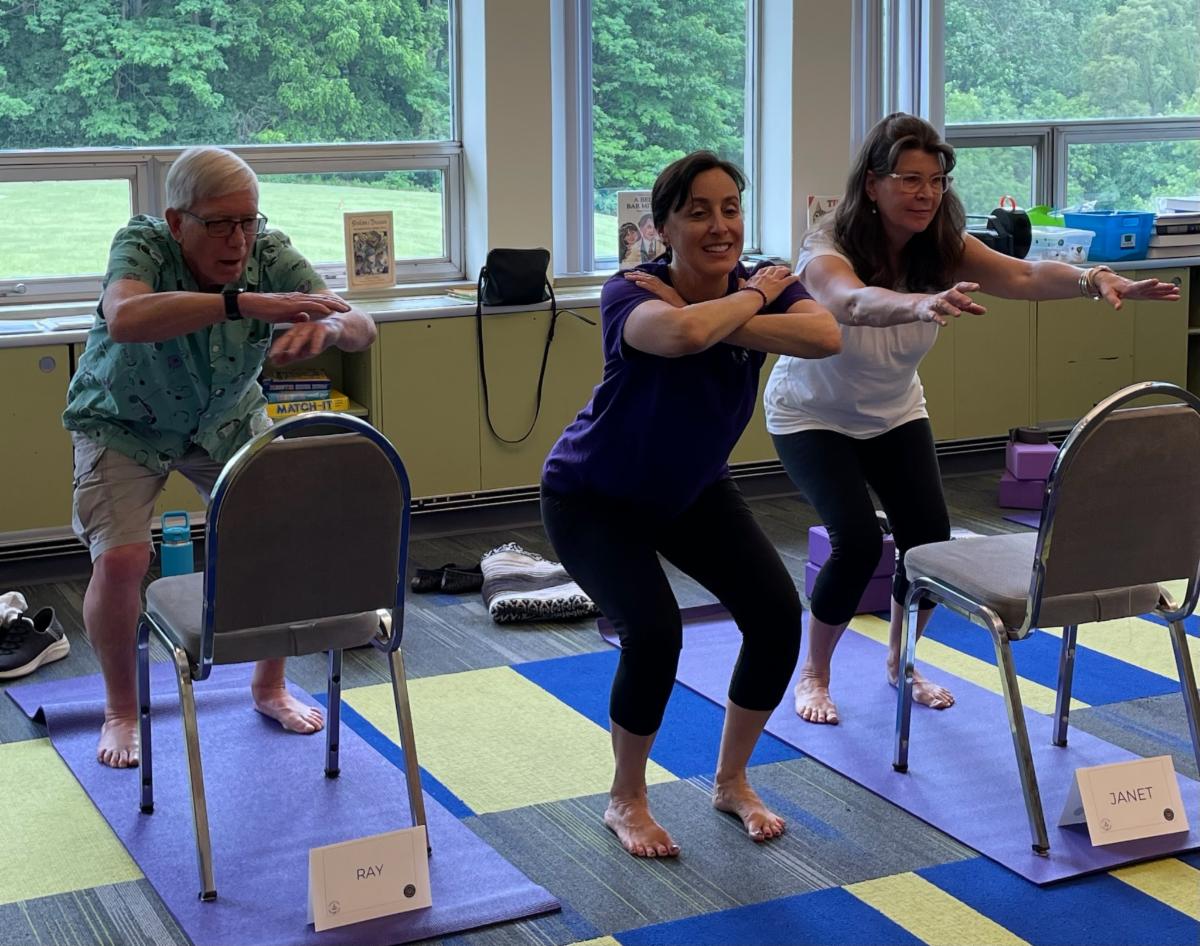
Chair Pose is more than just a position—it’s a powerful tool to help people feel strong and grounded. It is also a pose that can be practiced in different ways, so it works for everyone—whether you’re sitting in a chair, standing, or using the wall for support.

Chair Pose (called Utkatasana in Sanskrit) strengthens your:

  • Thighs
  • Glutes (your bottom!)
  • Core muscles
  • Back and shoulders

Chair Pose helps with:

  • Balance and stability
  • Posture and coordination
  • Confidence in standing up and sitting down safely

For people with Parkinson’s disease, MS, or other neuromuscular diseases, this kind of movement is important. Muscles can feel stiff or weak, affecting balance and make everyday movements—like getting up from a chair—more challenging. Practicing Chair Pose regularly can help keep your body strong and your movements steady.

Variations of Chair Pose:

1. Seated Chair Pose (This variation is perfect if you’re working on posture or want to strengthen muscles safely while seated.)

  • Sit in a sturdy chair with feet flat on the floor.
  • Press your feet down and sit up tall.
  • Reach your arms forward, to the side, or overhead.
  • Engage your belly and lift your chest.

2.Standing Chair Pose (This is great if you’re comfortable standing and want to build strength and endurance)

  • Stand with feet hip-width apart.
  • Bend your knees as if you’re sitting in an invisible chair.
  • Reach your arms forward or overhead.
  • Keep your weight in your heels and your chest lifted.
  • Stand behind an “actual” chair for extra support.

3. Chair Pose Using a Wall (This version helps you feel supported while still working your legs and core)

  • Stand with your back against a wall.
  • Slowly slide down the wall into a seated position.
  • Press your back into the wall for support.
  • Raise your arms if that feels comfortable.
Adaptive yoga meets you where you are. Whether you’re living with Parkinson’s, MS, or recovering from an injury, Chair Pose can be modified so it’s safe, effective, and enjoyable. You don’t have to “do it perfectly”—you just have to do it with awareness and care. “Yoga is not about the pose. It’s about how the pose makes you feel,” Mindy Eisenberg. So if Chair Pose helps you feel grounded, strong, and energized—that’s what matters.

Join Us for the Sit to Stand Challenge – April 11, 2025, to celebrate World Parkinson’s Day.

Here’s what to do:

  1. Sit in a sturdy chair.
  2. Stand up and sit down as many times as you can in 30 seconds.
  3. Go at your own pace. Use support if needed.
  4. Share a photo or video with the hashtag #SitToStandChallenge and tag @YogaMovesAnyBody!
  5. For more information visit The Stand up to Parkinson’s Website

Every sit-to-stand movement is a celebration of strength, progress, and community. Whether you’re living with Parkinson’s or supporting someone who is, your movement makes a difference.

To learn more about Mindy Eisenberg, Director of Yoga Moves MS and Bettyanne Hodges, Director of Marketing, or to learn more about our specialized classes for students with MS, Parkinson’s Disease, and related conditions go to Yoga Moves MS Website. 

To order Mindy’s book or adaptive yoga cards Adaptive Yoga Moves Any Body and Adaptive Yoga Cards. (Click the link to order).

“Adaptive yoga meets the body where it is, offering a safe space to practice compassion, both mentally and physically.” – Mindy Eisenberg

Moving with Parkinson’s

By: Mindy Eisenberg, MHSA, C-IAYT, ERYT-500 with Bettyanne Hodges, Director of Marketing, YMMS

April is Parkinson’s Awareness Month—a time to shine a light on the millions of people living with Parkinson’s disease. Parkinson’s disease is a condition that affects the brain and the way the body moves. It happens when the brain cells that produce dopamine—a chemical that helps control movement—start to die. Without enough dopamine, people with Parkinson’s may begin to shake, feel stiff, move more slowly or have trouble with balance, speech, or even writing.

Parkinson’s is a progressive disease, but there are many ways to manage symptoms and live a full, active life. One of those ways is adaptive yoga. Yoga Moves Any Body, offers yoga for every body, including those with Parkinson’s disease. The classes are gentle, safe, and made for people with different levels of movement and strength. Yoga Moves Any Body offers both online and in-person classes. The instructors are trained to adapt the yoga poses to fit each person’s needs. Yoga helps:

  • Improves balance and strength – Yoga builds muscle and helps people feel more steady on their feet.
  • Eases stiffness – Gentle stretches reduce tension and make it easier to move.
  • Boosts mood – Breathing exercises and movement help lower stress and anxiety.
  • Builds community – Classes are filled with kind, encouraging, supportive and fun people.

Together, we can bring light, strength, and movement to the Parkinson’s community, because everybody deserves to move. What can you do?

  • Try a class with Yoga Moves Any Body or invite a loved one to join.
  • Share this blog to help others learn more.
  • Make a donation to support adaptive yoga programs for those with Parkinson’s.
  • Wear silver or gray ribbon, the official color of Parkinson’s awareness, to show support.

To learn more about Mindy Eisenberg, Director of Yoga Moves MS and Bettyanne Hodges, Director of Marketing, or to learn more about our specialized classes for students with MS, Parkinson’s Disease, and related conditions go to Yoga Moves MS Website. 

To order Mindy’s book or adaptive yoga cards Adaptive Yoga Moves Any Body and Adaptive Yoga Cards. (Click the link to order).

“Adaptive yoga meets the body where it is, offering a safe space to practice compassion, both mentally and physically.” – Mindy Eisenberg

Yoga for Sleep

By: Mindy Eisenberg, MHSA, C-IAYT, ERYT-500 with Bettyanne Hodges, Director of Marketing, YMMS

Do you ever struggle to fall asleep? Tossing and turning, staring at the ceiling? For many people, sleep doesn’t always come easy. That’s where yoga can help!

One of the many benefits of yoga—besides better flexibility and strength—is improved sleep quality. Whether you have MS, Parkinson’s or just want a deeper, more restful night’s sleep, yoga might be the missing piece in your bedtime routine.

Yoga isn’t just about stretching or doing fancy poses. It’s a practice that helps calm the mind, relax the body, and prepare you for a good night’s rest. Here’s how it works:

1. Yoga Lowers Stress and Anxiety: It is challenging to fall asleep when your mind is racing. Stress and anxiety can make it difficult to relax and fall asleep. Yoga helps by reducing cortisol, the hormone responsible for stress. When you practice gentle yoga movements and deep breathing, your body shifts from a “fight-or-flight” mode into a relaxed state, making it easier to drift off to sleep.

2. It Soothes Muscle Tension and Pain: For people with MS and other conditions that cause muscle stiffness or pain, getting comfortable in bed can be a challenge. Yoga stretches and strengthens muscles in a gentle way, helping to release tension. Certain poses, like Legs Up the Wall or Child’s Pose, relax tight muscles and improve circulation, reducing discomfort that might keep you awake.

3. Breathing Techniques Calm the Nervous System: Deep breathing is a powerful tool for sleep. Yoga teaches pranayama, or breath control, which helps slow your heart rate and signal to your brain that it’s time to rest. One technique, called 4-7-8 breathing, involves inhaling for four seconds, holding for seven, and exhaling for eight. This simple practice can quiet the mind and prepare the body for sleep.

4. Yoga Encourages a Healthy Sleep Routine: Just like brushing your teeth or dimming the lights, practicing yoga before bed should become part of your nightly routine. By doing gentle movements, deep breathing, or even meditation, you can train your body to recognize that it’s time to wind down. Also, a consistent bedtime routine can help regulate your sleep cycle, helping you to fall asleep more easily.

Want to try yoga before bed? Here are a few easy poses to help you relax:

  • Child’s Pose – Stretches the back and calms the nervous system.
  • Reclining Bound Angle – Opens the hips and encourages deep breathing.
  • Legs Up the Wall – Reduces swelling and promotes relaxation.
  • Supine Twist – Relieves back tension and soothes digestion.

If you struggle with sleep, adding just a few minutes of yoga to your nighttime routine could make a big difference. Better sleep is possible, and yoga can help you get there—one breath at a time. Try this simple 8 minute video!

To learn more about Mindy Eisenberg, Director of Yoga Moves MS and Bettyanne Hodges, Director of Marketing, or to learn more about our specialized classes for students with MS, Parkinson’s Disease, and related conditions go to Yoga Moves MS Website. 

To order Mindy’s book or adaptive yoga cards Adaptive Yoga Moves Any Body and Adaptive Yoga Cards. (Click the link to order).

“Adaptive yoga meets the body where it is, offering a safe space to practice compassion, both mentally and physically.” – Mindy Eisenberg

Living with MS can feel overwhelming – but you don’t have to navigate it alone

By: Mindy Eisenberg, Founder of Yoga Moves MS with Bettyanne Hodges, Director of Marketing, YMMS – Photo courtesy of Elayne Gross Photography


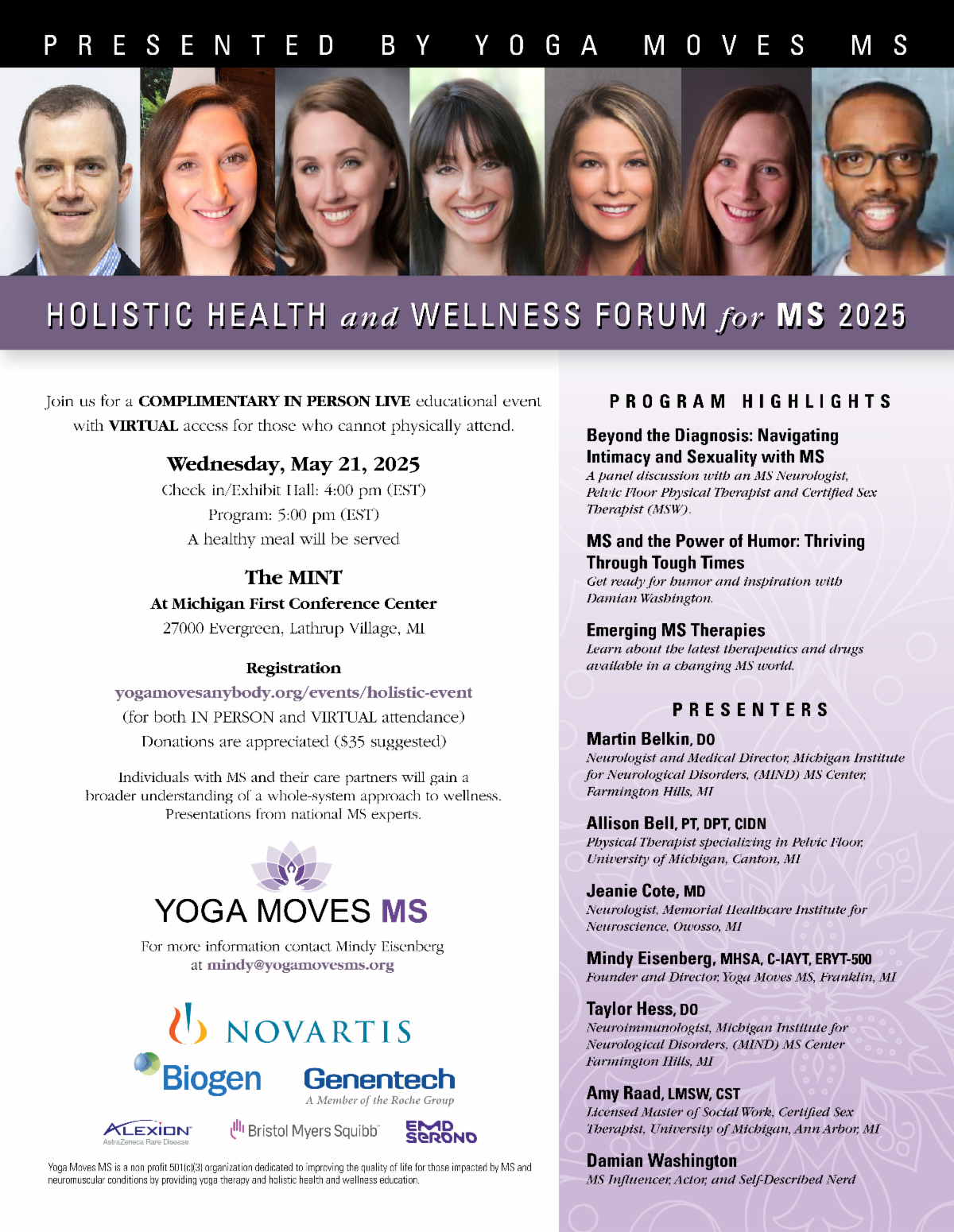
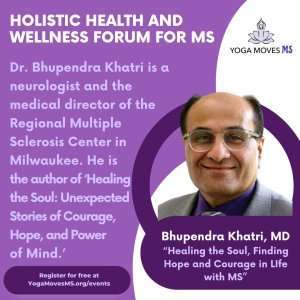
Join us for the Holistic Health and Wellness Forum for MS 2025 — a free, in-person and virtual event where leading MS experts share breakthroughs in therapies, tips for navigating intimacy, and how to stay strong through tough times.

Living with MS brings questions. How can I feel better? What treatments can help? How do I stay hopeful? You’re not alone — and this forum is here to help. Attend live at The MINT, in Lathrup Village, MI, or join virtually from anywhere. Register here!

At this year’s Forum, you’ll hear from national MS experts. Topics include:

  • Navigating intimacy and sexuality with MS (an honest, important conversation)
  • Finding the power of humor during tough times with speaker Damian Washington
  • Emerging MS therapies and what’s new in treatment and care

You will also have a chance to browse our in person and virtual exhibit hall, learning about new products, services, and Yoga Moves classes. Most importantly, you will feel supported, connected and empowered. This event brings together people who understand, care, and inspire. Whether you’re living with MS yourself, caring for someone who is, or just want to learn more—you’ll be welcomed with open arms and have a chance to meet new friends.

You’ll also meet Mindy Eisenberg, the founder of Yoga Moves MS, and other Yoga Moves Any Body teachers and volunteers, who will share how adaptive yoga and holistic wellness can help you move, breathe, and live with greater ease.

Can’t join in person? No problem. Register for virtual access and attend from the comfort of your home.

This isn’t just another conference. It’s a day of hope, learning, laughter, and connection.

You’ll leave feeling stronger, more informed, and motivated to keep moving forward, no matter where you are on your MS journey. Let’s move toward wellness together. We can’t wait to see you there!

To learn more about Mindy Eisenberg, Director of Yoga Moves MS and Bettyanne Hodges, Director of Marketing, or to learn more about our specialized classes for students with MS, Parkinson’s Disease, and related conditions go to Yoga Moves Any Body Website. 

Take an adaptive yoga class anywhere and anytime from our extensive On Demand Library. Learn more at Yoga Moves Any Body Website

To order Mindy’s book or adaptive yoga cards Adaptive Yoga Moves Any Body and Adaptive Yoga Cards. (Click the link to order).

“Adaptive yoga meets the body where it is, offering a safe space to practice compassion, both mentally and physically.” – Mindy Eisenberg

Phone Posture

By: Mindy Eisenberg, MHSA, C-IAYT, ERYT-500 with Bettyanne Hodges, Director of Marketing, YMMS

Do you ever feel soreness in your neck after spending time on your phone? Maybe your shoulders ache, or you get headaches. If so, you might have “text neck”or “phone posture”—a condition caused by looking down at your phone for long periods.

Dr. Ken Hansraj, a spine surgeon at St. Francis Hospital in New York, discovered that the way we tilt our heads while texting, scrolling, or gaming adds extra weight on our necks. In fact, the more we bend forward, the heavier our head feels to our spine! At a 60-degree angle (which is common when looking down at a phone), it’s like carrying a 60-pound weight on your neck—that’s as heavy as a young child! Over time, this extra strain can lead to pain, stiffness, and even long-term damage.

Text neck can sneak up on you. At first, you might feel a little tightness, but if you don’t fix it, the discomfort can get worse. Common symptoms include:

  • Neck pain or stiffness
  • Shoulder tension
  • Frequent headaches
  • Numbness or tingling in your arms
  • Poor posture (hunched shoulders, forward head position)

The good news? You can fix it! The key to a healthier neck is simple: better posture and movement. Here’s what you can do:

  1. Hold Your Phone Higher – Keep your phone at eye level so you’re not constantly looking down. Imagine bringing the screen up to your face instead of bending your head down to it.
  2. Take Breaks Often – Set a reminder to look up every 20 minutes. Stand up, stretch, and roll your shoulders to release tension.
  3. Try Yoga & Stretching – Yoga Moves Any Body, teaches yoga that helps with muscle tightness and posture issues. Simple stretches, like chin tucks and gentle neck rolls, can help reverse the effects of text neck. You will find some special moves for your neck and shoulders in our free On Demand Library.
  4. Strengthen Your Neck & Shoulders – Exercises like shoulder blade squeezes and chin tucks help build the muscles that support your spine. The stronger they are, the less strain your neck feels.
  5. Practice Good Posture – Keep your ears aligned with your shoulders when sitting or standing. Imagine a string pulling the top of your head toward the ceiling.

Being mindful of your posture can prevent pain, improve flexibility, and keep your spine healthy for years to come. So next time you reach for your phone, ask yourself—am I looking down too much? If the answer is yes, lift that screen up, straighten your back, and take care of your neck. Your future self will thank you!

To learn more about Mindy Eisenberg, Director of Yoga Moves MS and Bettyanne Hodges, Director of Marketing, or to learn more about our specialized classes for students with MS, Parkinson’s Disease, and related conditions go to Yoga Moves MS Website. 

To order Mindy’s book or adaptive yoga cards Adaptive Yoga Moves Any Body and Adaptive Yoga Cards. (Click the link to order).

“Adaptive yoga meets the body where it is, offering a safe space to practice compassion, both mentally and physically.” – Mindy Eisenberg

7 Steps to Managing Stress

By: Mindy Eisenberg, MHSA, C-IAYT, ERYT-500 with Bettyanne Hodges, Director of Marketing, YMMS

Stress is an unavoidable part of life, but how we respond to it can significantly influence our physical and mental well-being. Chronic stress can trigger mental and physical health problems. However, with mindful strategies, we can manage stress effectively and build resilience. Below are 7 strategies to manage stress.

1. Adaptive Yoga, Moving Mindfully Through Stress: Yoga and mindful movement activate the parasympathetic nervous system, reducing cortisol levels and promoting relaxation. Poses such as seated forward folds, backbends, or twists help release tension in the back and shoulders, common areas where stress manifests.

2. Breathwork and Mindful Breathing Techniques: When we’re stressed, our breath tends to become shallow, exacerbating anxiety. Breathwork exercises such as deep diaphragmatic breathing or alternate nostril breathing (Nadi Shodhana) can help restore calm. Regular breathwork builds emotional resilience by helping you respond, rather than react to stress triggers.

Try this: The 4-7-8 Breath. Inhale for 4 seconds, hold for 7, and exhale slowly for 8. This technique quickly lowers heart rate and activates relaxation responses. When the length of our exhale is longer or double to our inhale, the relaxation response is initiated.

3. Mindfulness-Based Stress Reduction (MBSR): Mindfulness helps cultivate a non-judgmental awareness of the present moment, preventing us from getting trapped in anxious thoughts about the future. MBSR, a structured eight week program that includes meditation, body scans, and mindful movement, has been shown to reduce stress levels and promote emotional balance. Incorporate mindful movement through a gentle yoga flow, focusing on your breath to enhance both physical and mental awareness.

4. Community and Connection: A strong support system can act as a buffer against stress. Sharing experiences and practicing mindfulness or yoga with others fosters a sense of belonging and encourages emotional well-being. Yoga Moves is a strong community connecting people living with chronic conditions.

5. Physical Activity: Regular movement releases endorphins, which are natural mood boosters. The goal is not to push yourself to exhaustion but to move in ways that feel good for your body. 20-30 minutes of movement daily, broken into shorter sessions, is enough to improve the mood.

6. Cultivate Self-Compassion and Gratitude: Stress often causes us to be harsh on ourselves. Cultivating self-compassion through intentional practices helps break this pattern. Yoga encourages practitioners to honor their bodies and accept life’s ebbs and flows.

Try this: Practice gratitude by listing 3 things you’re grateful for each morning to shift focus from stressors to positive experiences.

Try this: Practice Self-Compassion by speaking to yourself as you would to a friend—kindly and without judgment.

7. Rest: Sleep is a crucial component of stress management. Poor sleep creates a vicious cycle and lack of sleep intensifies stress. Adopting healthy sleep habits such as winding down with 10-15 minutes of gentle yoga or breathing exercises before bed or practicing Yoga Nidra (guided meditation systematically relaxes the body) can help restore balance.

Managing stress isn’t about eliminating it but responding more skillfully. Practices like yoga, mindful breathing, and self-compassion help calm the mind and strengthen the body. These strategies can be tailored to your needs, creating space to breathe and approach life with renewed calm and clarity.

To learn more about Mindy Eisenberg, Director of Yoga Moves MS and Bettyanne Hodges, Director of Marketing, or to lean more about our specialized classes for students with MS, Parkinson’s Disease, and related conditions go to Yoga Moves MS Website. 

To order Mindy’s book or adaptive yoga cards Adaptive Yoga Moves Any Body and Adaptive Yoga Cards. (Click the link to order)

Subscribe to our YouTube Channel

Visit our Facebook

Follow us on Instagram

“Adaptive yoga meets the body where it is, offering a safe space to practice compassion, both mentally and physically.” – Mindy Eisenberg

Gratitude

By: Mindy Eisenberg, MHSA, C-IAYT, ERYT-500 with Bettyanne Hodges, Director of Marketing, YMMS

Gratitude is a simple practice that has the potential to transform our perspective on life. Cultivating gratitude can create profound shifts in your mental, emotional, and even physical well-being.

Mindfulness, compassion, and adaptability are not just core elements of yoga, but also foundational to the practice of gratitude. Just as adaptive yoga teaches us to adjust our movements to honor our bodies, gratitude allows us to shift our mindset to appreciate what we have, instead of focusing on what we lack.

Gratitude has tangible benefits. Studies have shown that people who regularly practice gratitude experience lower levels of stress and depression, enhanced feelings of well-being, and even improved physical health. For individuals living with chronic illness, where stress can worsen symptoms, this is especially important.

Gratitude encourages the production of neurotransmitters like dopamine and serotonin—chemicals in the brain that enhance our mood and reduce anxiety. When combined with the calming, mindful movements of yoga, the effects can be even greater.

Gratitude might seem counterintuitive when faced with an illness, but this is where the practice of gratitude and yoga comes in. Adaptive yoga encourages students to accept where their bodies are today, without judgment or frustration. Similarly, gratitude asks us to acknowledge what is good and the abilities we have, even when life is difficult.


Practice Gratitude: On and Off the Mat

Yoga is not only about physical poses; it’s a practice that extends into how we live our lives. Through adaptive yoga, students learn to modify traditional postures to suit their bodies’ needs, fostering self-compassion and self-awareness. Both are essential for gratitude.

Simple steps to start your gratitude practice:

  1. Start with a Breath of Gratitude: Begin by focusing on your breath. As you breathe in, silently express thanks for the air that fills your lungs. As you exhale, release any tension or negative thoughts. Mindful breathing connects you to the present moment and helps you appreciate the small gifts of life.
  2. Appreciate Your Body’s Efforts: As you move through your yoga practice, take a moment to appreciate and honor the effort your body is making. Celebrate the strength in your muscles, the flexibility in your joints, and the peace in your mind.
  3. End with a Moment of Reflection: After your yoga session, reflect on something specific that you’re grateful for today. Over time, this practice will shift your focus from what’s missing to what’s present and abundant.

Healing is not only about the body but also about the mind and spirit. Gratitude has the power to shift our emotional state, offering a sense of control. While we cannot always change the circumstances of our lives, we can change how we respond to them. Incorporating gratitude into your daily life and yoga practice can lead to a more balanced and peaceful mindset. It helps foster acceptance, allowing you to approach challenges with a sense of calm and optimism. As gratitude grows, so too does your capacity to face life’s difficulties with grace and resilience.

Yoga Moves is a community built on the principles of support, adaptability, and gratitude. Students benefit from yoga’s physical postures and from the sense of belonging that comes with practicing together. Gratitude is a choice, even when life is challenging. By shifting our focus to what we can appreciate—we can transform our lives from within.

Gratitude, like adaptive yoga, is about embracing where you are in the moment and recognizing the beauty in it. Approaching life with a heart full of gratitude, no matter the challenges we face, will make space for healing, connection, and inner peace.

Join us for our Gratitude Gala on November 16. To learn more or purchase tickets click here: Gratitude Gala

To learn more about Mindy Eisenberg, Director of Yoga Moves MS and Bettyanne Hodges, Director of Marketing, or to lean more about our specialized classes for students with MS, Parkinson’s Disease, and related conditions go to Yoga Moves MS Website.

To order Mindy’s book or adaptive yoga cards Adaptive Yoga Moves Any Body and Adaptive Yoga Cards. (Click the link to order)

Subscribe to our YouTube Channel.

Visit our Facebook!

Follow us on Instagram

Post Holiday Energy

By: Mindy Eisenberg, MHSA, C-IAYT, ERYT-500 with Bettyanne Hodges, Director of Marketing, YMMS

By: Mindy Eisenberg, MHSA, C-IAYT, ERYT-500 with Bettyanne Hodges, Director of Marketing, YMMS

As the holiday lights dim and winter settles in, it’s easy to feel stuck in the heavy energy of Kapha season. In Ayurvedic tradition, Kapha season—marked by cold, damp, and slower rhythms—invites us to embrace stillness. But too much Kapha energy can leave us feeling lethargic, sluggish, and unmotivated. The solution? Energize with movement and uplifting activities while embracing Kapha’s nurturing qualities to restore balance.

Ready to shake off the post-holiday blues and find joy this season? Keep reading!

1. Awaken with Movement and Mindfulness

In Ayurveda, excess Kapha energy can weigh us down, making it essential to balance it with Pitta’s fiery energy and Vata’s flowing movement. Energizing activities counter the season’s heaviness, reducing stiffness, fatigue, and mental fog. Gentle, intentional movement—like adaptive yoga with mindful breathwork—can restore balance and vitality.

  • Morning Yoga Flow: Start your day with a gentle yet energizing practice like a Sun Salutation series or adaptive yoga poses to awaken your spine and boost circulation.
  • Dance it Out: Play your favorite upbeat music and dance like nobody’s watching, igniting your inner fire and getting your blood pumping.

2. Embrace the Kapha Nesting Period

While movement is essential, Kapha’s gifts of nurturing and grounding are essential. Winter invites us to cocoon, reflect, and rejuvenate. Lean into this period of restfulness by creating rituals that honor your need for comfort and calm.

  • Self-Care Rituals: Treat yourself to an oil massage or take a warm bath infused with invigorating scents like eucalyptus or ginger.
  • Mindful Breathing: Spend a few minutes each day focused on deep, intentional breathing, reconnecting you with your body and calming the mind.

3. Ignite Connection with Community

Winter’s solitude can feel isolating, but community is a powerful antidote to the heaviness of Kapha. Engage in meaningful interactions to lift your spirits and stay motivated.

  • Join Yoga Moves Any Body classes and experience the benefits of movement and camaraderie: We host virtual and in-person classes designed to promote both physical and emotional well-being.
  • Plan a potluck: Invite friends or family and celebrate the season’s comforting foods—healthy soups, stews, teas.

4. Celebrate Small Wins

The pressure of lofty New Year’s resolutions can feel overwhelming in the aftermath of the holidays. Instead, keep the goals simple and obtainable.

  • Stretch for 10 minutes each morning.
  • Try a daily gratitude journal, noting three things that bring you joy.
  • Commit to drinking an extra glass of water daily to stay hydrated during winter.

5. Rekindle Your Inner Light

Amid the slower pace of winter, allow yourself to reflect on the joys of the holiday season and look forward to what lies ahead. This nesting period isn’t about doing less—it’s about doing what feels meaningful.

  • Give yourself permission to rest without guilt.
  • Engage in activities like cooking, knitting, or writing to keep your inner fire alive.
  • Set intentions that align with your values, focusing on how you want to feel rather than what you want to achieve.

Now’s the time to nest, connect, and move with purpose—Kapha style.

Kapha season doesn’t have to be a time of stagnation. By blending Pitta’s fiery energy with Kapha’s soothing grounding, you can find balance and renew your vitality. Ready to embrace the season? Explore the resources at Yoga Moves Any Body, where adaptive yoga and mindfulness meet to support your journey to wellness.

To learn more about Mindy Eisenberg, Director of Yoga Moves MS and Bettyanne Hodges, Director of Marketing, or to learn more about our specialized classes for students with MS, Parkinson’s Disease, and related conditions go to Yoga Moves MS Website. 

Please consider making a tax deductible donation to help us serve individuals with neuromuscular conditions by providing yoga and holistic health and wellness education.  Donate Here

To order Mindy’s book or adaptive yoga cards Adaptive Yoga Moves Any Body and Adaptive Yoga Cards. (Click the link to order)

Subscribe to our YouTube Channel

Visit our Facebook

Follow us on Instagram

“Adaptive yoga meets the body where it is, offering a safe space to practice compassion, both mentally and physically.” – Mindy Eisenberg

Fall Cleanse

By:  Mindy Eisenberg, MHSA, C-IAYT, ERYT-500 with Bettyanne Hodges, Director of Marketing, YMMS

As the leaves change and temperatures drop, fall brings a sense of transformation that feels like a natural time for renewal. This seasonal shift also affects our bodies and minds, which makes autumn an ideal time for a “cleanse.” According to Ayurveda—the ancient Indian system of medicine—a fall cleanse helps us align with the natural rhythms of the season, allowing for a smoother transition into winter and strengthening both our body and mind.

The Importance of a Fall Cleanse

In Ayurveda, seasonal cleanses are crucial because our bodies build up toxins, known as “ama,” that can disrupt our balance. Ama can come from unhealthy foods, stress, or environmental pollutants, and can cause sluggishness, digestive problems, and even mental fog. A cleanse removes toxins, helping us feel lighter and more energetic.

Fall is a season governed by the Vata dosha in Ayurveda. Vata represents movement and change, which can lead to imbalances like dry skin, restlessness, and anxiety. A fall cleanse helps calm these effects, grounding us as we transition into colder weather. By cleansing in fall, we can stabilize Vata and can build a defense against the typical colds, flus, and seasonal blues that can come with winter.

Benefits of a Fall Cleanse

  • Increased Energy: By resetting the digestive system, we experience renewed energy.
  • Improved Digestion: Clearing out toxins and eating simple, warm foods can help reduce bloating, gas, and other digestive issues.
  • Mental Clarity: Reflection and mindful movement calm the mind, reducing stress and increasing focus.
  • Stronger Immunity: Supporting the body with nourishing foods and practices prepares it to fight off seasonal illnesses.

An Ayurveda fall cleanse isn’t about fasting or deprivation; it’s nourishing!

1. Simplified, Warm Diet: Ayurveda teaches that we should eat foods that counterbalance the effects of each season. During fall, this means eating warm, moist foods that help counteract Vata’s cold and dry qualities. Avoid cold foods, caffeine, and processed sugars during the cleanse, as they can disrupt digestion and increase Vata. A typical cleanse diet includes:

  • Kitchari: A simple stew of rice, split mung beans, and warming spices like ginger, cumin, and turmeric. Kitchari is easy to digest, allowing your body to rest and focus on removing toxins.
  • Cooked Vegetables: Root vegetables like sweet potatoes, carrots, and beets are grounding and nourishing.
  • Herbal Teas: Warming teas made from ginger, fennel, or cinnamon help improve digestion and keep you hydrated.

2. Daily Routine with Self-Care Practices: In Ayurveda, self-care goes hand-in-hand with cleansing. These practices promote detoxification through the skin and encourage relaxation, which is essential for balancing Vata’s active, airy qualities:

  • Tongue Scraping: Removes toxins that build up on the tongue overnight, stimulating your digestive system in the morning.
  • Dry Brushing: Using a soft, natural bristle brush, gently brush your skin before showering to promote circulation and remove dead skin cells.
  • Abhyanga (Self-Massage): Massage your body with warm sesame oil before bathing, nourishing the skin and calming the nervous system.

3. Mindful Movement and Breathwork: Fall can make us feel scattered and anxious, so a cleanse incorporates calming exercises that promote relaxation and stability. Yoga poses that are grounding—such as Child’s Pose, Mountain Pose, and forward bends—can be particularly helpful. Breathwork, or “pranayama,” is also important. Calming practices like nadi shodhana (alternate nostril breathing) help bring focus and calm to the mind.

4. Meditation and Reflection: As Vata governs the mind, a fall cleanse is a great time to slow down and focus inward. Try journaling, meditation, or setting intentions to help release any mental clutter. This reflective period allows us to let go of what no longer serves us, preparing our minds and spirits for the quiet, restful nature of winter.

Ready to try a fall cleanse? Start by choosing one or two practices that feel manageable. Embrace the change in nature, and let it inspire a fresh start in your own body and mind.

Want to celebrate after your Fall Cleanse? Attend our Gratitude Gala on November 16th. To learn more or purchase tickets click here: Gratitude Gala

To learn more about Mindy Eisenberg, Director of Yoga Moves MS and Bettyanne Hodges, Director of Marketing, or to learn more about our specialized classes for students with MS, Parkinson’s Disease, and related conditions go to Yoga Moves MS Website. 

To order Mindy’s book or adaptive yoga cards Adaptive Yoga Moves Any Body and Adaptive Yoga Cards. (Click the link to order)

“Adaptive yoga meets the body where it is, offering a safe space to practice compassion, both mentally and physically.” – Mindy Eisenberg

Adaptive Yoga Props

By: Mindy Eisenberg, MHSA, C-IAYT, ERYT-500 with Bettyanne Hodges, Director of Marketing, YMMS

Yoga is all about balance, flexibility, and strength—both physical and mental. But what if you need support to reach a pose or stretch more effectively? Try a prop! Props are not “training wheels,” they are powerful tools that help anyone access the benefits of yoga safely and effectively.

What Are Yoga Props?

Yoga props are used during our practice to assist, enhance, or deepen a pose. They include; blocks, straps, bolsters, blankets, and chairs. Each prop serves a specific purpose and is designed to help you achieve correct alignment, support your body, and make poses accessible.

Yoga props help bridge the gap between a pose and a person’s physical ability. Props can enhance your practice and make it safe. Benefits include:

  1. Accessibility: Props make yoga accessible to people with all levels of flexibility, strength, and balance. For example, using a block under your hand in a standing forward fold allows you to experience the stretch in your hamstrings without overextending yourself.
  2. Alignment and Stability: Misalignment can lead to strain or injury over time. Props help you maintain optimal alignment. For instance, using a strap around your feet in a seated forward bend can help keep your spine straight, rather than rounding your back. Similarly, a block between your thighs in Chair Pose, helps to access your core and hold the position with greater ease and control.
  3. Deeper Stretch and Relaxation: Need help relaxing in a pose? Try a bolster. Bolsters provide comfort and support, making them ideal for restorative poses. Resting your body on a bolster can allow you to relax fully, focusing on your breath rather than muscle strain. This deep relaxation helps calm the mind and body.
  4. Building Strength: Yoga props allow students to build strength without pushing too hard or too fast. Chairs are often used in adaptive yoga, enabling people to perform poses that would otherwise be too strenuous. Chairs also allow students to transition into standing poses without rising directly from the floor.
  5. Increased Awareness and Mindfulness: Using props can also promote mindfulness. When you work with a prop, you need to slow down and adjust, which makes you more aware of your body’s alignment, sensations, and limitations. This awareness brings more focus to your practice, allowing you to listen to your body and respect its needs – a core principle of yoga.

Common Yoga Props and How to Use Them:

  • Blocks: Ideal for poses that require reaching the ground, like triangle pose or side angle. Blocks bring the floor closer to you, helping you maintain a strong and aligned posture.
  • Straps: Straps act as extensions of your arms or legs, helping you reach and maintain poses that involve extended stretches. They are especially useful for forward bends and poses that involve stretching your arms overhead.
  • Bolsters: Used mainly in restorative yoga, bolsters support the body in seated or reclining poses, allowing muscles to relax and the mind to focus.
  • Blankets: Blankets provide cushioning for sensitive areas, like knees in lunges or under your head in supine poses. They also help with stability in seated poses. Next time in Savasana try covering up with a blanket!
  • Chairs: Chairs support balance and can be used for seated poses that are traditionally done on the mat. They can also be used to modify standing poses, allowing you to focus on the pose.

Props do more than provide physical support—they make yoga accessible to everyone. Whether you’re a beginner or deepening your practice, props offer stability and insight, allowing focus on alignment and the transformative aspects of yoga without strain. Props remind us that progress isn’t about doing more; it’s about honoring what our bodies need in each moment. Yoga props are tools that make yoga accessible for Any Body.

To learn more about Mindy Eisenberg, Director of Yoga Moves MS and Bettyanne Hodges, Director of Marketing, or to learn more about our specialized classes for students with MS, Parkinson’s Disease, and related conditions go to Yoga Moves MS Website. 

To order Mindy’s book or adaptive yoga cards Adaptive Yoga Moves Any Body and Adaptive Yoga Cards. (Click the link to order)

Giving Thanks

By:  Mindy Eisenberg, MHSA, C-IAYT, ERYT-500 with Bettyanne Hodges, Director of Marketing, Yoga Moves MS

Giving Thanks Through Movement: How Yoga Moves MS Supports a Grateful Life

Gratitude is the heart of Thanksgiving, but for those connected to Yoga Moves MS, it’s more than a holiday tradition—it’s a daily way of life. As the season of thankfulness approaches, many of us pause to reflect on what brings us joy. For the Yoga Moves MS community, that joy often comes through the simple yet profound gift of movement.

Adaptive yoga offers numerous benefits, touching the body, mind, and spirit. Physically, it can increase mobility, flexibility, and strength while easing pain and fatigue. Mentally, yoga’s mindfulness techniques calm anxiety, lift depression, and encourage a more optimistic outlook. These benefits intertwine, creating a powerful tool for reclaiming wellness and fostering resilience.

Yet, the most meaningful aspect of Yoga Moves MS isn’t just its focus on individual well-being. It’s the sense of connection and camaraderie it creates in our classes for Any Body.This is more than a yoga class; it’s a supportive community. Participants don’t just find a network—they discover shared purpose, strength, and encouragement.

Gratitude emerges in small, powerful moments: holding a pose, feeling a reduction in pain, or laughing with someone who truly understands the journey. While these moments might seem simple, they reveal something profound: that the human spirit can find ways to grow, thrive, and celebrate life.

This Thanksgiving, think about the many ways movement—both physical and emotional—connects us to gratitude. For the Yoga Moves MS community, yoga isn’t just an exercise routine; it’s a chance to rediscover joy and embrace peace in the present.

By supporting Yoga Moves MS—through donations (donate here), sharing our mission, or drawing inspiration from our work—you can help spread gratitude far and wide. Thanksgiving is not just about acknowledging what we’re grateful for but about finding meaningful ways to share that gratitude with others.

To learn more about Mindy Eisenberg, Director of Yoga Moves MS and Bettyanne Hodges, Director of Marketing, or to learn more about our specialized classes for students with MS, Parkinson’s Disease, and related conditions go to Yoga Moves MS Website. 

To order Mindy’s book or adaptive yoga cards Adaptive Yoga Moves Any Body and Adaptive Yoga Cards. (Click the link to order)

2025 Southfield Exhibit Hall

Helping Others

How Helping Others Helps You Too!

By: Mindy Eisenberg, MHSA, C-IAYT, ERYT-500 with Bettyanne Hodges, Director of Marketing, YMMS

Think you’re too busy for kindness? Think again—it’s essential for a life well lived. Science shows that helping others benefits both the giver and receiver, fostering happiness and well-being. The book, Your Happy Heart: How Helping Others Helps You, Too by Amie Dean highlights this through the story of a fifth-grader mentoring a younger student, illustrating how small acts of empathy can transform lives. Similarly, Yoga Moves MScreates supportive spaces for those with neuromuscular conditions, enriching everyone involved. Kindness feels good because it enhances our mental, emotional, and physical well-being.

1. A Happiness Boost: Research consistently shows that helping others releases “feel-good” chemicals in the brain, such as dopamine, serotonin, and oxytocin—the same hormones associated with happiness and love. This phenomenon, the “helper’s high,” creates an immediate sense of reward that uplifts our spirits. Studies have demonstrated that volunteering not only decreases stress, anxiety and depression, but also increases life satisfaction and a sense of purpose.

2. Building Stronger Connections: Helping others builds relationships and a sense of community. When Javon, the protagonist in Your Happy Heart, becomes a Book Buddy to a kindergartner, he discovers that the bond they form brings him joy. This mirrors real life—acts of kindness build trust, strengthen connections, and foster a shared sense of humanity. In Yoga Moves MS classes, the camaraderie becomes a source of strength for participants and instructors alike. Sharing struggles, victories, and a common goal fosters a sense of belonging, which is essential for emotional resilience.

3. Rediscovering Purpose: Helping others anchors us to something bigger than ourselves. In a world full of distractions and challenges, it’s easy to feel adrift. However, when we dedicate time and energy to uplifting someone else, we reconnect with our sense of purpose.

4. Physical Health Benefits: Helping others can also lead to better physical health. Volunteering, for instance, is associated with lower blood pressure, reduced stress, and longer lifespans.

5. Fostering Emotional Growth: Helping others teaches us self-compassion and emotional resilience. In Your Happy Heart, Javon learns that helping Richard not only improves Richard’s confidence but also helps Javon feel proud and capable. Our kindness not only impacts others, it impacts us, allowing us to be more empathetic toward ourselves. When we face struggles, offering support to others reminds us that we are not alone in our challenges, cultivating gratitude, perspective, and emotional growth.

December Kindness Challenge:

  • Start Small: Offer a compliment, lend an ear, or help someone with a task.
  • Volunteer: Join an organization that aligns with your passions.
  • Share Your Skills: Your expertise can make a difference.
  • Create Community: Build connections by participating in group activities.
  • Be Present: Simply being there for someone is the most profound gift.

Helping others creates a ripple effect, inspiring others to pay it forward. It’s a mutual exchange that transforms lives, bringing joy to both giver and receiver. Next time you’re considering how to boost your own happiness, remember: the secret might lie in lifting someone else.

Give the gift of healing & community by donating to Yoga Moves MS. Donate Here

To learn more about Mindy Eisenberg, Director of Yoga Moves MS and Bettyanne Hodges, Director of Marketing, or to learn more about our specialized classes for students with MS, Parkinson’s Disease, and related conditions go to Yoga Moves MS Website. 

To order Mindy’s book or adaptive yoga cards Adaptive Yoga Moves Any Body and Adaptive Yoga Cards. (Click the link to order)

Subscribe to our YouTube Channel

Visit our Facebook

Follow us on Instagram

“Adaptive yoga meets the body where it is, offering a safe space to practice compassion, both mentally and physically.” – Mindy Eisenberg

Meditation

By: Mindy Eisenberg, MHSA, C-IAYT, ERYT-500 with Bettyanne Hodges, Director of Marketing, YMMS

Meditation is the practice of focusing the mind on the breath, a thought, mantra, object, or physical sensation to train attention and awareness. The goal is not to escape reality but to engage fully with the present moment. It allows us to pause, breathe, and find inner stillness, regardless of external circumstances. For individuals living with chronic illness, meditation can provide much-needed comfort, peace, and clarity amidst life’s challenges.

Meditation can be transformative for individuals living with chronic neuromuscular conditions. Here’s how meditation can make a difference:

1. Reduces Stress and Anxiety

For individuals facing chronic conditions, stress often exacerbates physical symptoms. Meditation helps counter this by calming the nervous system and lowering cortisol levels (the stress hormone). Through mindful breathing, meditation allows you to cultivate a sense of inner peace even during times of difficulty.

2. Enhances Mental Clarity

Chronic illnesses, especially those that affect the nervous system, can cloud one’s mental clarity. Meditation helps sharpen focus and improves memory by training the mind to stay in the present moment. By practicing mindfulness regularly, you can find relief from mental fog and cultivate a sharper, more focused mindset.

3. Supports Emotional Resilience

Living with a chronic condition often leads to feelings of frustration, sadness, or isolation. Meditation teaches self-compassion and emotional resilience. It allows you to observe your thoughts and feelings without judgment, leading to a greater sense of acceptance and emotional balance. Through mindfulness, you learn that emotions are temporary and that you have the power to navigate them with grace.

4. Pain Management

Meditation, particularly when combined with yoga, can help reduce the intensity of pain by changing how the brain processes pain signals. Mindfulness practices encourage you to bring awareness to sensation in your body in a gentle, non-judgmental way, allowing you to experience pain differently and develop a healthier relationship with it.

5. Improves Sleep

Meditation helps regulate the body’s natural sleep cycles by calming the mind and easing physical tension. By practicing meditation before bed, you can cultivate a state of relaxation that leads to deeper, more restful sleep.

Ready to Start Meditating?

Starting a meditation practice is simple, and it doesn’t require hours of dedication or special tools. Here’s how you can begin:

  1. Find a Comfortable Position: You can meditate seated in a chair or lying down. Just find a position where you can be both alert and relaxed.
  2. Focus on Your Breath: Start by paying attention to your breath. Notice the sensation of air entering and leaving your nose or the abdomen rising and falling. When your mind wanders (which it will), gently bring your focus back to your breath.
  3. Start Small: Begin with just 3 to 5 minutes a day. You can gradually extend the duration as you become more comfortable meditating.
  4. Consistency is the key. Set aside the same time each day to meditate.
  5. Use Guided Meditations: If you find it challenging to meditate in silence, try using guided meditations. There are plenty of free apps and online resources (including those offered by Yoga Moves MS) that can help you stay focused and on track.

Whether you’re living with a chronic condition or simply navigating the stresses of everyday life, meditation is a powerful tool that can bring balance and calm. It doesn’t require perfection; it simply asks that you show up, breathe, and be present.

Take a deep breath. Pause. And begin your journey towards peace today.

To learn more about Mindy Eisenberg, Director of Yoga Moves MS and Bettyanne Hodges, Director of Marketing, or to lean more about our specialized classes for students with MS, Parkinson’s Disease, and related conditions go to Yoga Moves MS Website.

To order Mindy’s book or adaptive yoga cards Adaptive Yoga Moves Any Body and Adaptive Yoga Cards. (Click the link to order)

Subscribe to our YouTube Channel.

Visit our Facebook!

Follow us on Instagram

Functional Breathing

By: Mindy Eisenberg, MHSA, C-IAYT, ERYT-500 with Bettyanne Hodges, Director of Marketing, YMMS

Breath is life. While it may sound like an obvious statement, the impact of functional breathwork on our overall well-being cannot be overstated. Whether you’re managing a neuromuscular condition like Multiple Sclerosis (MS), Parkinson’s Disease (PD) or simply seeking to enhance your physical and mental health, breathwork offers a pathway to healing and balance.

What is Functional Breathwork?

Functional breathwork refers to breathing practices that are specifically designed to optimize respiratory function. Unlike passive breathing, which we do unconsciously, functional breathwork is intentional. It integrates controlled, mindful breathing techniques that positively influence the nervous system, improve oxygen delivery, and enhance physical performance.

Breath is a tool for creating balance between the mind and body. For individuals with chronic conditions, functional breathwork can be transformative. These practices are more than just breathing exercises—they are a way to regulate the nervous system, manage stress, and create a deeper mind-body connection.

Functional breathwork focuses on:
Breath Awareness: Encouraging students to bring mindful attention to their breath.
Breath Control: Teaching techniques to control the length, depth, and rhythm of each breath.
Integration with Movement: Coordinating breath with gentle, adaptive yoga postures to enhance mobility and reduce tension.
The benefits of functional breathwork go beyond the immediate experience of relaxation, they include:

1. Stress Reduction and Mental Clarity: Stress often triggers physical and emotional discomfort, but functional breathwork activates the parasympathetic nervous system, reducing cortisol and promoting relaxation. Techniques like pranayama calm the mind, ease anxiety, and improve mental clarity. At Yoga Moves Any Body, we teach students to see their breath as a tool for emotional resilience, helping them stay focused and centered.

2. Improved Lung Function and Oxygenation: For those with neuromuscular conditions, maintaining lung function is vital. Breathwork strengthens respiratory muscles, improving lung capacity, oxygen delivery, and toxin release. In our adaptive classes, breath awareness is combined with movement to promote efficient breathing, even during challenging tasks.

3. Pain Management: Research shows that functional breathwork, especially deep diaphragmatic breathing, can trigger the release of endorphins, the body’s natural pain relievers. In adaptive yoga, slow, controlled breathing combined with gentle movements helps reduce muscle tension and manage pain, improving overall quality of life.

4. Enhanced Mobility and Coordination: One of the lesser-known benefits of breathwork is its ability to support physical mobility. Incorporating breathwork into adaptive yoga helps improve balance, coordination, and body awareness. When movement is synchronized with breath, the body flows more naturally, reducing strain on the muscles and joints.

5. Emotional Resilience and Self-Awareness: By breathing mindfully, students learn to navigate difficult emotions with greater ease and patience, using the breath as a source of self-compassion and emotional resilience. Functional breathwork encourages a deep sense of self-awareness. As students observe their breath, they also become more attuned to the sensations in their bodies and the emotions that arise, fostering a holistic sense of well-being.

Here are a few functional breathwork techniques that you can incorporate into your daily routine:

Diaphragmatic Breathing: Also known as belly breathing or a complete three part breath, this technique involves deep breathing from the diaphragm rather than shallow breaths from the chest. Place one hand on your abdomen and the other on your chest. Inhale deeply through your nose, allowing your belly to rise, and then exhale slowly, feeling your belly fall. This promotes relaxation and oxygen exchange.

Box Breathing: This technique involves inhaling for a count of four, holding the breath for four counts, exhaling for four, and holding again for four counts before repeating. Box breathing helps calm the nervous system and sharpen focus.
Coordinated Breath with Movement: In seated or reclining positions, gently raise your arms as you inhale and lower them as you exhale. This integrates breath with movement and helps improve mobility.

The breath is a lifeline. Functional breathwork is not just a practice for yoga sessions but a tool we can carry with us throughout our day. Breath is the foundation of healing. It grounds us in the present moment, nourishes our bodies, and provides a pathway to greater physical and emotional balance. Through the simple act of mindful breathing, we can move towards greater health and well-being—one breath at a time.

Using Props In Yoga

By: Mindy Eisenberg, MHSA, C-IAYT, ERYT-500 with Bettyanne Hodges, Director of Marketing, YMMS

Yoga is often associated with flexibility, strength, and balance, but for many people, traditional poses can feel out of reach due to physical challenges or health conditions. What is one secret weapon used to make yoga accessible to Any Body? Yoga Props!

1. Supporting Physical Alignment

One of the primary purposes of yoga props is to ensure proper alignment. Whether you’re using a block, bolster, strap, or chair, props help you practice a posture in a way that respects your body’s limitations and needs. For example, blocks can bring the floor closer to you during standing or seated poses, while straps can lengthen your reach during stretches. These simple adjustments allow you to maintain alignment while gradually increasing strength and flexibility. Adaptive yoga isn’t about forcing yourself into poses, but about meeting your body where it is today.

2. Enhancing Stability and Balance

Balance is a challenge for many, especially for individuals with conditions like MS or Parkinson’s, where coordination can be affected. Props like chairs and walls provide stability, allowing you to focus on the pose rather than worrying about falling or losing balance. Yoga On Your Seat and in a chair provides a stable foundation for poses that would otherwise require significant balance while On Your Feet. The use of a chair as a prop makes the practice more accessible while empowering students to explore movements and poses they might have otherwise avoided.

3. Increasing Comfort

One of the greatest benefits of yoga props is their ability to make the practice more comfortable and accessible. Bolsters and blankets are used to cushion joints, support your spine, and create a softer landing for poses that are On Your Seat or On Your Mat. This is important for individuals with chronic pain or stiffness. Yoga is about self-compassion and mind-body awareness. Props provide the comfort needed to stay in poses longer, allowing you to experience the full mental and physical benefits of the practice without discomfort.

4. Promoting Relaxation and Mindfulness

Props also play a crucial role in restorative yoga On Your Mat or in bed, which focuses on deep relaxation and mindfulness. Bolsters, blankets, and eye pillows are used to support the body in fully relaxed poses, allowing the nervous system to calm down, promoting a sense of deep relaxation, which is beneficial for those managing stress, anxiety, fatigue, or chronic illness.

5. Enabling Progress at Your Own Pace

Yoga is a personal journey, and the use of props allows individuals to progress at their own pace. Props offer a safe, adaptable pathway toward strength, flexibility, and balance. Props are there to meet you where you are in the present moment, allowing you to build confidence and celebrate progress.

Yoga props are far more than tools for beginners or those with physical limitations—they are essential components of a thoughtful yoga practice. Props provide support and stability. Embracing yoga props can help you find alignment, comfort, and balance in every pose. To learn more and see numerous photos of adaptive Yoga Moves students in poses with props, refer to the Adaptive Yoga Moves Any Body (Click the link to order) and Adaptive Yoga Cards by Mindy Eisenberg.

To learn more about Mindy Eisenberg, Director of Yoga Moves MS and Bettyanne Hodges, Director of Marketing, go to Yoga Moves MS Website. To learn more about our specialized classes for students with MS, Parkinson’s Disease, and related conditions visit our website or Yoga Moves YouTube Channel

Visit our Facebook!

Follow us on Instagram

Adaptive Yoga Teacher Training

By: Mindy Eisenberg, MHSA, C-IAYT, ERYT-500 with Bettyanne Hodges, Director of Marketing, YMMS

Yoga is about union and creating space for all individuals to balance body, mind, and spirit. Yet, many individuals may feel that traditional yoga classes don’t fully meet their needs. This is where adaptive yoga, as taught by Yoga Moves Any Body, comes in—a transformative approach that aligns beautifully with the traditional values of yoga.

Why attend Yoga Moves Any Body Training?

1. Deepen Your Commitment to Inclusivity: Yoga is for everyone, yet physical limitations can make traditional yoga inaccessible. Yoga Moves Any Body empowers you to adapt your teaching for individuals with neuromuscular conditions. This approach embodies the yogic principle of compassion (karuna) and promotes inclusivity, enabling you to serve a more diverse community.

2. Expand Your Knowledge of the Body-Mind Connection: Traditional yoga integrates body, mind, and spirit. Yoga Moves Any Body builds on this by equipping you to address the unique needs of individuals with chronic conditions. Learn physical adaptations, mindfulness, and breathwork to ease fatigue, pain, and stress—extending yoga’s therapeutic benefits.

3. Honor the Guru-Disciple Tradition: Traditional yoga values mentorship. Mindy Eisenberg, founder of Yoga Moves Any Body, combines expertise in adaptive yoga with deep respect for yoga’s classical roots. Her training offers an authentic, accessible, and enriching experience for modern challenges. She believes that she continuously learns from all of her students.

4. Enhance Your Impact as a Teacher: Yoga Moves Any Body, fosters healing communities. This training empowers you to reach those who might avoid yoga, helping individuals with chronic conditions experience its transformative benefits—fulfilling yoga’s goal to ease suffering and cultivate peace.

5. Stay True to Yoga’s Evolutionary Spirit: Yoga Moves Any Body Adaptive Yoga Training empowers you to embody yoga’s core principles—tailoring practices, fostering community, and helping students connect with their inner strength—making yoga accessible to all.

Who is the training designed for?

This training is designed for yoga instructors and therapists, clinicians such as physical and occupational therapists, and care partners.

Ready to honor the essence of traditional yoga while embracing its ongoing evolution, ensuring that its light shines brightly for everyone, regardless of physical ability? Then sign up today!

“I was so impressed. All of you are such kind, warm-hearted healers. It was easy to see why your students love going to yoga, and why your teachers love teaching! I loved being a part of the course. There was such a positive and supportive atmosphere.”

~Suzette, Physical Therapist

Stretching for Spasticity

By: Mindy Eisenberg, MHSA, C-IAYT, ERYT-500 with Bettyanne Hodges, Director of Marketing, YMMS

Spasticity and rigidity are common and often debilitating symptoms for those living neuromuscular disorders. Characterized by muscle stiffness, involuntary spasms, and reduced range of motion, spasticity and rigidity can impact daily life. However, there is hope in managing these symptoms.

Spasticity occurs when muscles contract involuntarily, making it difficult to perform everyday activities like walking, sitting, or even holding objects. This can lead to pain, muscle tightness, and a decrease in mobility. Rigidity is characterized by abnormal stiffness due to increase in muscle tone and lack of dopamine which is produced by the brain. For those with MS, Parkinson’s Disease or similar conditions, managing spasticity and stiffness is crucial for maintaining independence and improving overall well-being.

The Role of Stretching in Managing Spasticity

Stretching, as a core component of yoga, offers several benefits that directly address the challenges of spasticity:

  1. Muscle Lengthening and Relaxation: Regular stretching helps lengthen muscles that are prone to tightness and contraction. By gently elongating these muscles, stretching reduces stiffness, improves posture, and promotes relaxation, helping to alleviate the discomfort associated with spasticity.
  2. Improved Range of Motion: Spasticity often limits a person’s range of motion, making it difficult to perform basic movements. Through consistent stretching, individuals can gradually increase their flexibility, leading to better mobility and less muscle spasms.
  3. Better Blood Circulation: Stretching promotes blood flow to the muscles, which is essential for muscle health and recovery. Improved circulation helps to flush out toxins and bring in oxygen and nutrients, reducing inflammation and muscle tightness.
  4. Neuromuscular Re-education: Adaptive yoga encourages the mind-body connection, teaching the nervous system to respond differently to muscle tightness. This process, known as neuromuscular re-education, retrains the body to better manage spasticity.
  5. Pain Reduction: Chronic pain is a common side effect of spasticity and rigidity. Stretching can help alleviate this pain by reducing muscle tension and promoting the release of endorphins, the body’s natural painkillers!

Adaptive Yoga Moves Any Body book and videos by Mindy Eisenberg offer yoga stretching techniques that are accessible on your seat, on your feet, on the mat, or in bed.

Here are a few examples:

  • Gentle Hamstring Stretch: This stretch targets the hamstrings, which are often tight in individuals with spasticity. By gently stretching the hamstrings while seated or lying down, this exercise helps reduce tightness and improve flexibility.
  • Modified Cat-Cow Pose: This pose involves gentle spinal movements that help release tension in the back and neck, areas commonly affected by spasticity. Connecting breath and movement in a seated position or on your hands and knees on the mat, the slow, controlled movements enhance the mind-body connection and promote relaxation.
  • Thigh Stretch Pose: This stretch lengthens the front of the thighs and body.  It can be practiced on the mat, in a chair, or standing against a wall or with the support of a chair and often eases lower back tension.

Consistency is always key!  A daily routine of stretching, as part of an adaptive yoga practice, is a powerful tool for managing spasticity and rigidity. Learning safe ways to stretch is key and referring to a yoga therapist or instructor, or physical therapist is highly recommended. For anyone struggling with spasticity and rigidity, visit our website or YouTube Channel.

Mouth Taping

By: Mindy Eisenberg, MHSA, C-IAYT, ERYT-500 with Bettyanne Hodges, Director of Marketing, YMMS

Mouth taping during sleep has gained popularity as a simple, effective way to improve breathing, sleep quality, and overall health. Advocated by James Nestor (Author of Breath) and rooted in techniques like the Buteyko Method, it promotes nasal breathing, a natural but often overlooked process. Breathing through the nose is more than just an alternative to mouth breathing—it’s how our bodies are designed to function. Let’s explore its benefits, the science, and its potential health impacts.

Benefits of nasal breathing include:

  1. Filters and Humidifies Air: Nasal passages trap dust, allergens, and bacteria, while warming and humidifying air to reduce lung irritation.
  2. Enhances Oxygen Efficiency: Nasal breathing optimizes CO₂ levels, improving oxygen delivery to cells.
  3. Supports Oral Health: Mouth breathing dries the mouth, increasing the risk of bad breath, cavities, and gum disease.
  4. Improves Sleep: Nasal breathing reduces snoring and lowers the risk of sleep apnea by promoting smoother airflow.

Chronic mouth breathing during sleep is linked to a range of health issues:

  • Sleep Apnea: Mouth breathing can cause airway collapse, leading to sleep apnea.
  • Snoring: A common trigger for noisy nighttime breathing.
  • Poor Sleep Quality: Disrupts sleep, causing daytime fatigue.
  • Health Risks: Hypertension, poor cardiovascular health, and dental issues like misaligned teeth.

Mouth taping involves placing a skin-safe tape over your lips before bed to encourage nasal breathing. No need to seal your mouth shut entirely, just create a subtle reminder to breathe through your nose. Benefits include:

  1. Reduced Snoring: Encourages nasal breathing, easing snoring and improving airflow.
  2. Better Sleep: Activates the parasympathetic system for restorative rest.
  3. Improved Oxygenation: Maintains CO₂ levels for optimal oxygen delivery.
  4. Oral Health: Prevents dryness and acidity that cause dental issues.

James Nestor, in Breath, highlights that nasal breathing is central to optimal health. By taping the mouth, individuals naturally retrain themselves to breathe through their noses, enhancing their breathing efficiency. The Buteyko Method, a breath retraining technique, also encourages nasal breathing to improve CO₂ tolerance. Studies have shown its effectiveness in reducing symptoms of conditions like asthma, anxiety, and sleep apnea.

If you’re considering trying mouth taping, follow these precautions:

  1. Use Skin-Friendly Tape: Choose gentle options like medical surgical tape or special mouth strips. You may use chapstick on your lips before the tape for extra protection.
  2. Experiment with tape size and placement on your lips: A small piece often suffices – centered on the lips or two on each of the sides, leaving a central opening for straw use.
  3. Start Gradually: Try taping during naps or while awake to adjust to the sensation.
  4. Check Nasal Patency: Make sure your nose is clear; consult a doctor if you have chronic congestion.
  5. Combine with Breathing Techniques: Techniques like those taught in the Buteyko Method can further enhance the benefits.

While mouth taping is safe for most people, it may not be suitable if you:

  • Have severe nasal congestion or a deviated septum.
  • Suffer from serious sleep apnea without medical supervision.
  • Experience discomfort or anxiety with the idea of taped lips.

Mouth taping is an affordable, non-invasive way to harness the benefits of nasal breathing, blending ancient practices with modern science. Advocates like James Nestor and the Buteyko Method highlight its profound impact on physical, mental, and emotional health. Ready to wake up refreshed? This simple health hack could transform your nights.

Mindy Eisenberg, Director of Yoga Moves Any Body, is a Certified Buteyko Breathing Instructor. You can learn more and schedule breathwork sessions with her at mindy@yogamovesms.org.


Disclaimer: Always consult a healthcare professional before trying new health practices, especially if you have pre-existing conditions.

Finding Your Balance

By: Mindy Eisenberg, MHSA, C-IAYT, ERYT-500 with Bettyanne Hodges, Director of Marketing, YMMS

What Impacts Balance?  What is the Role of Proprioception?

Balance is something we often take for granted—until it’s compromised. Whether it’s walking down the street, practicing yoga, or even standing still, our ability to balance plays a role in how we move through the world. Understanding the mechanics of balance and how the body works to maintain it can help us regain confidence and stability in our movements.

What Impacts Balance?

Balance is a highly complex process that relies on a combination of systems in the body working together. Any disruption to these systems can affect our ability to stay steady and oriented in space. Here are the three primary systems that impact balance:

  1. The Vestibular System: Located in the inner ear, the vestibular system acts as your body’s internal GPS, detecting head movement and position to help you maintain balance. Disruptions from vertigo, inner ear infections, or neurological conditions can significantly impact stability.
  2. Vision: Sight is crucial for balance, as it provides visual cues to help orient your body. This is why balance can feel challenging in the dark or with your eyes closed.
  3. Proprioception: Our “sixth sense” of self-movement and body position, lets us detect limb and joint placement without sight—like adjusting on a balance beam or touching our nose with closed eyes. Sensory receptors in muscles, tendons, and joints provide constant feedback to the brain, ensuring smooth movement and balance. Impairments can lead to clumsiness or a sense of disconnection.
  4. Interoception: Answers, “How do I feel now?”—our nervous system’s ability to read internal cues from organs like the heart, gut, lungs, and muscles. Heightened interoceptive awareness improves our ability to recognize and respond to these signals, driving self-regulation for comfort and balance.
  5. Other factors that can impact balance: muscle weakness, neurological conditions, aging, medication effects, stress and fatigue

Why does Proprioception and Interoception Matter?

Impaired proprioception can cause clumsiness, difficulty on uneven surfaces, and trouble with balance or precise movements. Impaired interoception may weaken emotional self-regulation. Yoga supports mind-body integration, helping maintain homeostasis and adapt to internal and external changes.

Conditions like MS, arthritis, or injuries can weaken proprioception and interoception, but yoga can help restore it. By fostering mindfulness, yoga enhances awareness of subtle body movements and sensations, improving balance and proprioception by:

  1. Building Awareness: Yoga increases mind body integration and requires focus, helping you become more aware of how your body moves. Poses like Tree Pose engage your core, breath, and footing to boost proprioceptive feedback.
  2. Strengthening Muscles: Yoga strengthens the core, hips, and lower body—key areas for balance—providing a stable foundation and reducing fall risk.
  3. Enhancing Brain-Body Connection: Slow, controlled yoga movements improve communication between your brain and body, boosting coordination and confidence.
  4. Reducing Stress: Yoga’s breathwork and mindfulness calm the nervous system, reducing stress and improving physical and mental balance.

Looking to improve your balance? Try these simple poses:

  • Mountain Pose (Tadasana): A simple standing posture that encourages grounding and alignment. Focus on feeling the connection between your feet and the earth.
  • Tree Pose (Vrksasana): A classic balancing pose that helps you build strength and stability in your legs and core.
  • Chair Pose (Utkatasana): Strengthens the lower body while challenging your balance and proprioception.
  • Warrior II (Virabhadrasana II): Improves focus, leg strength, and awareness of body alignment.
  • Heel lifts: Try this short video to play with heel lifts and learn a few yoga tricks to improve balance.

Adaptive yoga, like Yoga Moves Any Body, provides tailored modifications using props such as chairs, walls, or blocks to make poses accessible for those with limited mobility or neuromuscular challenges. Balance is a dynamic process involving multiple body systems, and when impaired, it can feel unsettling. However, by understanding proprioception and practicing yoga, you can restore balance, stability and confidence on or off the mat.

Posing or Playing?

By: Mindy Eisenberg, MHSA, C-IAYT, ERYT-500 with Bettyanne Hodges, Director of Marketing, YMMS

Yoga is a Journey or Exploration, Imperfection and Connection

Yoga is often celebrated for its physical, mental, and spiritual benefits, but one aspect that is sometimes overlooked is its playful nature. Leela is a Sanskrit word that translates into ‘play’, and that is exactly what adaptive yoga entails. What makes yoga playful, and why is this playfulness so important?

1. Exploration and creativity

Yoga invites us to explore our bodies, minds, and spirits in new and creative ways. It’s not just about achieving the perfect pose; it’s about discovering what feels good, what challenges us, and what brings us joy. Yoga is for everyone, and this inclusivity opens the door to creativity. By adapting poses to meet individual needs, yoga becomes a form of creative expression, allowing practitioners to play with movement and find what works best for their unique bodies.

2. Embracing imperfection

Yoga doesn’t demand perfection; it encourages the opposite—embracing our imperfections. Adaptive yoga highlights this by reminding us that there is no one-size-fits-all in yoga. The playful nature of yoga lies in the freedom to try, and learn without judgment. Celebrating progress, we create a safe space to explore without fear of failure. The most perfect pose is a smile.

3. Connection and community

Yoga fosters a sense of connection, both with oneself and with others. This connection is deepened through shared experiences, laughter, conversation, and support. YMMS emphasizes the importance of community. Students come together to practice, adapt, and enjoy yoga in a supportive environment. The playfulness in yoga comes alive in these group settings, where the collective energy and shared experiences create a joyful atmosphere.

4. Mindfulness with levity

While yoga is deeply rooted in mindfulness, it doesn’t have to be “too” serious. Approaching yoga with a light heart can enhance the practice, encouraging us to be present without taking ourselves too seriously. Adaptive yoga is designed to be accessible and enjoyable, helping students stay in the moment while cultivating a sense of fun and curiosity, making yoga a joyful exploration rather than a rigid discipline.

5. Empowerment through adaptation

Yoga can be adapted to fit Any Body, making the practice empowering rather than restrictive. By encouraging students to modify poses, use props, and listen to their bodies, adaptive yoga transforms the practice into a playful, personalized experience of exploration and growth.


Yoga is a practice of balance—between effort and ease, discipline and freedom, focus and play. Next time you step onto your mat or sit down in your chair, remember that yoga is not just about poses or perfection, it’s about finding joy in the journey.

Sankalpa: Unlocking the Transformative Power of Intention in Yoga

By: Mindy Eisenberg, MHSA, C-IAYT, ERYT-500 with Bettyanne Hodges, Director of Marketing, YMMS

Setting a Purposeful Intention Can Elevate Your Practice

Yoga is a journey of the mind, body, and spirit, offering deeper self-awareness and holistic well-being. One of the most important elements of this practice is the power of intention. Setting an intention before beginning your yoga practice can transform not only the session itself, but also your overall experience and the impact yoga has on your life. In the Sanskrit language and yoga tradition, an intention is called a Sankalpa which means “resolve.”

An intention is a guiding principle or a purpose that you set at the beginning of your practice. Unlike a goal, which focuses on achieving a specific outcome, an intention is about the mindset and energy you bring to your practice. It’s a way to connect with your deeper desires, values, and needs, creating a sense of purpose and focus as you move through poses.

Intention is powerful in yoga. To connect to our deepest intentions, adaptive yoga students are encouraged to listen to their bodies, honor their limitations, move with mindfulness and compassion, and connect to the wisdom of their heart.

Setting an intention before yoga can have several benefits:

  1. Mindful Focus: An intention helps to center your mind and keep it focused throughout your practice. Whether your intention is to cultivate patience, find inner peace, or simply be more present, it serves as an anchor that brings you back to the present moment whenever your mind starts to wander.
  2. Emotional Connection: Your intention can tap into your emotional state, providing a space to acknowledge and work through feelings of stress, anxiety, or frustration.
  3. Empowerment: Adaptive yoga is about finding empowerment through movement, regardless of physical limitations. By setting an intention, you take ownership of your practice, making it a powerful tool for personal growth and self-acceptance.
  4. Enhanced Mind-Body Awareness: Intentions encourage you to listen to your body and its signals, leading to a more intuitive and safe movement.

Setting an intention is simple. Begin by taking a few deep breaths to center yourself. Reflect on what you need most at that moment—peace, strength, compassion, or just the ability to let go. You may ask yourself, “What do I really want?” or “what is the deepest longing in my heart”? Once you’ve identified your intention, silently state it to yourself. Throughout your practice, return to this intention, letting it guide your movements and mindset. For example, if you’re practicing yoga to manage a chronic condition, your intention might be “I am strong and resilient”,  “I move with compassion for myself”, “I am at peace”, or “I am already whole.” These intentions create a positive framework for your practice, helping you approach each pose with a sense of purpose.

The power of intention in yoga lies in its ability to transform your practice from a series of physical exercises into a deeply meaningful and personal experience. Setting an intention can make your yoga practice more inclusive and compassionate, and connected to your unique need. Whether you’re dealing with physical limitations, simply seeking greater mindfulness or your soul’s purpose, an intention can be the key to unlocking a more fulfilling yoga practice.

Breathe Better, Feel Better: The Science of Deep Breathing

By: Mindy Eisenberg, MHSA, C-IAYT, ERYT-500 with Bettyanne Hodges, Director of Marketing, YMMS

When was the last time you thought about how you breathe? Most of us don’t give it much attention—it just happens. But the way you breathe can make a huge difference in how you feel. If you’re stressed, tired, or even struggling with pain, a proper deep breath can be a powerful tool. But not all deep breaths are created equal. Some people think a deep breath means taking a big inhale, puffing up their chest, and shrugging their shoulders toward their ears. This kind of breath, while well-meaning, actually works against you. It puts extra stress on your neck and shoulder muscles, and instead of calming your body, it can leave you feeling even more tense. A truly effective deep breath doesn’t come from your chest—it comes from your belly and engages your diaphragm, the dome-shaped muscle under your lungs.

Why does deep breathing matter? Andrew Huberman, a neuroscientist and professor at Stanford University, often talks about the science of deep breathing. He explains that breathing isn’t just about bringing oxygen into your body; it’s also a way to control your nervous system. When you breathe deeply (the right way), you can lower your heart rate, reduce stress, and activate your parasympathetic nervous system. That’s the part of your body that helps you feel calm and relaxed.

Huberman recommends a simple technique called the physiological sigh to help your body relax almost instantly. Here’s how it works:

  1. Take two short inhales through your nose. The first should be big, and the second is a smaller “top-off.”
  2. Then, exhale slowly and completely through your mouth.

This double inhale-exhale pattern is something your body naturally does when you’re crying or falling asleep, but doing it intentionally can quickly reduce tension and anxiety.

What does a “good” deep breath feel like? A healthy breath should feel easy and free. It shouldn’t strain your shoulders, neck, or upper chest. Instead, it should come from your diaphragm, which is like a pump that powers your breathing.

When you breathe from your diaphragm, your belly gently expands on the inhale and falls on the exhale, a process called diaphragmatic or belly breathing. This method is far more efficient than chest breathing, allowing you to take in more oxygen with less effort. However, many people mistakenly tense their upper body when trying to breathe deeply, lifting their shoulders and relying on neck muscles, which can lead to tightness, headaches, and added stress.

Practice this simple exercise for a few minutes a day, and over time, your body will learn to breathe this way naturally.

  1. Sit or lie down in a comfortable position. Place one hand on your chest and the other on your belly.
  2. Inhale deeply through your nose. Focus on making the hand on your belly rise while the hand on your chest stays still.
  3. Exhale slowly through your nose or mouth, feeling your belly fall.

Breathing is self-care! Deep breathing isn’t just about keeping your body healthy—it’s also a way to take care of your mind. Breathwork is a simple but powerful tool for managing stress. Whether it’s through yoga, or neuroscience-backed techniques like Huberman’s physiological sigh, the key is to approach your breath with intention and awareness.

The next time you feel overwhelmed or tense, take a moment to pause. Place your hands on your belly, take a slow, gentle inhale, and let your exhale carry your stress away. A deep breath isn’t just about oxygen—it’s about giving your body and mind the space to reset, relax, and reconnect. Try this short video!

Discover the Soothing Benefits of Epsom Salt Baths

By: Mindy Eisenberg, MHSA, C-IAYT, ERYT-500 with Bettyanne Hodges, Director of Marketing, YMMS

Anyone living with a neuromuscular disorder like multiple sclerosis (MS) or Parkinson’s, knows how challenging muscle tightness, pain, and fatigue can be. Simple daily movements can feel difficult, and relaxation may seem impossible. But what if relief could be found in something as simple as a bath?

Epsom salt baths have long been used to ease sore muscles, reduce stress, and enhance well-being. While magnesium absorption through the skin is debated, many with neuromuscular conditions report feeling looser, calmer, and more refreshed after soaking. Yoga Moves Any Body teacher, Marcia Williams, states, “I take baths in Epson salt because it releases my sore muscles. It relaxes me and I sleep well at night.”

Epsom salt isn’t actually salt! It’s a naturally occurring mineral compound called magnesium sulfate. When dissolved in warm water, it breaks down into magnesium and sulfate, which are believed to be absorbed through the skin. Magnesium is essential for muscle function, nerve signaling, and relaxation, making it especially important for people with spasticity, stiffness, or chronic pain.

How Can Epsom Salt Baths Help with Neuromuscular Disorders?

1. Relaxing Tight Muscles: Warm water itself helps muscles relax, but Epsom salt may provide extra relief by delivering magnesium, a key mineral for muscle function. Soaking for 15–20 minutes can ease tightness and discomfort, making movement feel smoother afterward.

2. Reducing Stress & Fatigue: Stress often makes symptoms worse. Epsom salt baths promote relaxation by activating the body’s parasympathetic nervous system—the “rest and digest” mode. This can help lower stress hormones, improve mood, and even support better sleep.

3. Easing Nerve Pain & Inflammation: People with MS, Parkinson’s, or neuropathy often experience nerve pain like burning or tingling. While not a cure, Epsom salt baths may offer temporary relief by reducing inflammation and improving circulation, helping deliver oxygen and nutrients to affected areas.

4. Promoting Better Sleep: Discomfort or nighttime muscle spasms can disrupt sleep. Since magnesium plays a role in melatonin production, soaking in an Epsom salt bath before bed may help you unwind and sleep more soundly. A warm bath also lowers the body’s core temperature, signaling to your brain that it’s time to rest.

Though not a cure, an Epsom salt bath is a simple, natural way to ease muscle tension, reduce stress, and promote well-being. Whether managing stiffness, nerve pain, or seeking relaxation, a warm soak can provide much-needed relief. Follow these steps for the best results:

  • Use the right amount: Add 2 to 4 cups of Epsom salt to warm (not hot) water.
  • Soak for 15–30 minutes: Give your body time to absorb the minerals and relax.
  • Stay hydrated: Drink water before and after to prevent dehydration.
  • Be mindful of temperature: If you have MS, avoid overheating, as heat can sometimes worsen symptoms temporarily. Keep the water warm, not too hot.

Yoga vs. Yoga Therapy

Yoga is known for its ability to improve physical health, mental clarity, and overall well-being. In recent years, a more specialized branch of this ancient practice has emerged: yoga therapy. While both yoga and yoga therapy share common roots, they differ in approach, intent, and application. Learn more here…

Read the full article at the link below

https://www.theoaklandpress.com/2025/01/02/yoga-moves-ms-has-offered-healing-through-movement-for-decades-throughout-southeast-michigan/?share=hoeocohgtecykfhraseo

Sleep Better With Yoga!

Yoga promotes relaxation by reducing stress and helping to regulate the nervous system. Continue reading to sleep better….

Benefits of Yoga for Sleep:

  1. Reduces Stress and Anxiety: Yoga helps lower cortisol levels and promotes a sense of calm, making it easier to fall asleep.
  2. Enhances Relaxation: Breathing exercises and mindfulness in yoga activate the parasympathetic nervous system, preparing the body for rest.
  3. Improves Sleep Quality: Regular yoga practice can help deepen sleep cycles, resulting in more restorative sleep.
  4. Relieves Physical Tension: Stretching and gentle movements in yoga releases tension in muscles and joints, reducing discomfort that might interfere with sleep.

Yoga Poses to Improve Sleep:

  • Legs Up the Wall Pose (Viparita Karani):
  • Lie on your back with your hips close to a wall. Extend your legs up the wall. Relax your arms by your sides and breathe deeply.
  • Child’s Pose (Balasana):
  • Kneel on the floor, sit back on your heels, and then fold forward, extending your arms in front of you or resting them by your sides. Rest your forehead on the mat and breathe deeply.
  • Corpse Pose (Savasana):
  • Lie flat on your back with your arms by your sides, palms facing up. Let your feet fall naturally apart. Close your eyes, relax your entire body, and focus on your breath.
  • Reclining Bound Angle Pose (Supta Baddha Konasana):
  • Lie on your back and bring the soles of your feet together, allowing your knees to fall open. Place your hands on your belly or by your sides. Use pillows or blocks under your knees for support if needed.
  • Supine Spinal Twist (Supta Matsyendrasana):
  • Lie on your back and draw your knees to your chest. Extend your arms out to the sides in a T position. Drop your knees to one side while turning your head to the opposite side. Hold and breathe, then switch sides.

Remember consistency is the key! Incorporating yoga into your daily routine, even for a few minutes before bedtime, can lead to better long-term sleep. 

Savasana: The Ultimate Pose for Neuromuscular Well-being

Unlock Deep Relaxation, Pain Relief, and Emotional Balance with Adapted Savasana Techniques

Savasana is considered one of the most important yoga poses, offering many benefits, particularly for individuals with neuromuscular conditions.

What is Savasana? Savasana is traditionally performed at the end of a yoga session. The intention is to experience deep relaxation while remaining conscious. This pose serves as a bridge between the physical practice of yoga and a meditative state, promoting overall well-being.

The Benefits of Savasana:

  • Deep Relaxation and Stress Relief
  • Savasana encourages the body to enter a state of deep relaxation. This can reduce stress and anxiety, common issues for individuals managing chronic conditions. Savasana helps to calm the nervous system and reduce the body’s stress response.
  • Improved Sleep Quality
  • By promoting relaxation and reducing stress, Savasana can help individuals fall asleep more easily and enjoy more restful sleep.
  • Enhanced Mental Clarity and Focus
  • Savasana provides an opportunity to clear the mind and release mental clutter, improving focus and concentration in daily activities.
  • Pain Management
  • Savasana helps reduce muscle tension and pain by promoting relaxation and improving blood circulation..
  • Emotional Balance
  • Savasana helps balance emotions by encouraging mindfulness and presence, helping to release emotional stress, and fostering a sense of peace and emotional stability.

Adapting Savasana for Accessibility:

  • Use of Props
  • Props such as bolsters, blankets, and pillows can provide support and comfort. Placing a bolster under the knees or a folded blanket under the head can help alleviate discomfort and support proper alignment.
  • Propping the legs up on a chair, while lying on your back, is a perfect way to take pressure off the low back.
  • Chair Savasana
  • Savasana can be performed in a chair.
  • A second chair can be used to elevate the legs.
  • A reclining chair is also an option.
  • Side-Lying Savasana
  • Another variation involves lying on the side with support from pillows. This position can be more comfortable for those with back pain or other physical limitations.
  • Guided Relaxation
  • Incorporating guided relaxation or mindful body scan can enhance the effectiveness of Savasana.

Savasana is more than just a closing pose in yoga; it is a gateway to relaxation, healing, and mental clarity. For more insights and adaptive yoga techniques, explore Mindy Eisenberg’s book, “Adaptive Yoga Moves Any Body,” and discover how yoga can move and heal anybody, anywhere.

Magic at Your Fingers Unlock the Power of Mudras for Body, Mind, and Spirit

Yoga is much more than a series of physical postures; it encompasses a variety of techniques that harmonize the body, mind, and spirit. Among these techniques are mudras. Derived from the Sanskrit word meaning “gesture” or “seal,” mudras are symbolic hand positions that are believed to channel energy flow within the body, enhance meditation, and promote overall well-being. Mudras can be practiced by anyone!

The fingers represent different earth elements according to Ayurveda which is the ancient sister science to yoga that focuses on healing and wellness. When practicing mudras, the fingers are brought together in specific ways to balance the five elements within the body, promoting physical health, emotional stability, and spiritual growth.

  • Thumb: Fire
  • Index Finger: Air
  • Middle Finger: Space (Ether)
  • Ring Finger: Earth
  • Little Finger: Water

Each mudra is believed to have a specific effect on the body and mind, directing the flow of prana (life energy) improving mental, physical, and spiritual well-being. Commonly practiced mudras include:

  • Gyan Mudra (Mudra of Knowledge)
  • How: Touch the tip of the thumb to the tip of the index finger, with the other three fingers extended.
  • Benefits: Enhances concentration, memory, and clarity of thought. Often used during meditation to calm the mind.
  • Prana Mudra (Mudra of Life)
  • How: Touch the tip of the thumb to the tips of the ring finger and little finger, keeping the other two fingers straight.
  • Benefits: Increases vitality, reduces fatigue, and boosts the immune system. Helps energize the body.
  • Shuni Mudra (Mudra of Patience)
  • How: Touch the tip of the thumb to the tip of the middle finger, keeping the other fingers straight.
  • Benefits: Promotes patience, discipline, and stability. Develops perseverance.
  • Apan Mudra (Mudra of Digestion)
  • How: Touch the tip of the thumb to the tips of the middle and ring fingers, with the other fingers extended.
  • Benefits: Aids in detoxifying the body, improves digestion, and supports the excretory system.

How to Integrate Mudras into Your Practice:

  1. Start Simple: Begin with 1 or 2 mudras and practice them regularly. Consistency is key!
  2. Combine with Breathwork:Find a comfortable seated position, and form the chosen mudra with the light touch of your fingers. Pair mudras with mindful breathing practices to amplify their impact on your mental state.
  3. Meditation and Mudras: You can use a mudra for several complete breaths or during meditation to deepen your focus.
  4. Mindful Awareness:Pay attention to the sensations and changes in your body and mind as you practice mudras.

Mudras are a simple, yet powerful tool offering a unique way to balance the body’s elements, enhance mental clarity, and promote spiritual growth. To learn more about mudras, refer to Mindy Eisenberg’s book Adaptive Yoga Moves Any Body (Click the link to order)


Did You Forget How to Breath???

Breathing is the most fundamental life function, yet often taken for granted. In daily life, many of us neglect the quality and mindfulness of our breath. However, as both Mindy Eisenberg and James Nestor discuss in their books, functional breathing can be a game-changer for our physical and mental well-being.  Let’s explore the benefits…

In Adaptive Yoga Moves Any Body, Mindy Eisenberg emphasizes the importance of breath in yoga practice, especially for individuals with neuromuscular conditions..

Benefits include:

  • Enhance Mobility and Function: Breath-coordinated movement can improve physical mobility.
  • Manage Pain: Deep, mindful breathing can alleviate chronic pain by reducing muscle tension and promoting relaxation.
  • Reduce Anxiety and Depression: The mindfulness aspect of yoga, combined with controlled breathing, helps calm the mind and reduce symptoms of anxiety and depression.

James Nestor’s Breath: The New Science of a Lost Art delves into the science behind how we breathe and its profound impact on our health. He explores various breathing techniques and how they can enhance our lives.

Benefits include:

  • Nasal Breathing vs. Mouth Breathing: Nestor emphasizes nasal breathing, which filters, warms, and humidifies the air, leading to better oxygenation and overall health.
  • Slow and Deep Breathing: Techniques that promote slower and deeper breaths can reduce stress, lower blood pressure, and improve cardiovascular health.
  • Balanced Breathing: Maintaining a balance between oxygen and carbon dioxide is crucial. Over-breathing can lead to a deficiency in carbon dioxide, which is necessary for oxygen release from hemoglobin into our cells.

Combining the insights from Eisenberg and Nestor, we can incorporate functional breathing into our daily routines.

Some tips include:

  1. Practice Nasal Breathing: Make a conscious effort to breathe through your nose, both during rest and physical activity.
  2. Incorporate Breathwork in Yoga: During class, focus on linking your breath with movement. This can enhance the effectiveness of your practice and bring greater awareness to your body.
  3. Try Breath-Control Techniques: Experiment with techniques discussed in Breathand Adaptive Yoga Moves Any Bodylike Buteyko breathing or box breathing (inhale for four counts, hold for four, exhale for four, hold for four). These methods can help manage stress and improve mental clarity.
  4. Mindful Breathing Breaks: Take breaks throughout your day to practice mindful breathing. Sit comfortably, close your eyes, and take slow, low belly  breaths. This can refresh your mind and reduce tension.

Functional breathing is a powerful tool that can enhance our quality of life, improving our physical, mental, and emotional health. Start exploring the world of functional breathing today, and experience the transformative effects it can have on your life.

Mindy and her team teach breathwork in their in person and virtual online classes. You can also schedule a private session with Mindy to learn more about Buteyko Breathing and for a breathwork consult. Contact mindy@yogamovesms.org.

Calm Minds, Strong Bodies – Mindfulness and Adaptive Yoga for Anxiety Relief

Embracing Mindfulness and Adaptive Yoga for Anxiety Relief

Anxiety Disorders affect approximately 19% of the US population, and 31% experience anxiety at some point in their lives. It is no wonder that the percentages are higher for those living with neuromuscular conditions. While medications can help reduce anxiety, an integrative approach that includes mindfulness and adaptive yoga offers a holistic solution, complementing traditional treatments.

Anxiety often stems from worrying about the future or ruminating on the past. Mindfulness, the practice of being present and fully engaged with whatever we are doing at the moment, without distraction or judgment, can decrease symptoms of anxiety and stress by promoting a state of calm and relaxation. This practice involves meditation and breathing techniques that help calm the mind and reduce stress. Meanwhile, adaptive yoga tailors traditional yoga to make it accessible and beneficial for everyone, regardless of physical limitations.

How Mindfulness Works for Anxiety:

    \

  • Reduces Stress Hormones: Regular mindfulness practice can lower cortisol levels, the hormone associated with stress.
  • Improves Emotional Regulation: Mindfulness helps individuals respond to stressors more calmly and with greater clarity.
  • Enhances Focus: By training the mind to focus on the present, mindfulness reduces the impact of negative thoughts that often fuel anxiety.

Calm the Nervous System With Your Breath

Begin with Awareness of Breath: Start by placing your hands on your belly or in your lap, either seated or lying down. Pay attention to your breath. Feel the sensation of breathing as the air enters your nostrils on the inhale and expels out on the exhale. Notice how your belly expands and descends as you inhale and exhale. You may focus on the movement of your belly or the air moving in and out of your nose. When your mind wanders, keep bringing your attention back to your breath.

A slow and soft breath relaxes the nervous system. On the inhale, the breath should be slow and light. On the exhale, the breath is ideally about one and half times to double the inhale, passive and gentle. Resist trying to force, push, or pull the breath.

Practice Humming Breath: Bhramari (bee breath): Inhale through the nose and exhale by humming. This technique can be particularly soothing and helps to extend the exhalation naturally. Click the link below to watch Mindy demonstrates Bee’s Breath:

Bee’s Breath

Integrating Mudras and Mantras

As suggested by Amy Weintraub, author of Yoga for Depression, incorporating mudras and mantras can further enhance the calming effects of mindfulness and adaptive yoga.

Polishing the Diamond of the Heart (Vajrapradama Mudra) is one example:

  • Interlock all ten fingers, release the thumbs, and hold the hands with open palms a few inches from the heart.
  • Try the mantras, “Unshakable confidence and trust flow through me now,” and “I have everything I need to manage my life.”
  • Then bring the hands to the heart center.

The Power of Adaptive Yoga

Adaptive yoga tailors poses and practices to meet the unique needs of each individual, ensuring safety and effectiveness. This approach not only improves physical mobility and strength but also provides significant mental and emotional benefits.

By integrating mindfulness and adaptive yoga into your routine, you can create a powerful, holistic approach to managing anxiety. These practices offer valuable tools for calming the nervous system, improving emotional regulation, and fostering a deeper sense of peace and well-being.

Current MS Research with Dr. Agusto Miravalle

Watch the full presentation: Current MS Research with Dr. Agusto Miravalle

YOUTUBE LINK

This presentation was part of the Chicago Wellness for MS Forum held Saturday May 18, 2024

The goal for all patients should be No Evidence of Disease Activity (NEDA) with no disability progression, and no relapses. Markers for acute inflammation that causes lesions and relapses include neurofilament light. Biomarkers for progression include Glial fibrillary acidic protein (GFAP.)

MS medication fight acute inflammation and preventing new lesions and relapses. They are very important in the beginning of the disease. The earlier the intervention, the better the outcome for patients. Neurologists are moving away from the escalation approach where they start with a less effective treatment and ramp up if it doesn’t work and moving toward an early intensive approach where the most effective medication is prescribed earlier in the disease course. The early intensive approach lowers EDSS score compared to those who start a highly effective medication later in their disease course.

Artificial intelligence in MS

Imaging is an area where AI is being used to identify active lesions to understand the inflammation process, especially for slowly enhancing lesions. AI can more easily identify if and how lesions are growing than the human eye. AI will also more easily be able to compare brain volume loss compared to healthy aging and change in brain volume over time.

Subclinical biomarkers through a blood test can capture underlying inflammation information even before the clinical relapses occur. Using only an MRI or symptoms presentation as evidence of disease activity is retrospective rather than understanding what’s happening in real time using biomarkers.

Neurogenisis

Exercise, mindfulness meditation, and music therapy help grow new neurons and improve memory and brain power. Synaptic plasticity is training the brain to teach neurons to modify the strength of their connection. Compensatory sprouting and regeneration are two ways the neurons improve their connection once damaged. Long term potentiation increases the number of receptors on each neuron to be able to improve brain function. If you don’t use certain pathways the receptors will be down regulated and the pathways will be diminished, so use it or lose it when it comes to exercise and other movements.


Dr. Agusto Miravalle is the Chief of the MS and Neuroimmunology Division and Associate Professor of Neurology at Rush University, Chicago. Dr. Miravalle is a board-certified neurologist who sub-specializes in Multiple Sclerosis.

Dr. Miravalle received his Medical Degree from the University of La Plata, Argentina.  He completed his Neurology Residency training at Loyola University, Chicago where he served as Chief Resident of Education.  He subsequently completed a Neuroimmunology Fellowship at Harvard University in Boston and a Fellowship in Medical Education at the University of Rochester, New York. Dr. Miravalle is the recipient of the 2012 American Neurological Association Medical Education Fellowship Award, 2015 American Academy of Neurology Research in Education Award, and 2015 American Board of Psychiatry and Neurology Faculty Education Innovation Award.

Dr. Miravalle has been involved in both clinical and science based research in the field of Multiple Sclerosis and Neuroimmunology.  He is a member of many professional societies and advisory boards.  He is frequently invited as speaker at national and international meetings.  He has published numerous scientific articles and serves as a consultant to various scientific organizations.

Chicago Holistic Health and Wellness Forum for MS 2024

Join the Yoga Moves MS community on Saturday May 18, 2024 from 10 am to 3 pm CT in-person at the Westin Chicago Northwest or join virtually on Zoom for the 2024 Chicago Holistic Health and Wellness Forum for MS. Learn about the latest research and tips for managing MS symptoms holistically. Register here for in person, and register here for virtual.

The 2024 Holistic Health and Wellness Forum for MS speakers and topics

“Adaptive Yoga for Multiple Sclerosis”

Mindy Eisenberg, MHSA, C-IAYT, ERYT-500

Join Yoga Moves MS Founder and Author of ‘Adaptive Yoga Moves Any Body,’ Mindy Eisenberg as she discusses the many benefits of adaptive yoga for people who live with MS and how to start practicing.


“Introductions and Current MS Research”

Holistic Health Forum 2024 Dr. Voci James Voci, MD, chair of Yoga Moves MS

Join chair of the Yoga Moves MS nonprofit, Dr. James Voci as he discusses the latest MS research. Dr. Voci is a neurologist at Ascension Medical Group in Chicago with interests in memory and gait impairment.


“Healing the Soul, Finding Hope and Courage in Life with MS”

Holistic Health Forum 2024 Dr. Khatri

Bhupendra Khatri, MD

Dr. Bhupendra Khatri is a neurologist and the medical director of the Regional Multiple Sclerosis Center in Milwaukee. He is the author of Healing the Soul: Unexpected Stories of Courage, Hope, and Power of Mind.


“Photobiomodulation (Light) Therapy for MS”

Holistic Health Forum 2024 Mitra RouhaniMitra Rouhani, PT, PhD Candidate

Mitra Rouhani is a physiotherapist and PhD candidate at Marquette University. She will be speaking about the anti-inflammatory effects of light therapy to improve multiple sclerosis symptoms.


“Building a Brain Health Approach to the Care of MS Patients”

Holistic Health Forum 2024 Panel 2Kathy Keefer, Adrienne Castillo, Dr. Augusto Miravalle

Kathy Keefer is the President and Co-Founder of the Brain Health Center of the Rockies. Adrienne Castillo is a Family Nurse Practitioner at the Brain Wellness Program at RUSH where Dr. Augusto Miravalle is the Chief of the MS Center.

“Beating Multiple Sclerosis” with Agota Nawroth

The Yoga Moves MS community met for a special webinar March 30, 2024 to welcome author Agota Nawroth who talked about her journey with Multiple Sclerosis. Read more

How to Integrate Balance Into Your Day with Doctor Gretchen Hawley and Mindy Eisenberg

Dr. Gretchen Hawley is a physical therapist and MS specialist. She’s the author of The MSing Link: The Essential Guide to Improve Walking, Strength & Balance for People With Multiple Sclerosis. She spoke with Yoga Moves MS founder Mindy Eisenberg in February 2024 about the role physical therapy and yoga therapy can play in restoring balance in people with MS.  Read more

Yoga for Pelvic Floor Health with Leslie Howard

About Leslie Howard

As a yoga practitioner and teacher, Leslie specialize in the use of yoga for many issues but specifically for pelvic floor problems. After suffering from hypertonic pelvic syndrome, she found relief from her symptoms by a careful application of Iyengar-style influenced yoga and breath work and since then she has continued to refine and develop the application of yoga for the pelvic floor for herself and others. To this end, for the past 18 years, Leslie has taught women of all ages to practice yoga to alleviate pelvic floor conditions, including urinary incontinence and pelvic pain, through a combination of small group teaching, public workshops, and national and international conferences.

Leslie’s approach is trademarked as Pelvic Floor Yoga. She is also the author of Pelvic Liberation. Twice a year she teaches a 20-hour Pelvic Floor Yoga teacher training for therapeutic application of yoga and pranayama to help alleviate symptoms for pelvic floor issues. Leslie is the co-director of the Nest Yoga 200 Hour Teacher Training program. Her courses are approved as continuing education with Yoga Alliance and the International Association of Yoga Therapists. She is a certified Yoga Therapist and educator through the International Association of Yoga Therapists (IAYT).

To hear Leslie’s whole talk including a guided pelvic floor exercise routine, sign up for OnDemand at www.YogaMovesOnDemand.org

Leslie’s Iyengar Yoga Training and Experience

Leslie Howard has over 3800 hours of yoga study and 25 years of yoga teaching experience. Unlike the western medical academy, there does not exist an analogous institution of higher learning in yoga. Instead there exist various schools of yoga and students who learn through close apprenticeship with a teacher. Iyengar yoga is known for its focus on anatomy including proper alignment of the body, precision of asanas, sensitivity to injury, and keen attention to asana sequencing. She has studied intensively with top-tier teachers in the Iyengar school including Ramanand Patel, Tony Briggs, Patricia Walden, Manouso Manos, Peter Thompson and others. Leslie holds a 320-hour Advanced Studies Certificate from Piedmont Yoga Studio, a 300-hour Tony Briggs teacher training certificate, and a 500 hour Yoga Alliance and IAYT certification.

Clinical research in yoga for incontinence

In conjunction with the University of California at San Fransisco, Leslie conducted a pilot study on yoga for incontinence for women over 50 in which participants experienced a 70% improvement in symptoms using Leslie’s methods during a six week program. The National Institute of Heath commissioned a bigger study over three year which yielded even better results than pilot with participants experiencing a 75% improvement in symptoms. These studies are further proof that her methodology works.

Types of incontinence

Stress Incontinence 

Stress Incontinence occurs when there’s added pressure on the pelvic floor from coughing sneezing, or jumping. If the pelvic floor is weak with muscles that are too lax or too tight and unable to respond to the added pressure, incontinence can result. With this type of incontinence people don’t feel like they have to go to the bathroom and there is a clear cause and effect. Stress incontinence paired with constipation indicates the muscles are too tight.

Urge Incontinence

Urge incontinence is a common symptoms in MS. People experiencing urge incontinence feel like they have to go to the bathroom really badly and worry they won’t make it to the toilet. With urge incontinence there is not an obvious cause of the incontinence. This type of incontinence usually is caused by tight pelvic floor muscles combined with a weak bladder–brain connection due to nerve damage. It is sometimes referred to as an overactive bladder.

Anatomy of the pelvic floor

The most superficial muscle of the pelvic floor surrounds the urethral sphincter, the vaginal opening and the anal sphincter. This muscle is suspended from the front and back connecting behind the public bone and the tip of the tailbone. These muscles help with opening and closing the urethra. There is an internal and external sphincter muscle. When the bladder is full the internal sphincter opens giving you the sensation of having to pee. A weak external sphincter can lead to incontinence.

The second layer of pelvic floor connects the two sits bones. The center of the pelvic floor is the perineum. The third, deepest layer of the pelvic floor is the largest, deepest and ideally strongest muscle of the pelvic floor and connects behind the public bone and to the sides of the tail bone. The rotation of the thigh bones can affect the pelvic floor, they should be externally rotated.

When we inhale the respiratory diaphragm moves down and widens, which gently presses on all the organs into the pelvic floor. Think about breathing into the pelvic floor widening on the inhale and attempting to lift on the exhale. The lift should be gentle, not clenching with all your might.

Slouching and crossing the legs puts the pelvic floor in an asymmetrical position which can lead to weakness. Your pelvic floor and lower abs work together to make everything more stable. You can practice engaging just the left then just the right side to feel any differences and become more aware. The transverse abdominis is like a deep inner corset set of muscles which cinches when it engages and puts a lot of pressure on the pelvic floor.

Kegels typically instruct people to squeeze all the pelvic muscles at once instead of in isolation, which doesn’t address any left-right or front-back disparities.

Top Tips

  1. Put up the pelvic floor before a cough or a sneeze.
  2. People with flat feet have a higher rate of pelvic floor issues — tightness in the bottom of the foot can contribute to tightness in the pelvic floor as can tightness in your jaw.
  3. Rolling the feet can hep the pelvic floor to relax.

Connect with Leslie through her website 

Party with a Purpose Fundraiser

Late to the party? Don’t worry, there’s still time to make an end of year tax-deductible donation to Yoga Moves MS. Click here. Read more

Yoga for Depression and Anxiety with Amy Weintraub

Amy Weintraub, C-IAYT, MFA, E-RYT 500, YACEP, is the founder of the LifeForce Yoga® Healing Institute, an acclaimed yoga therapist, and a pioneer in the field of yoga and mental health. In 1999 Amy wrote “The Natural Prozac”, Yoga Journal’s first article addressing yoga and depression. She is the author of Yoga for Depression, Yoga Skills for Therapists; the new card deck, Yoga for Your Mood: 52 Ways to Shift Depression and Anxiety, and numerous articles and book chapters. She guides thousands of practitioners and yoga and mental health professionals around the world. Her Silver Nautilus Award winning novel Temple Dancer was released in 2020. She thrives in Tucson, Arizona, where she mountain bikes, dances, writes, and creates.

Key Takeaways

Watch the entire presentation as part of your Yoga Moves On Demand subscription. New users get a 10-day free trial. 

We’re living in stressful times, take care of yourself in your life and yoga practice

Stress damages our physical and mental health including the immune system. Yoga balances the autonomic nervous system to clear the space and help reduce stress.

Often people have difficulty accessing deep breathing and diaphragmatic breathing due to the constriction due to trauma. Sometimes breathwork can release lots of emotions, so best to go slowly at first.

Adapt your practice physically and emotionally for what suits your body and your mind today, whether in a chair or on a mat. It’s okay to feel big emotions or cry on your yoga mat. Crying is one of the highest spiritual practices and a big release.

Centering practices

Bring into your heart’s mind an image that represents calm strength (from nature, a face, deity or a word like “courage.”)

Bellows Breath (Bhastrika) – Inhale through the nose and raise the hand over head with open palms and exhale to bring the fists down with thumbs closed inside. Alternative 1: bring the hands forward and back. Alternative 2: open and close the fists.

Inhale 2/3 capacity with mula bandha (root lock, lifting the pelvic floor) and imagine the energy coming up the left side of the body and exhale imagining the energy going down the right side of the body. Try the mantra “I am here.”

Try Garuda mudra over the heart center with the thumbs linked bringing your image of calm strength to mind. Inhale to bring the arms out in front and bring it towards the body with the mantra Ma-Ha-Ra (calm strength) then Ma-Ha-Ya (heart strength). Bring compassion to your heart and set an intention for your practice with the healing tone of Om.

Yoga practice for anxiety and depression

Breath of joy is a three part inhalation seated or standing. Inhale the arms forward, inhale the arms to the sides, and inhale the arms up overhead. Then exhale the arms down and back into a chair pose saying ha or lum on the exhale.

Pratyahara is the calming withdrawing of the senses that can help with meditation with the Shanmukhi mudra. Press the index fingers to the inner corners of the eyes, put the middle fingers on the sides of the nose, the ring fingers above the lips and the little fingers below the mouth. Use the thumbs to close the ears.

Five pointed star to victory goddess with mantra Di-Ri-Ha. Bring an image to mind of a time you felt powerful and strong. Bring the arms out wide, palms face down and feet in a wide straddle. Exhale with bent the elbow and lowering the body ad you exhale “Di-Ri-Ha” with a gentle pump of the belly.

Polishing the diamond of the heart (Vajrapradama Mudra): Interlock all ten fingers, release the thumbs and hold the hands with open palms a few inches from the heart. Try the mantras, “Unshakable confidence and trust flows through me now.” And “I have everything I need to manage my life.” Then bring the hands to the heart center.

Sha May Ya – bring an image for peace and inhale the arms in front of the body and bring the hands to the heart then exhale “Sha-may-ya” while bringing the hands to the heart. Rock back and forth with the hands over the heart thinking of the peaceful image.

Bhramari (bee breath) – inhale through the nose and exhale by humming.

Glossary

Nada yoga is an ancient Indian metaphysical system. It is equally a philosophical system, a medicine, and a form of yoga.

Ma Ha means grand, royal.

Ra is the sound for the solar plexus, the seat of self and identity.

Yam is the sound for the heart chakra.

Shanti means peace.


Connect with Amy through her YouTube channel or her website.

YMMS Founder Mindy Eisenberg Featured on Yoga for Real Life Podcast

Episode 70: Mindy Eisenberg Universal, accessible breathwork

Yoga Moves MS founder Mindy Eisenberg was recently featured on Emily Rex’s podcast Yoga For Real Life for a conversation about breathwork, which has become a passion for her.

Episode highlights include:

    • How Mindy became interested in breathwork
    • How breathwork is so essential for an anxious, stressed society
    • Challenges with teaching breathing in online settings
    • Students’ concerns about the “right” way to breathe
    • Ways to incorporate breath, mantra, and mudra into postural yoga (asana)

Links from the episode:

“Breath: The New Science of a Lost Art” by James Nestor

“Body by Breath: The Science and Practice of Physical and Emotional Resilience” by Jill Miller

“Restoring Prana” by Robin Rothenberg


Mindy was previously on episode 23: Accessible yoga, breathing, and everyday spirituality

Episode highlight include:

  • Why breathing is so important for our physical and mental wellbeing
  • What is adaptive yoga and what an adaptive yoga class looks like for those with multiple sclerosis and other neuromuscular conditions
  • Ways to incorporate spirituality into our practice and daily lives

Mindy has so much knowledge to share about these topics and so much more and we hope you enjoy this conversation!


To practice breathwork with Mindy and other Yoga Moves MS teachers, check out the Yoga Moves On Demand video library.

How Inside and Outside Environment affects MS with Dr. Allison Block

This presentation was part of the Chicago Wellness for MS Forum held Saturday April 22, 2023 Read more

Benefits, Safety, and Guidelines for Exercise in MS with professor Robert W. Motl

This presentation was part of the Chicago Wellness for MS Forum held Saturday April 22, 2023 Read more

Yoga for MS with YMMS founder Mindy Eisenberg

This presentation was part of the Chicago Wellness for MS Forum held Saturday April 22, 2023 Read more

Neuromyelitis optica spectrum disorder and What is New in MS? with Dr. James Voci

This presentation was part of the Chicago Wellness for MS Forum held Saturday April 22, 2023
Read more

Integrative Medicine and MS: Why “Wholistic” Care is Important with MS nurse Megan Weigel

This presentation was part of the Chicago Wellness for MS Forum held Saturday April 22, 2023 Read more

Acupressure with MS Certified Nurse Megan Weigel

This presentation was part of the 2023 Holistic Health and Wellness Forum for MS held on May 17 in Southfield, Michigan. Read more

Increase Motivation Toward a Life Well-Lived with MS with Evan Smith

This presentation was part of the 2023 Holistic Health and Wellness Forum for MS held on May 17 in Southfield, Michigan. Read more

Information for those Newly Diagnosed with MS with neurologist Robert Pace

This presentation was part of the 2023 Holistic Health and Wellness Forum for MS held on May 17 in Southfield, Michigan. Read more

Optimize Your Day using FUN Sensory Training with Trent McEntire

This presentation was part of the 2023 Holistic Health and Wellness Forum for MS held on May 17 in Southfield, Michigan. Read more

Nutrition and MS for a Healthier Lifestyle with Sarah Johnson

This presentation was part of the 2023 Holistic Health and Wellness Forum for MS held on May 17 in Southfield, Michigan. Read more

Precision Medicine: Biomarkers for MS with Dr. Taylor Gonyou

This presentation was part of the 2023 Holistic Health and Wellness Forum for MS held on May 17 in Southfield, Michigan. Read more

Music Therapy for Neurological Conditions

Betsy Hartman is a neurologic music therapist. She’s a board certified music therapist with extensive experience working with people living with cancer and multiple sclerosis and their families. She founded PNW Music Therapy in Seattle in 2014 and since that time has partnered with Swedish Medical Group to build and lead its flagship music therapy program at the Swedish Cancer Institute and Swedish MS Center. Betsy is passionate about developing tools and resources to help reduce pain and anxiety, improve coping skills and wellness, and enhanced motor speech and cognitive health. In addition to her clinical work, she partners with companies to develop resources, tools, and content which improve access to and awareness of music therapy. Betsy participated in developing the award-winning music therapy resource MS in Harmony. Betsy is a guest speaker for podcasts such as MS Journeys on iHeartRadio and real talk MS.

Watch the Entire Presentation

Key Takeaways:

*Note the Music Therapy experiential portion of the presentation begins at 20:35.

Do you need to have a music background to benefit from Music Therapy?

No! Most of the people I work with have no background or experience in music whatsoever and my greatest joy is to be able to give people the gift of music, and helping people learn that you don’t need to know how to play an instrument you don’t need to be able to carry a beat. You can still immensely benefit from the fundamental components of music from rhythm, from melody, from pitch, from sound. Not not only that, but you can benefit from how music makes you feel and helping people learn how to tap into the the healing power of music.

What is Music Therapy?

Music therapy is evidence-based. We support individualized clinical goals and it’s important that you’re working with a board-certified music therapist because board certified music therapists have extensive training in what we do. I’m sure you’ve all experienced the therapeutic benefits of music listening to a song on your morning commute that boosts your mood, or the power of a a lullaby, or a soothing song at night to help you fall asleep. That’s immensely therapeutic, but board certified music therapists have extensive training in psychology, special education, and exercise science. Neurologic music therapy is a specialized training specifically aiming to do for people living with conditions like MS.
Music therapy supports the physical, emotional, cognitive, verbal and social challenges and side effect of living with MS, using evidenced-based music intervention.

Active vs. Receptive Music Therapy

In active music therapy the client or group is involved in playing or creating music. This is irrespective of performance experience. We’re not looking at how good you can be or sound at an instrument. We’re looking at how different evidence-based music interventions help you accomplish your clinical and therapeutic goals. Music experience or confidence is not required. You wouldn’t be expected to be an athlete to go to a physical therapy session and you’re not expected to be a musician to go to a music therapy session.

In receptive music therapy the client of group is listening to live or pre-composed music. The music therapist may be presenting live or recorded music to be listened to.

Music Therapy Goals

  • Motor/Physical – gait, fine and gross motor skills, speech and language skills, pain management, sleep hygiene, energy
  • Emotional/ Mental Health – Coping skills, anxiety and stress management, personal insight and awareness, mindfulness practice
  • Cognitive – Memory recall and attention control
  • Speech and Language – Speaking, breath control, volume support, oral motor and respiratory skills
  • Social – Interpersonal connection

How does music help with Motor Skills?

Rhythm (rhythmic auditory stimulation) helps with walking pace, stiffness, weakness, spasticity and irregular gait patterns. Using rhythm to stimulate our movement when we have auditory input we have a direct motor output without even thinking about it. We have a subconscious physiological response when we hear rhythm. I always give the example if you’re out at a restaurant and all of a sudden you notice you’re tapping your foot and then you think, “oh I didn’t even know there was music on.”

One technique is walking to a metronome or a song with the beats per minute that matches the pace we want to walk at. We teach about entrainment. Entrainment is the ability for us to mesh to mold with music when we hear that beat we find the beat internally and then we train the person we’re working with to march in place to that beat and then to eventually start walking at that tempo without even thinking about it because we respond to rhythm. Because we are rhythmic beings,
we know that when we have auditory input we have a direct motor output the person that we’re working with starts walking with symmetry and predictability. Their whole body straightens up and if there’s any type of left side or right side weakness because they’re focused on making that beat happen.

We also use pattern sensory entrainment which is using melody and pitch. If you’re having difficulty standing up from sitting to standing we can mimic that motion using sound. Thinking about rhythm and tempo playing like an ascending scale that’s you standing up, holding your pose, being strong, being confident, taking a breath, and going back down.

Sensory entrainment with rhythmic auditory stimulation lets the music be the bridge between your brain (what you want to have happen) and your body. Then you practice with the music stimulation and eventually neuroplasticity, you’re building up new pathways to do the movements that you once were able to do but are now challenging. You’re going to relearn how to do those movements in a different way using music as the instigator, music as the motivator. Music is a tool to help you accomplish that.

What is Neurologic Music Therapy?

Neurologic music therapy is an advanced training. Music therapy is the core fundamental of how do you take music and help it address people’s therapeutic clinical goals so in our training at university whether it’s an undergraduate or graduate level program you know first and foremost we’re musicians but then all of our studying is in how can we put this into a clinical setting in schools and hospitals and private practice. Neurologic music therapy is specific to how we can take all of that and apply it one step further one more specific level of study into neurologic disorders like Parkinson’s, Down syndrome, TBI, MS, etc. Neurologic music therapy really focuses on the fundamental components of music: rhythm, tempo, melody, and pitch. For someone with a vocal goal like enunciation we might start with the breath and then working on things like the typical going up and down the scale, classic vocal exercises that you’d see in a choir setting but then music therapists are trained to adapt these to the person’s clinical goals.

Learn more about Music Therapy

  • Watch Betsy’s presentation at the 2022 Virtual Holistic Health and Wellness Forum for MS
  • Betsy runs a virtual Music and Wellness Music Therapy group for MS patients and caregivers on Wednesday 11am PST. Get in touch with her program manager for more details.
  • Betsy run a virtual Singing and the Brain Betsy group which uses singing to enhance speech and language skills. Get in touch with her for more details.
  • American Music Therapy Association has many resources and links to providers
  • MS in Harmony has many music therapy informed interventions you can do on your own

Stretching from a Physical Therapy and Yoga Therapy Perspective

Founder and Director of Yoga Moves MS, Mindy Eisenberg spoke with MS Specialist Physical Therapist Dr. Gretchen Hawley on the Topic of:
Stretching from a Physical Therapy and Yoga Therapy Perspective

Watch the entire presentation

Below are some key takeaways from the event.

Benefits of stretching

Dr. Gretchen: Most clients think of stretching as something you do only when your muscles feel tight. Any amount of tightness can restrict mobility. If it feels like you’re walking through mud, it might be because of spasticity or muscle tightness. Stretching also increases blood flow and helps with swelling in the feet and ankles. Stretching helps reduce the risk of injury when moving – especially in the lower back, hips and knees.

Precautions to take when starting to stretch

Dr Gretchen: Stretching should never be painful. Most of us grew up being told to “stretch until you feel it.” But you don’t need to feel a big stretch. It might be a bit uncomfortable as you’re stretching, especially if you’re tight, but it shouldn’t be painful. Don’t hold your breath while stretching. Being aware while you’re stretching to know if you’re feeling the stretch in the right spot, do you need to push forward or back off?

Mindy Eisenberg: We recommend to start at 20-30% of your max and once you feel the stretch move further into it over time. Knowing your “edge” and how not to go over it, it key. We talk a lot about body awareness in yoga and checking in with the body.

How often should we stretch?

Dr. Gretchen: You should stretch before you exercise, especially if you’re going to do a strength training. It’s also important to stretch after exercise. Strengthening exercises shorten the muscles. Stretching after helps lengthen them. The longer you go without stretching, the muscles contract. If you only stretch once per day, you’ll really feel the tightness the next day. Instead stretch every one to four hours over the course of the day. The more you stretch throughout the day the less likely your muscles will get back to that fully shortened positioned.

How can I stretch if I can’t get to the floor?

Mindy Eisenberg: You can stretch from a chair. You can stretch your feet by placing your fingers between the toes. You can use blocks, a strap, a leg lifter or another chair as props to help you stretch.

Dr. Gretchen: You can stretch in any position. You can do it seating or standing, from the couch or in any position.

Preventing knee hyperextension

Mindy Eisenberg: If you’re on the mat, put a rolled towel or blanket under the knee so it can’t hyperextend. Pressing into the heel to keep the knee lifted.

Dr. Gretchen: Place a towel under the knee, or not putting our leg out too far so your knee is still bent as you go into the stretch. You can still feel the stretch in the quad, hips or hamstrings without fulling locking the knee and risking hyperextension.

Preventing or dealing with spasms while stretching

Mindy Eisenberg: Warm up the muscles with massage using the hands, or a rolling pin then slowly stretch and stop when you feel it. If you spasm in class, breath and talk nicely to your body. Take a break and come back when you’re ready.

Dr. Gretchen: Relax the muscle, change position, and go slow (1cm at a time) and ease yourself very slowly into each stretch, which may take more time but you’ll be less likely to have spasms kick in.

Can you hold a stretch too long?

Dr. Gretchen: If you’re cold, meaning you haven’t moved much, dynamic stretching is better. A static stretch is holding a stretch for 20-30 second with two to three repetitions. A dynamic stretch holds the stretch for about 3 seconds then relax for 3 seconds and then goes back into the stretch. Repeat this cycle 20 to 30 times. Prolonged static stretching is holding a stretch for several minutes. Prolonged static stretching has shown benefits for spasticity.

Mindy Eisenberg: Props are not a sign of weakness, they help us get into poses. Restorative yoga and yin yoga include longer holds of poses supported by props.

Ways to stretch the quads

Dr. Gretchen: When we’re stretching we don’t want to be focused on strengthening or balance, only the stretch. You can stand within a staggered stance one leg back one leg forward both knees are bent so for that person asking about hyperextension you’d actively bend your knees and then again tuck your butt under as far as you can.

Mindy Eisenberg: On the mat you certainly could do this as well. So you start in what we call sphinx pose and then bring one arm parallel with the mat so it’s under and just a little bit forward to the shoulders and then bend one knee and you either grab the pants or the ankle or the foot or use the strap.

Stretching for chronic pelvic floor pain

Dr. Gretchen: Everyone has a pelvic floor, men and women. When we’re talking about releasing tension some people have too tight of pelvic floors others have too loose of a pelvic floor. Some have a lot of strength some have no strength and there’s any combination you can be tight and weak you can be tight and strong. You can be any combination and so I highly recommend anyone with any type of pelvic floor condition actually go to a pelvic floor PT because you might feel like you’re tight but it’s actually just contraction or weakness posing as that way because if you’re weak your muscles have to tighten and so if you focus on strengthening instead of stretching the pelvic floor it might improve.

Most people hold their pelvic floor tight and contracted. Take a moment to relax and let go and let your belly relax. Mentally relax everything, especially if you have a tighter pelvic floor rather than a relaxed pelvic floor. Core strengthening can also help with the pelvic floor for better bowel function, urination and pelvic floor strength.

Mindy Eisenberg: In yoga class we spend a lot of time on looking whether we’re taking a functional breath. We want a diaphragmatic breath. There is another diaphragm: the pelvic floor diagram and so we want that breath to be flowing in a functional way or that will cause some pelvic floor concerns and dysfunction.

Stretches for lower back pain

Mindy Eisenberg: Stretching the legs can help with the back. One of my teachers said that the legs are the governor of the back. You can try cat cow pose. Exhale taking the chin to the chest and cow pose is the opposite direction. The shoulder blades come together.

Dr. Gretchen: A seated twist is good. We don’t get enough side bending or twisting throughout the day. Watch your posture and if you’re leaving forward that’s a sign of hip flexor tightness. If you are just more rounded it’s is a sign of hamstring and glute tightness so you might want to do some of those hamstring or glute stretches because before you stand so you’re warming the spine up but you’re also stretching whichever muscles are the ones that kick in when you start getting that low back pain.

Stretching cold muscles

Dr. Gretchen: Use dynamic stretching with a 2-3 second hold and then release, but don’t “bounce” the stretch. There are many ways to wake up your muscles. You don’t need to do a full exercise routine. Massaging or shaking are quick and simple things you can do to wake up your muscles before a stretch.

Mindy Eisenberg: We often do shoulder rolls or pick up your leg and circle it around before going deeper into stretches.

More stretching resources

Hybrid Wellness for MS Forum in Chicago

Chicago Wellness for MS ForumYoga Moves MS (YMMS) and MS Views and News are offering the first Wellness for MS Forum Chicago. The Forum will be in a hybrid, virtual and in-person, format on Saturday, April 22, 2023 from Noon to 4pm in the afternoon central time.

Read more

March is MS Awareness Month

March is MS awareness month and here at Yoga Moves MS we are happy to announce several upcoming events.  Read more

Yoga Moves MS Founder Authors Academic Journal Article

Yoga Moves MS founder Mindy Eisenberg was recently published in the March/April 2023 issue of the academic journal Holistic Nursing Practice Vol. 37 Issue 2. The article, titled “Exploring an 8-Week Online Adaptive Yoga Program for Multiple Sclerosis A Pilot Study,” was authored by Mindy K. Robert, Mary Anne Hales Reynolds, Mindy Eisenberg, and Ann Rocha.

Studying online adaptive yoga for MS

The study looked at an 8-week adaptive yoga intervention for people with Multiple Sclerosis to asses symptom severity and quality of life before and after the program. Multiple sclerosis is a neurological disease with no known cure that causes symptoms including cognitive impairment, vision problems, fatigue, spasticity, pain and paresthesias, balance difficulties, bladder and bowel dysfunction, and mood disorders. Many individuals turn to complementary therapies such as exercise, yoga, meditation, or other interventions to assist with symptom management.

The adaptability of yoga, its general cost-effectiveness, lower safety risks, and collective health benefits make yoga an appropriate intervention for those with neurological dysfunction or decline. People with MS benefit greatly from exercise but are less likely to partake in physical activity than the general population due to functional limitations and lack of confidence to exercise.

Participants perceived symptom improvement

In this study eight participants with multiple sclerosis finished an eight-week pilot study of virtual adaptive yoga and completed pre- and post-program surveys about their experience. Participants received Yoga Moves MS Adaptive Yoga Cards and were encouraged to practice on their own twice weekly between live sessions.

The vast majority of participants (87.5%) reported improvement in balance, depression and anxiety, spasticity and muscle tightness, and self-confidence in their ability to exercise upon completing the program. Participants who practiced yoga and breathing exercises at home between live sessions reported reduced spasticity, increased flexibility, stress reduction, and less anxiety.

Results and further research

The study found that online yoga for people with MS is safe and feasible. While some technical issues arose for participants throughout the 8-weeks, the social connection between participants and close monitoring by the instructor for safety concerns outweighed any technical issues that arise at times during all virtual offerings.

This study was the first ever to look at online yoga’s impact on people with MS. Due to the small sample size, the results of the study cannot be generalized to the entire population of people with MS. The perceived improvements in symptoms were not statistically significant, which may be due to the short duration of the program or the day-to-day variability in MS symptoms. Further studies could compare virtual to online adaptive yoga and optimal class size and duration.


About Holistic Nursing Practice​

Holistic Nursing Practice (HNP), The Science of Health and Healing, is a peer-reviewed bimonthly journal that explores holistic models of nursing practice. Content emphasizes complementary traditional and holistic nursing and healthcare practices. Articles include theory-based interventions and their outcomes, including: innovations in holistic nursing practice; research related to holistic nursing practice, health care, and policy; and values and ethical-legal issues related to holistic nursing practices. The holistic approach is a worldview that emphasizes the potential for health and healing in human systems rather than on disease process and deficit.

Giving and Gratitude Challenge Wrap-up with Megan Weigel

Megan Weigel, DNP, APRN-c is an MS-certified nurse and board-certified advanced practice holistic nurse who has been practicing neurology since 2001. She received her Doctor of Nursing Practice degree from the University of Florida and has a special interest in Multiple Sclerosis. She was awarded the Jacksonville Business Journal “40 Under 40” Award in 2010 and is an active volunteer with the National MS Society and Healing Hands. She has received multiple local and regional nursing awards and is active in the Multiple Sclerosis community internationally. Megan, her husband, and son share a love for the ocean, the environment, and traveling. She believes in the importance of addressing the mind, body and spirit in a person’s care plan. Megan spends her extracurricular time in the MS community educating and empowering people living with MS and other providers. In 2012, she founded a non-profit organization, oMS Yoga, that in partnership with Yoga Moves MS brings free virtual yoga classes to people living with MS. Megan is the author of Monday Mantras with Megan.

The Giving and Gratitude challenge runs the entire month of January. Join us as we embark on generosity as a way of life. Here’s what to do:

  1. Spend a few minutes journaling on our gratitude prompt of the day. (We have included a list of prompts for the month of January and you can follow along on our Facebook or Instagram)
  2. Perform an act of giving each day. (We have included  a list of suggestions, most of which cost nothing and require no special skills or equipment.)

Interact with others challenging themselves on our daily social media posts and “in person” during our virtual yoga classes. Building a life of generosity and gratitude is a practice. If you miss a day, don’t beat yourself up, just begin again.

Watch the entire presentation

How did you become interested in Multiple Sclerosis and integrative health?

I have so much gratitude that the realization of what I was meant to do

I was a sick kid in 5th, 6th and 7th grade I spent time in and out of the hospital getting sinus surgeries and missed a lot of school. I went to college thinking I’d study physical therapy or medicine, but then I found out what a nurse practitioner was.

As far as MS goes, my preceptor in graduate school had a neurologist friend, Dr. Maquara who was looking for a nurse practitioner to join his team. He mentored me and two other nurses who joined his practice. I was doing family practice in his neurology office.

Why did you write Monday Mantras with Megan? 

As a little girl I always wanted to write a book. I started keeping journals in kindergarten. Over the pandemic I started doing Monday Mantras on Instagram and went back and wrote into each one. The project evolved over the years and I received so much positive feedback and now it’s a book. Each story is about an experience I’ve had that’s allowed me to go into a deeper place or achieve healing for an issue I’ve had.

When did you begin your yoga practice?

I was 25 years old doing Bikram Yoga, 108F plus degrees, looking at the mirror. There’s a lot of ego in the room. I was a recovering gymnast, dancer, cheerleader I thought “wow, I’m good at this!” In one of my first 5 classes in camel pose I had a panic attack and started crying. I’ve always been emotive and sensitive to energy. I asked my teacher, “what was that?” The teacher said, “When your heart is open the body releases in yoga.” I was finally learning how to deal with the anxiety in my life. Ten years later I was still doing Bikram and was seeing a nutritionist to heal from some food issues I had. My husband and I had lost a pregnancy pretty late and my nutritionist suggested I go to Big Fish yoga. That was the first time I did yoga as a mind-body-spirit practice. It’s where I did my teacher training and where we started oMS Yoga.

How do you benefit from yoga?

I practice a little bit. My husband goes to yoga five times a week. We have a Bikram date most Sunday mornings. I’ve started going to a 6am Vinyasa class. After years of doing power yoga, my body doesn’t like it anymore. If I don’t go to a yoga class, I do yoga at home. Yoga shows up in my everyday. I put my feet on the floor. I’m sitting up strait, rolling my shoulders back and taking a deep breath. I try to line my body up so I’m moving in the right way. It’s hard to choose gentle, be it because of age, injury or having MS.

How do you engage in introspection?

It’s more of a minute by minute practice rather than setting aside 30 minutes a day to meditate. If my mind is racing at work and I’m rushing into a room because I’m a little bit late, I try to stop, and take some deep breaths so I can be present with that patient. I try to recognize when I feel yucky and try to make an adjustment. When I have time I will sit down for 5 minutes and put on a timer and do some meditation. My body likes the practice of meditation. It is clear to me that my brain needs that, to be able to just shut down with a million things going on around me and to just hear quiet. My son is in kindergarten and I’ll tell him, “it’s time to sit still for a minute and breath.” We use the Zenimal for screen-free mindfulness.

What is a mantra?

I’m not speaking from an Eastern philosophical tradition. For me, it’s a set of words that ground you, cause you to pay attention and you look to keep you on the path you want to be on and makes you feel affirmed. In the Eastern tradition it’s a prayer or a song that keeps you in the meditation state. “Om shanti shanti” is a mantra in yoga. If you want to meditate for 10 minutes you could repeat over and over “I am loved.” Mantras keep you in a connected, mindfulness state.

How does gratitude come out in your life?

I hope whoever reads the book and goes through the weekly process, leaves with the sense of having gratitude for everything that comes your way, the good and the bad. There is some goodness in suffering. When you look back on the events that happened in your life. Having gratitude with the way things rolled out because it brought you here.

The patients that practice gratitude are a totally different species than the ones that don’t. They are happier, more resilient, more in their hearts. They may have awful problems physically or cognitive challenges, but if you ask them about their life with MS, they’ll say they’re so grateful because it brought me here.

A lot of people keep a gratitude journal or go around the dinner table with their family, or they might name what they’re grateful for in prayer at night or in the morning. You can think of one thing you’re grateful for and put it in a jar. Just looking at the jar will bring up feelings of gratitude. People with a gratitude practice are open and learn a lot more and verbally express their gratitude more.

How do you define grace?

Grace is a journey. Grace is having gone through really hard things and being able to communicate with integrity without offense. It’s connection. You have to be willing to let things roll off your back and give yourself a break without judgment. You have to be willing to speak up for what you believe in and be respectful. It’s the gift of letting go.

Megan’s Recommendations

Momastery Blog – by Glennon Doyle

Mathew Sanford – yoga teacher with a spinal cord injury

Bikram hot yoga/ 26+2 series

Zenimal turtle speaker with 6 choices

Research shows gratitude journalling practice can improve happiness by 10%

Use discount code “Joy23” to access all the content on Mondays Mantras with Megan for $5

Yoga Moves MS On-Demand Yoga Video Library is Finally Here

Yoga Moves MS has big news. You’ve been asking for a way to get more adaptive yoga that suits your schedule and energy levels. We are delighted to announce that the on-demand Yoga Moves platform has launched!  

The new platform is a one-stop shop for live virtual yoga classes as well as pre-recorded yoga videos. Visit www.yogamovesondemand.org/ and sign up to check out nearly 100 video replays of on-demand Yoga Moves MS live virtual classes, specialty wheelchair yoga videos, and meditations with new yoga videos added every month. 

All new and current Yoga Moves MS students need to create a username and password to attend live classes, which are still offered in exchange for a “pay what you want” donation. The same username and password can be used to access the library of recorded videos.

As a thank you to all of our students, Yoga Moves MS is offering a free 10-day trial of the new on-demand video library. If the times of the live classes don’t work for you, or if you’re looking for a shorter yoga or meditation experience, the library offers yoga on demand, anytime, anywhere.  

The links for daily classes are no longer being emailed out, simply log into your On Demand account to see the weekly schedule and attend a live class. Paying members can either purchase a single video to view as many times as they like, or subscribe for a monthly or annual membership. 

Membership Levels

After your free 10-day trial concludes, you can choose from four different membership levels to suit all budgets.

  • Free scheduled live classes (donations welcome) 
  • Single class download $8/on-demand class to watch an unlimited number of times
  • Monthly membership $24.95/month for unlimited on-demand and live classes
  • Annual membership $250/year for unlimited on-demand and live classes

On-demand Yoga Tech Support and Troubleshooting

If you have questions, or are having difficulties with any technical areas of the new On Demand System, please contact Kathy McRae at kathy@yogamovesms.org. Kathy has the most experience with the system and will be able to help most expeditiously. In the event you cannot reach Kathy, please contact Mindy Eisenberg at mindy@yogamovesms.org. 

We are working hard to take care of any issues or bugs in the system. Please let us know if you are having trouble, we want to help and make this transition as seamless as possible. We appreciate your patience as we work out the kinks and to provide you with the best options possible for your adaptive yoga practice.

New virtual yoga partnership with oMS

Yoga Moves MS is now offering live virtual yoga classes seven days a week 

Yoga Moves MS is very excited to announce a new partnership with oMS Yoga. The two organizations have merged their virtual classes into one schedule to bring yoga to people with neuromuscular conditions everyday.   

Yoga Moves MS students will notice two new classes on the schedule. On Sundays we’ll be offering On Your Seat (Chair Yoga) at 2 p.m. EST and on Mondays we’re adding to the schedule with Standing and Mat Flow at 10:45 a.m. EST.

These new classes will be taught by oMS teachers, Barb and Chelsea. We warmly welcome them and encourage you to check out their classes. 

Meet oMS yoga teacher Chelsea

New virtual yoga teacher Chelsea

Chelsea Franklin

Chelsea Franklin received her 200 RYT from MBody Yoga and leads the Southside oMS class. Originally from Jacksonville, Florida, she’s been practicing yoga for over 14 years and teaching for over 12 years. Chelsea is a 500 RYT/200 E-RYT.  She encourages and empowers her students to listen to and meet themselves where they are, rather than where they think they should be. Her goal is to always leave students feeling more connected, aligned and present in both their bodies and minds.  When not on her mat or teaching, Chelsea loves spending time in the great outdoors!

Meet oMS yoga teacher Barb

New virtual yoga teacher Barb

Barb Baker

Barbara Baker began practicing yoga in 1977 after the birth of her second child. The breathing and concentration were familiar to her, and the stretching came naturally. She was hooked. She  attended a Kripalu style yoga training in 1982 as a huge fan of mind–body practice. Mindfulness is the inspiration for how she teaches.

Surviving breast cancer, and meeting Christina Phipps, inspired her to obtain her RYT 200 certification in 2011. Following that, she participated in Christina Phipps Foundation Yoga training. Teaching yoga, and sharing yoga with this special community brings her the greatest joy. In fact, she found a new calling! Her growth in yoga has led her to workshops in restorative yoga, yin yoga, and ultimately to receive her RYT500 certification in 2019. Life is a journey, and having yoga interwoven into her life’s path has been a blessing. As she continues to grow, she is happily adding studies in accessible yoga for the MS population. Having a family member with MS has inspired her to reach out and share the practice through the oMS community.

The history of oMS yoga

In partnership with oMS, we welcome Barb and Chelsea to our team of teachers for our virtual classes. oMS Yoga, a 501 (c)(3) non-profit organization, was founded in 2012 by Cheryl Russell, who lives with Multiple Sclerosis (MS), and Megan Weigel, a nurse practitioner who specializes in the care of people living with MS. In January, Megan presented at the YMMS Giving and Gratitude Challenge wrap-up event with her talk “Monday Mantras with Megan.” 

After a brief introduction at a National MS Society luncheon where they shared their desires to teach yoga to people living with MS, Cheryl and Megan ran into each other a year later at a master class in Jacksonville taught by Baron Baptiste. The next day, Megan wrote a grant to the North Florida Chapter of the National MS Society. Mary Lyn Jenkins, owner of Big Fish Power Yoga in Jacksonville Beach, opened her studio doors to the possibility of oMS Yoga, and within a couple of weeks, the grant was funded. The first oMS Yoga class was held at Big Fish on November 5, 2012. The COVID-19 pandemic allowed oMS the opportunity to meet the goal of a virtual program. oMS Yoga is now available to people living with MS all over the world in partnership with Yoga Moves MS.  

Props for Zoom Yoga Sessions

If you have any of the props below, place them nearby as you set up for class. Placing your chair near a wall is nice but not required. 

1 yoga mat 

1 or 2 chairs (2 stable chairs are highly recommended)

Wall for balance

2 blocks or alternative props such as books, or a small exercise ball 

Strap or alternative prop such as a tie, rope, scarf or any fabric

1 to 2 blankets or towels

Join us 7 days a week for virtual yoga by registering for free at yogamovesondemand.org/ 

One student’s Giving and Gratitude Challenge experience

We received this lovely expression of gratitude from a Yoga Moves MS student based in Canada.  Read more

Breathwork for Adaptive Yoga Students 

I love when my students ask questions. One of the most asked about topics is the breath. During Yoga Moves online classes, many ask insightful and pertinent questions about how to breathe correctly. As long as you are alive, you are a breathing human being, and as my teacher, Jon Kabat-Zinn is known for saying, “as long as you are breathing, there is more right with you than there is wrong.” We often forget this principle and there is much anxiety around how to breathe. A breath practice should be accessible to Any Body, and nobody should be made to feel like they are doing it wrong.

Simple steps to improve your breathing practice

Observe your breath as you breathe in and out through your nose.

Do not try to control or change your breath in any way.

Feel the sensation of breathing. Notice where the breath is most pronounced in your body. Where do you feel movement when you breathe?

Practice non-judgment. There is no “right” or “wrong.” For instance “slow” is not “good,” and “fast” is not “bad.”

Your mind will wander. That is what it is meant to do. When it wanders, simply acknowledge the thought. You may say to yourself, “thinking.” Then direct your attention back to your breath with compassion.

Continue to rest your awareness in the movement and sensation of breathing.

Express gratitude to yourself for taking the time to focus on your breath as an act of self-care.

We breathe an average of 25,000 times per day. It is safe to say that we do not do anything as much as we inhale and exhale. According to experts, most individuals, as many as 70% to 80%, can improve the way in which they breathe. The World Health Organization estimates that hundreds of millions of people suffer from chronic respiratory diseases including Chronic Obstructive Pulmonary Disease, sleep apnea, and asthma. Excluding undiagnosed cases, 25% of the adult US population has sleep apnea. Apnea can result in a myriad of conditions including Attention Deficit Disorder (ADD), diabetes, and high blood pressure. Surprisingly, many with apnea are undiagnosed.

Research indicates that a functional breath is:

Slow

Low (in the belly and diaphragmatic) 

Through the nose

Soft like a gentle breeze

Rhythmic

Breathing is a primary biological function and can impact every dimension of your life. Attuning to the breath can result in a calmer nervous system, improved ability to cope with stress and pain, better quality sleep and an overall sense of ease and well-being.

According to research, breathwork has the power to impact several common conditions including:

Asthma and other chronic respiratory diseases

Anxiety

Depression 

Headaches

Pain

Sleep apnea 

Fatigue

Cardiac function and circulation

ADD/ADHD

As if the above stated reasons are not enough to convince you to embark upon a breath awareness practice, know that attention to the breath is fundamental to a yoga practice and is the first step to building your mindfulness “muscles”. When you attune to your breath, you are developing the ability to be in the present moment. In fact, a great way to begin a meditation practice is to focus on your breath.

Pranayama is a Sanskrit word that refers to conscious breathing exercises. For ages, yoga breathing practices and skills have been passed down through the generations. These, combined with more modern methods, backed by research, can be added to your Yoga Moves toolbox. They all aim to increase vital energy. The way we breath impacts our experience and is closely tied to our emotions. What if you could be empowered to feel better with simple and safe breathing techniques? The first step is to begin the New Year with an awareness of breath practice. The concepts are simple. Now let’s put them into action.

Begin with an Awareness of Breath Practice

Begin with an Awareness of Breath practice for a few minutes either when you awaken in the morning or go to sleep at night. You can hit your “refresh” button at any time of the day, and pause for a brief 30-second breath break which can trigger the relaxation response. When you attune to your breath, it often slows down and lengthens which creates a feeling of calm and relaxes the nervous system.

Prepare for breath awareness by finding a comfortable position, seated with a tall spine or lying down. You may wish to set a timer for a minute or two, and gradually increase the time to three to five minutes as you feel comfortable with your practice.

Is it ever appropriate to mouth breathe?

For the most part, nasal breathing is preferable. The main exception is for competitive athletes who may use nasal and mouth breathing.

Does taking a deep breath mean taking a big breath?

Breathing deep refers to breathing low in the belly and is required for abdominal-diaphragmatic breathing. Shallow breathing is associated with chest breathing.


This article was originally published in the Michigan Parkinson’s Foundation’s winter 2023 newsletter. The Yoga Moves MS classes at 10a.m. EST on Wednesday and Friday are sponsored by the Michigan Parkinson’s Foundation and we are so happy to have their support in bringing adaptive yoga to people with neuromuscular conditions like Multiple Sclerosis and Parkinson’s Disease. 

Mindy Eisenberg, MHSA, C-IAYT is the Founder and Director of Yoga Moves MS, a non profit 501C (3) with the mission of improving the quality of life for individuals with MS, Parkinson’s disease, and neuromuscular conditions. She is the author of Adaptive Yoga Moves Any Body, created for individuals with MS and neuromuscular conditions and Adaptive Yoga Cards, daily yoga moves for all ages and abilities. Mindy has provided yoga therapy to individuals with mobility challenges for over 18 years and thrives on building a strong, mighty community for her students and families. She is a qualified Mindfulness-Based Stress reduction teacher, Certified Buteyko Breathing Instructor, and Reiki Master. Her experience as a healthcare administrator at the University of Michigan Medical Center contributes to her ability to bring the Yoga Moves philosophy of healing and the importance of the mind–body relationship to the healthcare arena. Mindy presents for national, corpo- rate and yoga therapy organizations, and has trained hundreds of adaptive yoga instructors. She has a Bachelor of Science from Northwestern University and a Master of Health Services Administration from the University Michigan. She lives with her husband, and puppies, Felix and Oscar in Franklin, Michigan and enjoys visiting her daughter and son, Julia and Noah, in New York City.

In her spare time, she likes to read, kayak, hike, garden, and expand her cultural awareness at the theater, dance, and museums. She views herself as a perpetual student and loves to take classes on a variety of subjects. 

Mid-way Giving & Gratitude Challenge check in with Jacqueline Way of 365Give

Jacqueline Way is a dedicated world changer serving humanity with love every day. Her sole purpose is to teach, inspire and empower the hearts and minds of people globally to create a happy, meaningful life and world together. She expresses her purpose through her global giving movement 365give. The charitable organization was created with her 3-year-old son with a simple vision to “Change the World one give, one day at time.” She is a world-renowned keynote speaker with one of the most watched TEDx Talks “How to Be Happy Every Day – It Will Change the World.” She is committed to living the highest expression of who she is through her work, family and by touching the lives of others. She presented on Zoom January 15, 2023 for Yoga Moves MS’s Giving and Gratitude Challenge mid-way check in.

The Giving and Gratitude challenge runs the entire month of January and it’s not too late to join us as we embark on generosity as a way of life. Here’s what to do:

  1. Spend a few minutes journaling on our gratitude prompt of the day. (We have included a list of prompts for the month of January and you can follow along on our Facebook or Instagram)
  2. Perform an act of giving each day. (We have included  a list of suggestions, most of which cost nothing and require no special skills or equipment.)

Interact with others challenging themselves on our daily social media posts and “in person” during our virtual yoga classes. Building a life of generosity and gratitude is a practice. If you miss a day, don’t beat yourself up, just begin again.

Watch the entire presentation

Jacqueline’s exercises to move happiness through your body 

Emotional scan/check in

How to do it:
Ask yourself: How are you feeling? Where is your emotion sitting? Are you stressed or relaxed?

Why do it
:
It’s only when we know how we are feeling that we can start shifting our emotions.

Direct your Energy 

How to do it:
Put your hands together and rub them as fast as you can to generate heat and energy. Put your hand up and send that energy to others in your life – even though they may not be physically present.

Why do it:

You can feel connected to others and share your energy with them, which will elevate your positive emotions.  

5 deep breaths 

How to do it:
Breath in through the nose and out through the mouth deeply and slowly.

Why do it
:
Breathing this way calms the nervous system and helps us practice emotional regulation. 

Visualize a happy moment in your life 

How to do it:
Shift your attention to a vivid visualization of a happy memory. Think about what you were grateful for in that happy moment. 

Why do it:
You can change your emotions in the present by channeling good feelings from the past. This gets your “monkey mind” to focus on the positive rather than the negative.

We all need to be seen and heard in the world. Give others a big smile to turn on your endorphins and create happiness in your own life and the lives of others!  

Key takeaways from Jacqueline Way’s talk

Jacqueline is an adoptive parent of 3 boys 

“There is no more magical time than holding your child for the first time. I held my first son at 11 weeks old at his foster parents’ home and I felt unconditional love for the first time. I didn’t know who my son was or who gave birth to him, but I knew I now had the ability to give unconditional love away every day. That moment set me on the path of my life. We all have the ability to love unconditionally. 

“Through the adoption journey we needed to go through a counseling course to discover what you’re going to be like as a parent. One question was what are your expectations for your child in their life? My husband’s answers were traditional, he wanted our child to have a good life, be well educated, have a good career. My answer was a bit different, I wanted my child to grow into a kind, compassionate, loving human being. 

“Just before my son started school at age 3 I knew he would be influenced by other children and educators so I decided to start a personal parenting project to do one impactful kind thing every day for 365 days. I wanted to keep this close to home and simple enough that my 3 year old could understand it. 

“The more we focused on giving, the more opportunities to give showed up for us. We went to the park and picked up litter, on garbage day we would pick up our neighbor’s bins.” 

The Birth of 365Give

“I started a blog 12 years ago and wrote about our journey and the small things we did to create a positive effect. These were not random acts of kindness, these were intentional actions for people we knew and spaces we occupied. He really liked animals and we donated blankets and towels to the animal shelter and spent some time with the cats playing and petting them. He realized in that moment how happy giving makes you feel. At the end of the year I realized I had become addicted to giving. I didn’t realize at the time the positive effect giving had on us.” 

Giving is not just about money

“We found ways to save money and raise money. We collected our recyclables to get the deposit from the depot. We had a jar in the car for the change and had almost $200 by the end of the year and helped build a roof on a school in Africa. Through the blog we reached almost $2,000 and were able to Skype with the students we helped.” 

365Give Challenge in Schools 

“My friend was a teacher and wanted to bring giving to her classroom. We piloted a giving program where students could impact their community through giving. Over three years we expanded to 26 schools and more than 8,000 children.” 

The ripple effect of giving 

“I met an 83-year-old man at the gym who knew someone who knew someone and I ended up on the TEDx stage. Creating that talk was one of the most stressful things I’ve ever done. We are now a global giving movement that has traveled to countries around the world. We all have the ability no matter your age, culture, socioeconomic situation or physical ability, to make a difference.” 

Our daily DOSE of happiness 

D-Dopamine
O-Oxytocin
S-Serotonin
E-Endorphins

“These are neurotransmitters and hormones that we all have. Dopamine is the reward system – it fires when we cross a finish line. Oxytocin is the love hormone. Serotonin is happiness. Endorphins kick in to keep us going, it’s a pain reliever like the “runner’s high.” Giving is the “helper’s high” where all four of these fires at the same time.”  

Benefits to giving 

  • increased happiness 
  • increased wellbeing 
  • increased mental and physical health 
  • helps you live longer

“I use my social media to create positive messages to put out into the world. We know that the algorithms in YouTube, your social feed, Netflix reflect what you’re watching. It gives you more of the same content. I know that by putting out good content, it’ll influence the algorithm of those people who see it.” 

Other crowdsourced ideas for ways to give 

  • call a friend
  • volunteer at a charity
  • wave to your neighbors
  • make a handmade thank you cards
  • leave art or an uplifting note in public for others to find

“Stress, depression, and anxiety is our society’s greatest challenge. People in a poor mental health state are not usually capable of going above and beyond in their community 

“My first boyfriend came into my mind over the holidays and I decided to find him on Facebook and send him a message. He was so grateful that I reached out to him. I subsequently reached out to 4 other old boyfriends to say thank you for making that impact and teaching me something about love. 

“We all have things we’re healing from: mental healing, emotional healing, trauma or physical healing. We are not alone. Take time in your life everyday to think about how to start your own happiness habit. My journey with 365Give as much as it was a lesson for my son about being a kind, compassionate, loving human being it also became my own lesson to understand how I could be a kind, compassionate loving being every day. When we look back on the last day of our life we will want to look back and say I lived a happy life, my life had impact, meaning and purpose for others and myself. 

“Giving is a very simple practice. You will impact everyone around you, and the biggest impact will be on yourself. When your emotions are regulated and you’re in a happy, peaceful place, that happiness is contagious to everyone around you. The research states that in our lifetime we’ll touch 30,000 to 50,000 other people. We are all connected through every energetic exchange. We can create a positive impact just by how we feel and radiating that positive energy.” 

Resources on Cultivating Gratitude

There is no shortage of resources on cultivating a gratitude practice. Some resources take a religious or spiritual approach, others are grounded in the science of gratitude or draw from personal experience. Below is an incomplete list of titles to inspire your gratitude practice. Read more

Giving & Gratitude Challenge Kick-off with Dr. Amy Sullivan

Amy Sullivan, PsyD, ABPP is the Director of Behavioral Medicine & Research in the Mellen Center for MS, Director of the Neurological Institute Engagement and Wellbeing, and is the Chair of the Institute’s Diversity Leadership Development. She presented on Zoom January 5, 2023 for Yoga Moves MS’s Giving and Gratitude Challenge kick-off event. Read more

Start Your Year with the Mindset of Giving and Gratitude

How do you feel about New Year’s resolutions? Instead of making an unreasonable commitment you can’t keep, how about setting an intention to live in alignment with your values and passions? Create habits that instill this into your life through Yoga Moves MS’s fun and free challenge.

Karma Yoga is the act of service, known as the “yoga of unselfish action,” which makes the world a better place. As 2022 comes to an end, Yoga Moves MS invites you to join us in a January Giving and Gratitude Challenge.

Join us for a kickoff event on January 5th at 11:15am EST with Dr. Amy Sullivan, PsyD., the Director of Behavioral Medicine and Research at the Mellen Center for MS at the Cleveland Clinic. At this event, you will have the opportunity to reflect on 2022 and set your intentions for 2023. At Yoga Moves MS, we are dedicating 2023 to the themes of generosity and gratitude. Each week we have the privilege of teaching adaptive yoga to those impacted by MS, Parkinson’s disease, and other neuromuscular conditions, and we are so grateful for our community!

[button link=”https://www.eventbrite.com/e/january-giving-gratitude-challenge-kick-off-with-dr-amy-sullivan-tickets-482637109587″ type=”big” color=”purple” newwindow=”yes”] Kickoff Event Registration – Dr. Amy Sullivan, PsyD.[/button]

Join the challenge and become a daily doer. It’s easy: every day in January pledge to:

  • Write down or say to yourself 1-3 things you’re grateful for (we’ve included a gratitude log below if you want to keep track on paper)
  • Spend a few minutes journaling on our prompt of the day. (We’ve included a list of prompts below and you can follow along on our Facebook or Instagram)
  • Perform an act of giving each day. (We’ve included a list of suggestions, most of which cost nothing and require no special skills or equipment.)

The greatest gift we can give is to be fully present with our time and attention. Yoga asana or postures with breathwork bring our mind and body into the present moment, and karma yoga brings that awareness off the mat and into our daily interactions.

Tracking your progress in this challenge is “on your honor.” There’s nothing to submit at the end of January, but there is a lot to gain from participating. Gratitude and giving are shown to improve mental health, reduce stress and strengthen social connections, so everyone who participates is already a winner in our book!

As a mid-way check in, we are delighted to have TEDx speaker, Jacqueline Way of 365give share her story. Her “Stepping into Happy” talk on January 14th at 12:00 Noon EST will show how happiness and love can heal us with each step we take as we step into ourselves. Jacqueline has three children with neurodevelopmental disorders and understands how physical challenges can be so difficult in our lives. She will talk about the physical and heart centered perspective.

[button link=”https://www.eventbrite.com/e/stepping-into-happy-with-tedx-speaker-jacqueline-way-of-365give-tickets-482653598907″ type=”big” color=”purple” newwindow=”yes”] Mid-Way Check-In Event Registration – Jacqueline Way, 365give[/button]

Join us as we embark on generosity as a way of life. Interact with others challenging themselves on our daily social media posts and “in person” during our virtual yoga classes. Building a life of generosity and gratitude is a practice. If you miss a day, don’t beat yourself up, just begin again.

For everyone who participates in the challenge, whether for one day or the whole month, we’ll celebrate our collective contributions to making the world a more grateful and generous place at our wrap-up event on Zoom January 30th at 7pm EST with Megan Weigel, DNP, ARNP-c. Megan is an Advanced Practice Holistic Nurse, Board Certified, and Multiple Sclerosis Certified Nurse. Her bestselling book Monday Mantras with Megan is a yearlong guide to healing through mindfulness intentions and actions.

[button link=”https://www.eventbrite.com/e/celebrate-giving-and-gratitude-challenge-conclusion-with-megan-weigel-tickets-482658523637″ type=”big” color=”purple” newwindow=”yes”] Wrap-Up Event Registration – Megan Weigel, DNP, ARNP-c[/button]

We would love to hear about your experience participating in this challenge. Send a written email, voice memo or video to mindy@yogamovesms.org. Who did you help? How did you feel?

While this challenge doesn’t require financial contributions, for those with the means, we would appreciate a donation to Yoga Moves MS — the nonprofit runs on your generosity.

If you are unable to attend each of the events on the dates/times listed, as long as you are registered you will be provided with the recordings to watch at your convenience.

If you donate at the $100 level or above, you will receive a Yoga Moves MS journal. At the $75 level you’ll receive access to the Yoga Moves MS Wheelchair Yoga videos, and at the $50 level you’ll receive a Yoga Moves Any Body ebook.

Now, Go Make The World A Better Place!

Here are your Giving and Gratitude Prompts for the Month

Use the prompts below to help generate ideas of how you can experience the joy of giving and gratitude. These are suggested options. We are interested to learn your ideas too.


Explore Our 2022 Virtual Holistic Health and Wellness Exhibit Hall

Welcome to the 2022 Virtual Holistic Health and Wellness Forum Virtual Exhibit Hall

Yoga Moves MS presents this special Forum to empower those impacted by MS with information about a range of integrative and holistic mind-body strategies. This event is an opportunity to learn about healthy living and wholesome options that complement traditional medical care. Feedback from past year’s attendees is that they learned a LOT from our inspiring speakers. Sessions were packed with useful material. Many told us that they plan to watch the presentations again! You too can gain much from the Holistic and Wellness Forum for MS.

Make sure to register for this year’s event. If you are unable to attend the live event, you will receive links to the full program after December 3, 2022.

Register Now!

Explore the links below and learn about our amazing speakers and generous sponsors and reach out with questions to info@yogamovesms.org. The links for the complete Forum from 2021 and individual speaker recordings are below.

Yoga Moves MS Mission and purpose

Yoga Moves MS (YMMS) is a nonprofit 501(c)(3) organization and supportive community of students, yoga instructors and therapists, and volunteers. Our mission is to increase the quality of life and wellness for individuals impacted by MS through the provision of virtual and in person adaptive yoga for Any Body. We seek to educate the expanding YMMS community about yoga as an umbrella for healthy lifestyle choices- as a way of life! Holistic health principles are integrated into educational forums. The annual Holistic Health and Wellness Forum for MS offers opportunities to learn about an array of wellness topics from national MS experts.

The Yoga Moves philosophy cultivates empowerment, healing, and fun. We provide adaptive yoga resources for those with MS and neuromuscular conditions. Presently, we offer at-home practice through subsidized and donation-only virtual classes. In person classes in southeastern Michigan have recently begun.To learn more about our Yoga Moves Any Body classes,  you can view the schedule and descriptions at yogamovesms.org. These classes can be supported by the purchase of our book, card deck, and helpful videos. Take a look at our new videos of Yoga Moves in a Wheelchair.


Sponsors


About Genentech


Learn more about MS support and resources from Biogen


Bristol Myers Squibb is a global biopharmaceutical company whose mission is to discover, develop and deliver innovative medicines that help patients prevail over serious diseases.

At Bristol Myers Squibb, we work every day to transform patients’ lives through science. We combine the agility of a biotech with the reach and resources of an established pharmaceutical company to create a global leading biopharma company powered by talented individuals who drive scientific innovation.

Interested in learning about a treatment option? Take a look at ZEPOSIA® (ozanimod)—a pill by exploring the resources below and visiting ZEPOSIA.com. There you’ll get the information you need, including clinical study results, safety and side effects, support from the ZEPOSIA 360 SupportTM program, and more.

About Bristol Myers Squibb

ZEPOSIA Ad

Learn more about ZEPOSIA


Horizon is focused on the discovery, development and commercialization of medicines that address critical needs for people impacted by rare, autoimmune and severe inflammatory diseases. Our pipeline is purposeful: We apply scientific expertise and courage to bring clinically meaningful therapies to patients. We believe science and compassion must work together to transform lives. For more information on how we go to incredible lengths to impact patients, visit www.horizontherapeutics.com, follow us @HorizonNews on Twitter, like us on Facebook or explore career opportunities on LinkedIn.


As the specialty care global business arm of Sanofi, Sanofi Genzyme is committed to meeting significant unmet medical needs. With a well-established heritage in multiple sclerosis, we continue to forge the way in neurology, seeking to provide hope where none existed before, developing innovative approaches to treatments based on patient insights, scientific expertise, and cutting-edge technology. By partnering with scientific, healthcare and patient communities, we continue to build on over 40 years of collaboration and inspiration, understanding and experience, empathy and knowledge to drive the development of potential new therapies and to help change what it means to live with a neurological disease. Learn more about these partnerships and possibilities at www.sanofigenzyme.com

About Sanofi Genzyme

Visit the MS Patient Virtual Event Microsite


About TG Therapeutics

https://www.tgtherapeutics.com

At TG Therapeutics, our commitment to people impacted by multiple sclerosis knows no boundaries. We are fiercely focused on the needs of patients and caregivers, as well as physicians and allied professionals, working together as one team to bring innovative treatments to those in need. We view our role as more than the development of novel treatments, but more broadly as the development of solutions to ease the burdens associated with MS. To achieve this goal, we are actively pursuing partnerships that allow us to engage with the MS community in the most respectful and meaningful ways. We look forward to working with you.


Exhibitors


About EMD Serono

RMS Oral Therapy Website

RMS Oral Therapy Patient Info Kit

RMS Oral Therapy TV Ad

RMS Injectable Therapy Website

RMS Injectable Therapy Patient Info Kit


About MS Views & News

Sign up for news

MS Views and News (MSVN) is a Grassroots, MS Patient Advocacy organization which provides educational programs, advocacy and resources to empower and enhance the quality of life, for the MS community. Whether in metropolitan communities, Suburbia or Rural America, we want those needing information about Multiple Sclerosis, to get this information.

Promo video – Please click: https://youtu.be/mb3TfaMzPfk

MS Views and News is dedicated to the global collection and distribution of current information regarding Multiple Sclerosis. In collaboration with other organizations, MS Views and News uses state-of-the-art communication channels to provide information for those affected by MS.

Monthly virtual programs include:  MS NeuroTV;  MS Views NOW, MS Patient’s Voices; Mental Health and Wellness Chat; Compass To MS Care;  Chair Yoga; Pilates;  Physical Therapy; & more.

Use the search box on either our Blog or website to find information about Multiple Sclerosis.

Additionally, each month, you will be sent our monthly, MS Beacon e-Newsletter.

MS Views and News (MSVN) is making an IMPACT.


About Sun Communities

About Our Presenters


Dr. Martin Belkin, Medical Director, MIND MS Center
Medical Director, MIND MS Center
Michigan Institute for Neurological Disorders (M • I • N • D)

Dr. Belkin is the Medical Director of the MS Center at the Michigan Institute for Neurological Disorders, which is one of the largest private MS Centers in the country. In addition to his extensive experience as the primary and sub-investigator for clinical trials in Multiple Sclerosis, he is known as a national speaker on the topic of Multiple Sclerosis. He is also actively involved in educating medical students and residents in the field of Neurology as he serves as the residency program director for the Ascension Macomb-Oakland Neurology Residency. As of July 2022, he has developed and serves as the director of the MIND MS/Neuroimmunology fellowship program. Additionally, he serves as a Clinical Assistant Professor at Michigan State University College of Osteopathic Medicine and Oakland University William Beaumont School of Medicine.

About MIND

MIND Center for Comprehensive MS Care Virtual Exhibit

Virtual Exhibit

James Bowen, MD
Medical Director, Multiple Sclerosis Center
Swedish Neuroscience Institute

James Bowen, MD, is medical director for the multiple sclerosis center at the Swedish Neuroscience Institute (SNI) in Seattle. In addition, he is a Clinical Professor in the Department of Neurology at the University of Washington. He has served in many capacities with the National MS Society, receiving the Society’s Hall of Fame for Health Professionals and Researchers award in 2005. Dr. Bowen has published more than 160 peer-reviewed journal articles, plus numerous book chapters and abstracts with an emphasis on multiple sclerosis. His research focuses on clinical trials in MS, including hematopoietic stem cell transplants. Dr. Bowen was instrumental in creating the MS Center at Swedish that is internationally recognized as a model for providing comprehensive care of patients.

Dr. Bowen will present about the comprehensive MS Center at Swedish Neuroscience Institute (SNI), their unique wellness program, and how they optimize wellness which is divided into three parts: physical, emotional and community. An extensive list of wellness opportunities offered at SNI will be discussed, and  Dr. Bowen will share how programs can be initiated in other communities. 

The Pacific Northwest is believed to have one of the highest rates of multiple sclerosis (MS) in the world, so it’s natural that the Swedish Neuroscience Institute is home to a world-class MS Center — a leader in MS treatment and MS research. We help people with MS live to their fullest by providing an array of crucial services in one convenient location. Our compassionate, comprehensive care includes the latest medical treatments and addresses each person’s emotional and physical needs.

We move beyond the long list of physical and cognitive symptoms of MS to address the emotional, psychological and social needs that arise from this complicated disease and its impact on every aspect of a person’s life. Our goal is to help patients not only to cope, but to live life well, despite having a chronic illness.

MS Adventures Year Round

We currently have numerous virtual programs, including yoga, that anyone living with MS is welcome to join. Visit our wellness program calendar.

The Power of Music as Therapy in MS

Sign up for Our E-Newsletter


Mariska Breland
Certified Pilates Teacher for MS, The Neuro Studio

Presentation topic: My MS Story and Understanding Mobility – An Approach for Better Movement

In 1999, Mariska took her first Pilates class. After a 2002 diagnosis of MS, she became a devoted yoga and Pilates practitioner and taught her first class a year later. Mariska then founded Fuse Pilates, a contemporary Pilates method and studios based in Washington, D.C., for which she developed all of the group classes and training programs. Mariska is also the inventor of the patented Fuse Ladder.

Mariska completed a research project on Pilates for multiple sclerosis patients as part of her comprehensive Pilates certification through Body Arts and Science International (BASI Pilates). She later expanded that research into an in-depth multi-day Pilates for Neurological Conditions teacher training course and incorporated the latest research in neuroplasticity and neurorehabilitation into a program designed for people with MS, stroke, Parkinson’s disease, and other neurological conditions. This year, she launched the MS Master Plan – the most comprehensive single source for multiple sclerosis patients in existence, consisting of over 275 videos including interviews with experts and patients about everything from diet and exercise to understanding how MRIs work and how to read the results, from successful strategies for disability and workplace claims to the psychological ramifications of an MS life. 

As a student of medical neuroscience, Mariska has also designed workshops that focus on how to integrate brain science into exercise programs to enhance performance and improve neurological function. She has worked extensively with students with MS, stroke, spinal cord injury, neuropathy, Parkinson’s disease, Amyotrophic lateral scelrosis (ALS/Lou Gehrig’s disease), and Charcot-Marie- Tooth disease. She regularly consults with Pilates teachers around the world as well as with neurologists, physical therapists, and physiatrists to help them work with clients with MS.

Mariska’s education in the movement arts is vast and includes Pilates mat certification through Power Pilates and additional apparatus, mat, and anatomy training through Balanced Body Pilates and Peak Pilates. From 2010 until his death in 2013, Mariska studied in a one-on-one mentorship with renowned Pilates Master Julian Littleford, founding member of the PhysicalMind Institute and one of the world’s most creative and innovative Pilates instructors.

Mariska is a Pilates Method Alliance (PMA®) Nationally Certified Pilates Teacher (NCPT) and Continuing Education Provider. She is a Prenatal and Postnatal Pilates Specialist, trained through the Center for Women’s Fitness directly with its founder, Carolyne Anthony, who invited her to join the organization as faculty. She is also a Post Rehabilitative Breast Cancer Exercise Specialist, trained through the Pink Ribbon Program. In 2013, she completed Pilates Studio Techniques in support of Heroes in Motion, which overviews skills to work with amputees and persons with traumatic brain injury. Additionally, she has advanced certificate training in Pilates for Injuries and Pathologies, the Pathology of Neurodegenerative Diseases, and specialized training in Pilates for athletes and for men.

Mariska also has an upcoming TEDx Talk about finding your advocacy voice. 


Jean Cote, MD
Neurologist, Memorial Healthcare Institute for Neuroscience
Dr. Cote will discuss the benefits of Acupuncture for MS. 

Dr. Jeanie Cote is a neurologist at Memorial Healthcare Institute for Neuroscience in Owosso, Michigan. She received her medical degree from Wayne State University of Medicine, and completed her residency and fellowship in neurology at University of Michigan Health System. Dr. Cote has a special focus of planning, prenatal care, and post-natal care of women with Multiple Sclerosis. She is a member of the American Academy of Neurology, and has certificates from American Board of Psychiatry and Neurology, and Academy of Pain Research.


Yoga Moves MS logo

Mindy Eisenberg, MHSA, C-IAYT, ERYT-500
Director and Founder of Yoga Moves MS

Mindy is the Founder and Director of Yoga Moves MS, a non profit 501(c (3) with the mission of improving the quality of life for individuals with MS, Parkinson’s Disease, and neuromuscular conditions through the provision of adaptive yoga and holistic health and wellness education.  Mindy has provided in person and virtual yoga therapy to individuals with mobility challenges for over seventeen years and thrives on building a strong, mighty community for her students, families, and care partners. She is the author of Adaptive Yoga Moves Any Body, created for individuals with MS and neuromuscular conditions and Adaptive Yoga Cards, daily yoga moves for all ages and abilities. She has trained hundreds of students with her Adaptive Yoga Moves Any Body Teacher Training and is a Qualified Mindfulness-Based Stress reduction teacher, Reiki Master, and Certified Buteyko Breathing Instructor. Her experience as a health care administrator at the University of Michigan Medical Center contributes to her ability to bring the Yoga Moves philosophy of healing to the health care arena. She created the cutting edge annual Virtual Holistic Health and Wellness Forum for MS, presents for corporate, academic, and yoga therapy organizations, and offers small group and private therapeutic yoga, breathing, and meditation sessions. She lives with her husband and pets, Felix and Oscar in Michigan, and loves to visit her daughter and son, Julia and Noah, in NYC.


Dr. Taylor Gonyou

Taylor Gonyou is a graduate of Michigan State University College of Osteopathic Medicine where she
graduated at the top of her class. She completed her neurology residency through the Beaumont Health
System and Michigan State University Statewide Campus System. During her neurology training, she
developed a sincere interest and passion for helping patients with the diagnosis of Multiple Sclerosis and
related disorders. She made the decision to dedicate her career to helping patients with MS both from a
clinical and research perspective. She is currently completing her fellowship in Multiple Sclerosis at the
Michigan Institute for Neurological Disorder’s Comprehensive MS Center.


Betsy Hartman, MT-BC
Music Therapist-Board Certified
Neurologic Music Therapist, Fellow

Betsy will present how music therapy plays a role in the three of levels of wellness for people living with MS and their caregiver(s). She will provide an overview of music therapy including education, training, recent research, and the role of a music therapist – speaking specifically to the music therapy program at the MS Center. If time permits, she will lead an experiential exercise to showcase how music therapy addressed physical and psychosocial health.

Betsy is a board-certified music therapist with extensive experience working with people living with cancer, multiple sclerosis (MS), and their families. She founded PNW Music Therapy (Seattle) in 2014 and since that time has partnered with Swedish Medical Group (Seattle) to build and lead its flagship music therapy program at Swedish Cancer Institute and Swedish MS Center. Betsy is passionate about developing tools and resources to help reduce pain and anxiety, improve coping skills and wellness, and enhance motor, speech, and cognitive health. In addition to her clinical work, she partners with companies to develop resources, tools, and content which improve access to and awareness of music therapy. Betsy participated in developing the award-winning music therapy resource, MS in Harmony, The Power of Music as Therapy video, and is a guest speaker for podcasts such as MS Journeys on IHeartRadio and RealTalk MS.  

The Power of Music as Therapy in MS


Ilana Katz Sand, MD
Associate Professor of Neurology
Kahn School of Medicine at Mount Sinai

Dr. Katz Sand received her undergraduate degree from the Wharton School of the University of Pennsylvania, where she was elected to the Beta Gamma Sigma Honor Society. She obtained her MD degree from Columbia University College of Physicians and Surgeons where she was elected to the AOA Honor Society, the Arnold P. Gold Humanism in Medicine Honor Society, and received the Helen Sciarra Prize in Neurology. She completed her neurology residency at Columbia University Medical Center, where she was elected chief resident in her final year and was recognized by the Arnold P. Gold Humanism Foundation Circle of Excellence in Teaching. She then pursued a two-year fellowship in Multiple Sclerosis at the Corinne Goldsmith Dickinson Center for MS at Mount Sinai, funded by a Sylvia Lawry Fellowship Training Grant from the National Multiple Sclerosis Society. She joined the faculty at Mount Sinai following completion of her fellowship in 2013.

Dr. Katz Sand is currently the Associate Director of the CGD Center for MS. She cares for patients with Multiple Sclerosis, Neuromyelitis Optica, and other neuroimmunological conditions. She received a Cullman Family Award for Excellence in Physician Communication in 2016 and 2022. She is heavily involved in research, and is currently the Principal Investigator on several studies at the Center with a focus on clinical and translational research and a particular interest in how environmental factors, especially diet, affect prognosis. Recent and current studies include a pilot clinical trial of a dietary intervention for MS, observational studies related to diet and other lifestyle factors in MS, an investigation of the role of the gut microbiome in MS, a study on the mechanisms of neuronal degeneration in progressive MS, and a pilot clinical trial of cetirizine as an add-on for NMO. Her work has been funded by the National MS Society, the US Department of Defense, and the Guthy Jackson Charitable Foundation. She is a member of the National MS Society’s Wellness Research Working Group and the Co-Director of the CGD Center’s MS Wellness Program.


James Voci, MD
Chair, Yoga Moves MS

Dr. James M. Voci received his undergraduate training at Haverford College in Philadelphia followed by Medical School at the University of Pennsylvania. There, his interest in Neurology was nurtured by a strong faculty which included Dr. Robert Lisak who later became Chairmen of Neurology at DMC in Detroit. His residency in Neurology was performed at University Hospitals of Cleveland/Case Western Reserve University where he served as Chief Resident in his final year. Upon completion of his training, he served on the faculty there as Assistant Professor Of Neurology, performing both research in molecular biology as well as the instruction of new residents. In 1996 he left for private practice and eventually arrived in the metro Detroit region in 1999 where he has remained since. Dr. Voci currently serves as the Director of Neurology at St. Francis Hosp in Evanston. He is actively involved in the care of Multiple Sclerosis patients both clinically and with clinical research studies. And, yes, he actively practices Yoga. He has been the Chair of Yoga Moves MS since 2014.


Dr. Emmanuelle Waubant, MD, PhD
Neurologist, University of California San Francisco Weil Institute for Neuroscience
Dr. Waubant will present about the microbiome as it relates to MS. 

Emmanuelle L. Waubant, MD, PhD, received her medical degree at the University of Lille, France. She then trained in France as well as at the University of California, San Francisco (UCSF) in adult neurology, neuroimmunology and MS clinical research.  She is currently Professor of Neurology and Pediatrics at UCSF. She has served as the Race to Erase MS medical director since 2001. She also directs the Regional Pediatric MS Center at UCSF and is the president-elect of the Americas Committee on Treatment and Research in MS. Dr. Waubant serves or has served on the clinical care, fellowship and research grant review, and research programs advisory committees of the National MS Society. She is the Chair of the Clinical Trial Task Force of the International Pediatric MS Study Group and a Steering Committee member of the US Pediatric MS Network and International Pediatric MS Study Group. She also directs translational research projects and mentors junior investigators on various clinical, research and career development aspects in the field of MS and related diseases. In 2018, Dr. Waubant started an international consortium (international Women in MS) to foster diversity and community spirit among clinicians and scientists from all over the world, promote diversity in professional organizations and mentor junior women in the field of MS. 


Dr. Waubant’s specific interests include the translation of promising agents from the bench to bedside to advance patients’ care, and risk factors for MS susceptibility and disease modification in pediatric and adult MS.  


Explore our 2021 Virtual Exhibit Hall

Click here to see last year’s presentations


Explore our 2020 Virtual Exhibit Hall

Click here to see last year’s presentations


We welcome your feedback and questions!

Use this form to provide event feedback or submit a question; please include a topic or a particular presenter, if applicable, and your email address if you’d like a response.

MS is a balancing act Life is all about balance. Yoga is all about life.

A great way to catch the attention of those with MS, PD or neuromuscular conditions is to talk about how to improve balance and prevent imbalance. Dr. Mitzi Williams, also known as the Nerdy Neurologist, recently invited me to her Brain Chat podcast to discuss imbalance for those with MS and how yoga can help improve it. Our conversation inspired me to write this blog.

During Brain Chat, Dr. Mitzi discussed how the loss of balance and the risk of falling can be devastating and about the need to keep moving to prevent imbalance. Challenges to balance can look like difficulty walking or veering to one side. Many with MS say that they look like they are clumsy or drunk as written on the t-shirts that say “I am not drunk, I have MS.”

Vision, our inner ear, and ability to help us know where we are in space called proprioception help us with balance. Proprioceptors are located throughout the body and respond when the body is experiencing imbalance. Yoga practice helps to optimize proprioception because of the variety of poses and positions of our body in them. A term that may be new to many is interoception which is the sense that gives us information about what is going on inside of our bodies such as hunger, fatigue, and body temperature. Nerves within the body send signals to the brain to promote balance such as the response to drink water when thirsty or dehydrated. Yoga helps interoception because it increases our sensitivity and responses to internal bodily sensations. For example, when we become more aware of stressful holding patterns in the body, we can choose a response such as focusing on our breath or movement and stretching to let go of contraction.

Yoga Moves MS students often enter class with assistive devices such as canes, walkers, scooters, and wheelchairs because of challenges to balance with ambulation. They may experience symptoms such as weakness, foot drop, visual impairment, and numbness. Yoga can provide a safe and fun environment to practice balance. Props such as blocks, chairs, ambulatory assistive devices, and walls are used to adapt poses for each unique body. They do not lessen the challenge or quality of the practice. Rather they provide a way to fully experience poses, contribute to student safety, and facilitate creativity and pose variety. For example, Tree Pose can be practiced standing against a wall which can help increase confidence to try modifications such as different hand and feet positions. Almost all yoga poses can present opportunities to improve balance and students can choose pose adaptations that are just right for their body. In addition to the physical benefits, poses that require balance have the power to quiet the mind. When challenged to maintain balance, the natural response is to let go of any extraneous thoughts and shift them to the present moment.

Mindful breathing and meditation help with inner balance as they calm the mind, and help to cope with anxiety, depression and discomfort. Breathing, meditation, and the physical postures make up the continuum of yoga, and any one or all of these can be considered a yoga practice. There is also a sister science to yoga that addresses lifestyle called ayurveda which addresses imbalances on many levels including physical and emotional. Yoga is a mind, body, and spirit practice. There are many benefits to add yoga to your toolbox for your overall health and wellness including:

  • Yoga cultivates a functional breath
  • Yoga improves balance, spasticity, fatigue, quality of sleep, strength, mindfulness, concentration, and focus
  • Yoga improves proprioception, posture, coordination, and the ability of the body to react and prevent the risk of falls or injury
  • Increases internal body awareness known as interoception

Dr. Mitzi emphasized the concept of “prehabilitation” which is akin to prevention. We can be proactive with regular exercise and mindful movement before we have a problem like imbalance. When in better condition, we are more likely to bounce to back to baseline with greater ease after an injury or MS symptoms arise. As we concluded the Brain Chat session, Dr. Mitzi questioned how one can begin a yoga practice. The answer is to take the first step even if apprehension is present. Just do it -know that yoga is meant for Any Body!

Suggestions to flow through your day in a balanced way include:

  1. Tune into your breath before you arise and throughout your day. Just by observing your respirations, inhalations and exhalations often equalize. A balanced breath impacts the mind and body.
  2. Attend a foundations to adaptive yoga class that is designed for those with MS or a neuromuscular condition and is taught by an experienced instructor. You may meet privately with a yoga therapist that is trained to empower you with the application of the teachings of yoga to your life. In person and online small group classes offer a great way to build a regular daily practice. Yoga Moves MS provides daily live and On Demand virtual classes. Refer to yogamovesms.org.
  3. Gather a few yoga props such as a yoga mat and folding chair to practice at home in a quiet space. You do not need to purchase most props. You can use a blanket, towel, strap, or belt from around your house.
  4. Consider Adaptive Yoga Cards that were designed as a resource for beginners and those that want simple cues. They contain poses and adaptations and make it easy to learn with photos and easy directions. Choose a few yoga poses. Vary it up and as you feel comfortable with one pose, try another to build your skills and neuroplastic pathways in your brain. They are available at yogamovesms.org.
  5. Meditate with a focus on your breath, sounds in the environment, or sensations in your body, or listen to a guided meditation to help slow down the thoughts in your mind.
  6. Make yourself comfortable with your entry into the wonderful world of yoga and contact me with your questions and thoughts at mindy@yogamovesms.org.

Make sure to listen to the full Brain Chat podcast with Dr. Mitzi Williams and I which can be found on all podcast platforms as well as YouTube. Here is the link.

Yoga for Mental Health

mental health awareness month

What’s in your toolbox for your mental health and wellness? Consider breathing, meditation and guided imagery for relaxation.

Do you, or someone you know, experience anxiety and depression? Have you considered yoga and meditation for your health?

How are you, really? When someone asks this question, the most common or automatic reply is “fine.” We are conditioned to respond this way. With our busy minds and the hustle and bustle of our lives, it is easy to miss the real answer to the question. When we practice mindful listening and hear the inflection of a loved one’s voice or observe body language, we recognize that there are often many layers behind the answer to this important caring question. They give us a clue about mental wellness.

Mental Health Awareness Month is too important to me to let it breeze by without recognition and a contribution to the hope for a better future. According to research from Johns Hopkins University, one in four adults are diagnosed with a mental health disorder in the United States. Anxiety and depression are even more likely for individuals with MS and Parkinson’s Disease.

Mental Health Awareness Month is too important to me to let it breeze by without recognition and a contribution to the hope for a better future. According to research from Johns Hopkins University, one in four adults are diagnosed with a mental health disorder in the United States. Anxiety and depression are even more likely for individuals with MS and Parkinson’s Disease.

Many ask me why I began my journey with yoga and meditation and dedicate my life to making it accessible for those with MS. As with 25% of the population, depression and anxiety runs fiercely in my family. My beautiful father committed suicide in 1991 when I was twenty-seven years old. My mother was diagnosed with primary progressive MS when I was in elementary school. I share my story because I had the great fortune to be introduced to yoga and meditation as a young adult, which helped me heal from these experiences and realize my life’s purpose. Now, breathing practices, meditation and yoga are woven into my lifestyle. I dedicate my life to helping the Yoga Moves MS community, and my hope is that yoga and meditation are just as helpful and readily accessible in everyone’s toolbox for their mental wellness.

Given our ever-changing turbulent environment, everyone experiences daily stressors which impact overall health. In addition to medical care treatment, studies show that breathing techniques and meditation are two methods to help decrease stress and improve the ability to relax. The way we breathe impacts our overall sense of wellness and is closely tied to emotions and several health conditions such as asthma, depression, and anxiety. Even a brief awareness of breathing practice can reduce tensions and calm the nervous system. Upon observation of the breath, feelings of calm will naturally arise. A slow, balanced, rhythmic, and flowing breath triggers the ‘rest and digest’ response from the nervous system. In contrast, the ‘fight or flight’ response to stress creates a cascade of events detrimental to health and wellness. Guided awareness of breath recordings are readily available with a simple Google search. If you would like to learn more about and an awareness of breath practice, listen to my recording at https://youtu.be/HgMttzD-7s0

Meditation is a powerful daily habit that can alleviate stress, anxiety, and depression, and improve focus, memory, and concentration. Have you considered placing meditation in your toolbox for daily stressors but are too overwhelmed or think you cannot do it? Many think that they cannot meditate because the idea of sitting still with a wandering mind is daunting, but these are common misconceptions. It is okay to move during meditation and to adjust your position, especially if it is done with mindful intention. We know for certain that the mind will shift from thought to thought. It is performing exactly as it was created to do. There is no such thing as a “good” or “bad” meditator or meditation, and a routine practice is necessary to reap the full benefits of meditation.

A variety of meditation and relaxation techniques are available for your toolbox. Most types of meditation include an awareness of the breath component as you practice meditation. Three types include:

1. Focal Point Meditation: Stare at a candle flame as a focal point. The eyes may close after gazing at the flame for several breaths while picturing the image of the golden flame in the mind.

2. Mantra Meditation: Repeat simple words with an awareness of breath. For example, practice “letting go.” Breathe in as you say “let” and breathe out as you say “go.”

3. Mindful Meditation: Anchor the mind in the present moment without judgment and with compassion. Be conscious of your breath. Thoughts and emotions are noted and sensations in the body are felt without pushing them away. Loving kindness and compassion practices reverse or lessen negative thought patterns and open the heart.

Guided imagery is an accessible relaxation technique that uses the power of the mind to form relaxing and peaceful images that are a blend of your thoughts and senses including sight, sound, smell, taste, and touch. According to several studies, guided imagery helps the mind and body find a relaxed state and cope with everyday stressors, depression, anxiety, and pain. The body and nervous system often relax when attention is focused on a beautiful landscape such as the beach or meadow. Recordings with these tranquil scenes can help to de-stress. Over time, some practitioners create their own images to find a sense of calm.

It is suggested to experiment to determine which relaxation method works best for you. A breath of awareness practice is a perfect starting point. Refer to this YouTube video for a discussion about breath of awareness.

Yoga Moves MS is a nonprofit 501 (c) 3 and is a mighty community that offers adaptive yoga, mindfulness practices, and holistic health education to empower individuals to nurture their physical and mental wellness.

In honor of Mental Health Awareness Month, please consider a donation to Yoga Moves MS so that we can continue to offer complimentary daily virtual classes and contribute to mental health and wellness for any and every body. For donations of fifty dollars or more, a link to a guided imagery recording by me will be sent to you via email. Be prepared to tap the “do not disturb” button on your electronic device, and settle into a comfortable spot to listen to this dreamlike recording.

Note: Guided imagery and meditation are not substitutes for medical care. They have minimal risk, though each may not be recommended for those who have experienced trauma. If you have concerns or have experienced trauma or anxiety, make sure to contact your health care provider or therapist about guided imagery embarking on the practice.

Resources: https://healingmultiplesclerosis.com/guided-imagery-for-ms/

Guided Meditation to help you with Multiple Sclerosis by Bellaruth Naparstek at https://www.healthjourneys.com

The Detroit Jewish News: Mindy Eisenberg Makes Yoga Accessible for People with Multiple Sclerosis

I’m so thrilled to be featured in this article by The Detroit Jewish News! Give it a read here.

Learn how YOGA movement & stretching can benefit people living with MS – A Compass to MS Care event

MS NEURO TV: Yoga in Multiple Sclerosis, with Mindy Eisenberg

Explore Our 2021 Virtual Holistic Health and Wellness Exhibit Hall

Welcome to the 2021 Virtual Holistic Health and Wellness Forum Virtual Exhibit Hall

Yoga Moves MS presents this Forum to empower those impacted by MS with information about a range of integrative and holistic mind-body strategies. This event is an opportunity to learn about healthy living and wholesome options that complement traditional medical care. Our live event was on November 6, 2021. Feedback from this year’s and past year’s attendees is that they learned a LOT from our inspiring speakers. Sessions were packed with useful material. Many told us that they plan to watch the presentations again! You too can gain much from the Holistic and Wellness Forum for MS.

You are invited to explore the links below and learn about our amazing speakers and generous sponsors. The links for the complete Forum and individual speaker presentations are below. You can download informative content and reach out with questions to info@yogamovesms.org.

Yoga Moves MS Mission and purpose

Yoga Moves MS (YMMS) is a nonprofit 501(c)(3) organization and supportive community of students, yoga instructors and therapists, and volunteers. Our mission is to increase the quality of life and wellness for individuals impacted by MS by providing virtual and in person adaptive yoga for Any Body. We seek to educate the expanding YMMS community about yoga as an umbrella for healthy lifestyle choices- as a way of life! Holistic health principles are integrated into educational forums. The annual Holistic Health and Wellness Forum for MS offers opportunities to learn about an array of wellness topics from national MS experts.

The Yoga Moves philosophy cultivates empowerment healing and fun. We provide adaptive yoga resources for those with MS and neuromuscular conditions. Presently, we offer at-home practice through subsidized and donation-only virtual classes with the hope to return to in-person classes when it is safe! To learn more about our Yoga Moves Any body classes,  you can view the schedule and descriptions at yogamovesms.org. These classes can be supported by the purchase of our book, card deck, and helpful videos.

Enjoy watching the Virtual Holistic Health and Wellness Forum for MS. You have the option to watch the individual presentations or the full video in its entirety below. The individual presentations are next to the speaker’s bios and photographs below.

See individual presentations below.

Inspiring Yoga Moves MS Students Video

Enjoy this video of three inspiring students, Adam, Veena, and Liz to set the tone for our theme this year of resilience and thriving with MS.

Sponsors


Learn more about MS support and resources from Biogen


About Genentech


Meijer Specialty Pharmacy – Services For People Living With Multiple Sclerosis

Our registered dietitians have put together a Nutrition Tool Kit. This downloadable guide is filled with tools, tips, and recipes for people living with multiple sclerosis. Click here for many more MS-specific nutritional tools and resources.

Meijer has been in business for more than 85 years, including 55 years serving pharmacy patients. We’re a private, family-owned business that treats our patients like family. Please contact us at 1.855.263.4537 for additional information.

Watch a special video for forum attendees from Meijer Specialty Pharmacy

Download Meijer Specialty Pharmacy’s Living with MS Resource Guide

Download Meijer Specialty Pharmacy’s Enhancing Adherence & Persistence in MS Patients Guide

Download Meijer Specialty Pharmacy’s Nutritional Tips & Services

Download “A Healthier You” nutrition flyer for forum participants

Follow us on LinkedIn


About MS Views & News

Sign up for news

MS Views and News (MSVN) is a Grassroots, MS Patient Advocacy organization which provides educational programs, advocacy and resources to empower and enhance the quality of life, for the MS community. Whether in metropolitan communities, Suburbia or Rural America, we want those needing information about Multiple Sclerosis, to get this information.

Promo video – Please click: https://youtu.be/mb3TfaMzPfk

MS Views and News is dedicated to the global collection and distribution of current information regarding Multiple Sclerosis. In collaboration with other organizations, MS Views and News uses state-of-the-art communication channels to provide information for those affected by MS.

Monthly virtual programs include:  MS NeuroTV;  MS Views NOW, MS Patient’s Voices; Mental Health and Wellness Chat; Compass To MS Care;  Chair Yoga; Pilates;  Physical Therapy; & more.

Use the search box on either our Blog or website to find information about Multiple Sclerosis.

Additionally, each month, you will be sent our monthly, MS Beacon e-Newsletter.

MS Views and News (MSVN) is making an IMPACT.


Learn about Novartis

Learn about a Novartis treatment

At Novartis, our mission is to use science-based innovation to address some of society’s most challenging healthcare issues. We discover and develop treatments and find new ways to deliver them to as many people as possible. We strive to change the practice of medicine. We aspire to approach things differently – to make discoveries that take medicine in new directions. We look to tomorrow to inspire us today. Never satisfied with the status quo, we imagine what’s next. We are passionate about what we do.


As the specialty care global business arm of Sanofi, Sanofi Genzyme is committed to meeting significant unmet medical needs. With a well-established heritage in multiple sclerosis, we continue to forge the way in neurology, seeking to provide hope where none existed before, developing innovative approaches to treatments based on patient insights, scientific expertise, and cutting-edge technology. By partnering with scientific, healthcare and patient communities, we continue to build on over 40 years of collaboration and inspiration, understanding and experience, empathy and knowledge to drive the development of potential new therapies and to help change what it means to live with a neurological disease. Learn more about these partnerships and possibilities at www.sanofigenzyme.com

About Sanofi Genzyme

Visit the MS Patient Virtual Event Microsite


About TG Therapeutics


About EMD Serono

RMS Oral Therapy Website

RMS Oral Therapy Patient Info Kit

RMS Oral Therapy TV Ad

RMS Injectable Therapy Website

RMS Injectable Therapy Patient Info Kit


About Sun Communities


About The MSing Link


About MIND

MIND Center for Comprehensive MS Care Virtual Exhibit

Virtual Exhibit


About Memorial Healthcare

Visit Memorial Healthcare’s Multiple Sclerosis Resource Center

Presenters


Dr. Rany Aburashed, DO
Chief of Neurology and Director of Comprehensive MS Center, Memorial Healthcare Institute for Neuroscience

Presentation Title: Current MS Research

2020 Presentation

Dr. Rany Aburashed serves as the Chief of Neurology and Director of Multiple Sclerosis at the Memorial Institute for Neurosciences and Multiple Sclerosis. He holds a clinical faculty position at Central Michigan University and serves as the Medical Director for Specialty Care at Memorial Hospital. He is designated as a Comprehensive Center for MS care by the National Multiple Sclerosis Society and has lectured on various aspects of multiple sclerosis  internationally and nationally. He has published numerous articles and abstracts surrounding MS therapeutics/progressive multi focal leukoencephalopathy and autoimmune disorders of the central nervous system.  His Research team is currently focused on the role of blood biomarkers as measures of predictive change in Multiple Sclerosis.  He was the first in the United States to use Neurofilament light chain amongst other markers in real world MS patients.  He serves as principal investigator for numerous phase I, II and Phase 3 trials in Multiple Sclerosis.  He has received numerous awards including the Richard Alper memorial award, the Michigan Medical school grant, and Yoga Moves MS leadership award amongst others. 


Brandon Beaber, MD
MS Specialist, author of Resilience in the Face of Multiple Sclerosis

Presentation title: Stories on resilience & inspiration, and evidence-based coping skills

Presentation slides

Dr. Beaber is a board-certified neurologist with subspecialty training in multiple sclerosis and other immunological diseases of the nervous system. He posts new videos about MS every Wednesday on YouTube and is also the author of “Resilience in the Face of Multiple Sclerosis” about amazing narrative stories and practical evidence-based advice to develop personal strength. You can find his publications on MS epidemiology on PubMed here:  https://www.ncbi.nlm.nih.gov/pubmed/?term=Brandon+Beaber
You can follow him on Twitter where he regularly posts on MS news and research: https://twitter.com/Brandon_Beaber

Dr. Martin Belkin, Medical Director, MIND MS Center
Medical Director, MIND MS Center
Michigan Institute forNeurological Disorders (M • I • N • D)

View Dr. Belkin’s 2020 presentation

Dr. Belkin is the Medical Director of the MS Center at the Michigan Institute for Neurological Disorders, which is one of the largest private MS Centers in the country. In addition to his extensive experience as the primary and sub-investigator for clinical trials in Multiple Sclerosis, he is known as a national speaker on the topic of Multiple Sclerosis. He is also actively involved in educating medical students and residents in the field of Neurology as he serves as the residency program director for the Ascension Macomb-Oakland Neurology Residency. He is also a Clinical Assistant Professor at Michigan State University College of Osteopathic Medicine and Oakland University William Beaumont School of Medicine.


Yoga Moves MS logo

Mindy Eisenberg, MHSA, C-IAYT, ERYT-500
Director and Founder of Yoga Moves MS

Mindy Eisenberg, MHSA, C-IAYT, ERYT-500 is the Founder and Director of Yoga Moves MS, a non-profit 501(c )(3). She is the author of Adaptive Yoga Moves Any Body, created for individuals with MS and neuromuscular conditions and Adaptive Yoga Cards. Mindy has provided yoga therapy to individuals with mobility challenges for over sixteen years and thrives on building a strong, mighty community for her students and families. She is a Qualified Mindfulness-Based Stress reduction teacher and Certified Buteyko Breathing Instructor. She presents nationally for several MS, corporate, and yoga organizations and offers adaptive yoga teacher training for yoga therapists and clinicians. Her experience as a health care administrator at the University of Michigan Medical Center contributes to her ability to bring the Yoga Moves philosophy of healing and the importance of the mind-body relationship to the health care arena. Mindy has a Bachelor of Science from Northwestern University and a Master of Health Services Administration from the University of Michigan. Since COVID, she lives with her family and pets in Franklin, Michigan, and offers daily adaptive yoga and meditation classes online.


Gretchen Hawley, PT, DPT, MSCS
The MSing Link-Physical Therapy for MS

Title of Presentation: Physical Therapy for MS Fatigue

Presentation slides

2020 Presentation

The MSing Link

Learn more MS-Specific exercises & strategies with Dr. Gretchen

5 Day MS Strength Challenge

The MSing Link podcast on Spotify

The MSing Link podcast on Apple

Gretchen Hawley is a Doctor of Physical Therapy and a Multiple Sclerosis Certified Specialist. After graduating from Simmons University in Boston, MA she developed an MS physical therapy program alongside two of the city’s top MS neurologists. Dr. Hawley utilizes the concept of neuroplasticity in her online MS wellness program, The MSing Link, to help her clients reduce fatigue, get stronger, improve their balance, and walk better. Her clients feel more energized, empowered, in control over their life with MS. Dr. Hawley has been a keynote speaker at several MS conferences, lectures frequently for MS support groups, and continues to keep herself up-to-date on the newest & best MS practices by attending the MS Consortium each year. Dr. Hawley resides in Buffalo with her dog, Finn.


Evan L. Smith, PhD
Rehabilitation Psychologist, Michigan Medicine MS Center

Presentation title: Value-Based Thriving with MS

Presentation slides

Dr. Evan L. Smith (he/him/his) is a Rehabilitation Psychologist and Clinical Assistant Professor in the Department of Physical Medicine & Rehabilitation (PM&R), Division of Rehabilitation Psychology and Neuropsychology (RPN). He serves as the attending psychologist in the University of Michigan Multiple Sclerosis (MS) Center, a Comprehensive Center for MS care as designated by the National MS Society. His clinical role focuses on providing evidence-based psychotherapy services with patients and families living with MS, chronic health conditions, and disabilities through an interprofessional team-based approach. Dr. Smith is passionate about expanding access to care, serving historically marginalized/underserved communities, and is the Co-Director of the PM&R RPN Health Equity and Antiracism Taskforce (RPN-HEART). He has also served as the chairperson for the American Psychological Association, Division of Rehabilitation Psychology, Science Committee (2016-2018), and APA Program Committee (2019-2021).

In this session, we will learn about the importance of values, how values affect your lived experience with MS and how understanding your values can influence the choices you make to optimize your lived experience. Thriving with MS looks different for everyone. This discussion aims to provide a basic foundation of understanding in how to apply evidence-based value-based living strategies to your circumstances and empower yourself to thrive.


Barry Singer, MD
Director, The MS Center for Innovations in Care, Missouri Baptist Medical Center and also Founder of MS Living Well: Key Info from Multiple Sclerosis Experts

Keynote Speaker

Presentation slides

Barry Singer, MD is the director and founder of The MS Center for Innovations in Care at Missouri Baptist Medical Center.  He is an Associate Professor of Clinical Neurology at Washington University School of Medicine.  He obtained his undergraduate degree from Duke University and medical degree from Columbia University.  He completed his residency training in neurology at New York Hospital-Cornell University and a neuroimmunology fellowship at the National Institutes of Health. He has been an investigator in greater than 35 multiple sclerosis trials focused on new therapeutic options including remyelination. He received a Congressional Proclamation for MS Research in 2008.

Dr. Singer serves on the Board of Directors of the Multiple Sclerosis Association of America since February 2016 and has a position on its executive committee. He has also served on the health advisory committee of the Gateway Chapter of the National Multiple Sclerosis Society from 2000-2017 and is the recipient of the 2008 Pathlighter Award.  His award-winning MS patient education website www.mslivingwell.org started in 2007 has been a valuable resource in 200 countries. Dr. Singer is also the host of the MS Living Well podcast.


James Voci, MD
Chair, Yoga Moves MS

Dr. James M. Voci received his undergraduate training at Haverford College in Philadelphia followed by Medical School at the University of Pennsylvania. There, his interest in Neurology was nurtured by a strong faculty which included Dr. Robert Lisak who later became Chairmen of Neurology at DMC in Detroit. His residency in Neurology was performed at University Hospitals of Cleveland/Case Western Reserve University where he served as Chief Resident in his final year. Upon completion of his training, he served on the faculty there as Assistant Professor Of Neurology, performing both research in molecular biology as well as the instruction of new residents. In 1996 he left for private practice and eventually arrived in the metro Detroit region in 1999 where he has remained since. Dr. Voci currently serves as the Director of Neurology at St. Francis Hosp in Evanston. He is actively involved in the care of Multiple Sclerosis patients both clinically and with clinical research studies. And, yes, he actively practices Yoga. He has been the Chair of Yoga Moves MS since 2014.


Rosemarie Walch, DO
MS Specialist, MS Center at MIND

Presentation title: NMOSD and MS

Presentation slides

Dr. Rosemarie Walch was born and raised in Metro-Detroit. She received her undergraduate degree from Albion College. She then obtained her medical degree from Michigan State College of Osteopathic Medicine. Her residency was completed at Ascension Macomb Oakland in Metro Detroit where she became interested in the field of multiple sclerosis and neuroimmunology. She served as Chief Resident of her neurology residency before moving to Cincinnati for her Multiple Sclerosis & Neuroimmunology fellowship at the University of Cincinnati.
She is a member of the American Academy of Neurology and the Consortium of Multiple Sclerosis Centers. She is board certified by the American Board of Neurology & Psychiatry. She just started her career at MIND in August 2021. Her clinical interests include all aspects of neuroimmunology including Multiple Sclerosis, Neuromyelitis Optic (NMO), Myelin Oligodendrocyte Glycoprotein disease, Neurosarcoidosis, and Autoimmune Encephalitis.

Mitzi Joi Williams, MD
CEO of the Joi Life Wellness Group Multiple Sclerosis Center

Presentation title: Coping with MS Pain

Presentation slides

Mitzi Joi Williams is a Board-Certified Neurologist and Fellowship trained Multiple Sclerosis Specialist who serves as the Founder & CEO of the Joi Life Wellness Group Multiple Sclerosis Center in Newnan, GA. She is considered a subject matter expert in Neurology, Multiple Sclerosis, and Health Disparities. Dr. Williams has over 15 years of experience in the field of Multiple Sclerosis. She received her undergraduate degree in Neuroscience and Behavioral Biology from Emory University in Atlanta, GA, and received her Doctor of Medicine Degree from Morehouse School of Medicine also in Atlanta, Georgia. She completed her Internal Medicine Internship, Neurology Residency, and Multiple Sclerosis Fellowship at Georgia Health Sciences University (formerly MCG) in Augusta, GA, where she received numerous accolades and served as Chief Resident of the Neurology Residency Program.
Dr. Williams has spearheaded and participated in multiple steering committees and workgroups to further research in underserved populations with MS with a focus on the African American population. She has recently joined efforts to increase diversity in clinical trials and educate the community about the importance of research participation. Through collaborations with national and international committees, she advocates for people living with MS to share in the decision-making process with their healthcare teams to combat this disease. Dr. Williams is the author of “MS Made Simple: The Essential Guide to Understanding Your Multiple Sclerosis Diagnosis.” She continues to live out her mission to provide personalized Multiple Sclerosis Care delivered with expertise, compassion, and joy.

 
Q&A with Dr. Beaber & Dr. Singer


Explore our 2020 Virtual Exhibit Hall

Click here to see last year’s presentations


We welcome your feedback and questions!

Use this form to provide event feedback or submit a question; please include a topic or a particular presenter, if applicable, and your email address if you’d like a response.

Virtual Workshops with a Purpose

Gratitude arises when we are in sacred relationship with life-present, open and receptive ~Tara Brach

Tis the time for giving and receiving Virtual Workshops with a Purpose

Join YMMS for 10 special workshops designed for your exploration, restoration and self-care

All are welcome

Breathe. Feel. Receive. Give. Begin again…

Yoga Moves MS thrives on giving from the heart to individuals impacted by MS and neuromuscular conditions. During these challenging and isolating times, we knew that connection to our students and families was paramount. Live on site classes were swiftly transitioned to daily virtual classes and learning forums. Our treasured students and care partners are able to maintain a connection to each other, and they continue to experience daily adaptive yoga and mindfulness practices. Little did we realize that virtual classes would result in active participation from throughout the country and internationally. We receive daily messages of gratitude from students and families. Our classes improve the quality of life for our mighty students, and are solely funded by donations.

Throughout “Giving December”, YMMS Instructors will be offering a special array of enriching and relaxing virtual workshops for your pleasure and self-care. They will share their unique talents during the scheduled days and times below. If you are unavailable to attend live sessions, the recordings will be sent to you upon request. In exchange, we ask that you consider a donation of $20 per class or $100 or more for all ten sessions. GIVE WHAT YOU CAN. Your support in exchange for receiving nurturing experiences throughout the year and during this holiday season is so very much appreciated.

Donate

Virtual Workshops with a purpose
Led by YMMS instructors

Knee and foot massage & guided loving kindness meditation with Mandy: Learn how to give yourself a knee and foot massage followed by a guided loving kindness meditation. Please come with hand lotion, and prepared to lie down or sit comfortably with a warm blanket, warm hands and feet while in guided meditation. (December 2nd, 11am to 12pm)

World of crystals with Barb: Are you curious about the wonderful world of crystals? Join Barb for this upbeat and informative! Topics covered include selecting crystals for healing, protection and many other positive intentions. Crystals can also enhance Feng Shui in your home and office. You will learn about clearing, charging and programming crystals as well. (December 3rd, 3pm to 4pm)

Restore, Slow Down, Stress Less, Feel More with Anita: Explore your range of motion with slow, small movements that are done while lying on your back. Simple sliding and gliding movements will help you to be aware of sensations, and periods of stillness will quiet “monkey mind”. Most movements will be done on the back. Some movements are also practiced laying on the stomach. Students can be on the floor with a blanket or beach towel over a yoga mat or on a bed. Props: Yoga mat, blanket or beach towel, yoga strap or belt/scarf.(December 4th, Noon to 1:30pm)

Breathing and Meditation with Deb: Prana is defined as life-force energy. What is our life-force energy but our breath? Pranayama is defined as regulated breathing technique. When we learn how to regulate our breath , we learn how to focus our minds, tune into our ability to relax, and even exercise our lungs to increase oxygen flow in the body. Learn ways to stretch and balance your breath, and tap into ways to increase awareness. Once our mind is focused and calm, we will explore simple mantras and ways to meditate to release negative energy that causes depression and anxiety.(Saturday, December 5th, 2pm to 3pm)

Virtual Relaxing concert with Zara: Relax, listen and bathe in the the tranquil sounds of the harmonium and singing bowls. Zara is a professional musician! (December 8th, 10:30am)

Reiki for self-care with Julie: Reiki is the Japanese name for “Universal Life Force Energy,” which is the life-giving energy present in everyone. Reiki supports the body’s natural healing abilities. In this workshop, you will learn about the basic principles of Reiki and how to use reiki as a self-care practice for stress relief and pain management.(December 9th, 11am to Noon)

The art of storytelling with Marie: Bring your imagination, a snippet of an idea: a memory, picture, feather, jewelry or a vivid thought. During this hour, you will weave your thoughts into an elegant tapestry. Materials needed: a notebook and pencil or a laptop to write on.(December 10th, at 11:00-12)

Chakra healing with Dory: Learn information about what a chakra is, where the seven main chakras are located within your body, and what they represent. Dory will offer you guided chakra meditation and teach you simple ways to care for yourself through chakra healing.(December 17th, 11:30am to 12:30pm)

Restorative set-up and practice and Tong Len meditation with Jill: Restorative yoga is about being and letting go through the use of multiple blankets, pillows, blocks, soft lights, silence and rest. Poses will be done on the floor, (or bed), but adaptations will be provided for students who prefer not to be or cannot be on the floor. Each pose will be held for a minimum of 5-10 minutes. Explanation will be provided on how to use props and how to improvise props with items you have at home. Two poses will be offered, followed by a guided meditation taken from the traditional Tibetan Buddhist practice of Tong Len, (taking and giving), that focuses on generosity and loving kindness that will open your heart. (December 18, 2pm to 2:45pm)

Bathe yourself with the sounds of the gong with Mindy: Enjoy gentle movement, breathing practices, and hand mudras. Before sleepy time, this session concludes with a gong bath and sounds of the crystal singing bowl. (December 22, 7pm to 8:30pm)

(If you are unavailable for the scheduled live virtual sessions, recordings will be sent to you upon request.)

Donate

How Yoga Can Help Those With Multiple Sclerosis – Physically and Emotionally

How Yoga Can Help Those With Multiple Sclerosis — Physically and Emotionally

Mindy Eisenberg (above, in all photos) teaches adaptive yoga classes for people with MS. Elayne Gross for Yoga Moves MS

Adaptive yoga can reduce some symptoms of MS, as well as relieve the anxiety many people with MS feel.


At age 63, Charles Zuccarini had never set foot in a yoga studio. He had certainly never considered trying yoga to help with symptoms of primary progressive multiple sclerosis (PPMS), with which he was diagnosed in 2002. However, about four years ago, he found himself at a yoga class.


“A friend who was big into yoga convinced me to try it. I was skeptical because I didn’t see how yoga could help my MS,” Zuccarini says. “But I went in a skeptic and left a believer.”


Zuccarini attended a class at Yoga Moves MS, a Michigan nonprofit organization founded by the yoga instructor Mindy Eisenberg. The adaptive yoga classes Eisenberg teaches are focused on helping those with MS and other neurological diseases.


Eisenberg says yoga has the potential to lessen several physical symptoms of MS and may contribute to improved strength, flexibility, posture, balance, focus, circulation, digestion, elimination, and pelvic floor health and to decreased tension, fatigue, and spasticity.


Zuccarini can attest to this. He experiences numbness, tingling, and swelling on the entire right side of his body and walks with a limp. “After I go to class, I feel better. I can walk better, am more flexible, and it helps me with my balance,” he says.


Read full article in EverydayHealth.com

How Yoga for MS Can Help (And It’s Not Just About The Poses)

The scientific community is becoming more—well, flexible—when it comes to attitudes about yoga and its role in alleviating symptoms of multiple sclerosis.

Until recently, the effects of the practice on MS had never been subjected to rigorous scientific inquiry, and therefore it couldn’t be recommended. But a recent pilot study conducted at Rutgers University is changing that with promising preliminary outcomes. And the study’s participants seem to be at least as excited about the results as the researchers, if not more so.

“After nine years, I was finally able to feel the sand underneath my feet at the beach near our house on the Jersey shore,” reported one participant in a follow-up survey. Another said she was able to get up from her seat unassisted for the first time in 11 years.

Such comments echo a large volume of anecdotal evidence that’s accumulated over the years that supports yoga as a powerful tool for helping people with MS live safer, healthier and happier lives. “And the scientific research is beginning to catch up,” says Dr. Allen C. Bowling, a neurologist and author of Optimal Health with Multiple Sclerosis: A Guide to Integrating Lifestyle, Alternative, and Conventional Medicine (Demos Health, 2014).

Not just a bunch of posers

Susan Gould Fogerite, PhD, director of research for the Institute for Complementary and Alternative Medicine in the School of Health Related Professions at Rutgers, gathered 26 experts, including neurologists, psychologists, physical therapists and yoga instructors, as well as people with MS who practice yoga. Together, they created a progressive series of 90-minute, twice-weekly gentle yoga classes. Fourteen women who had either relapsing-remitting or progressive MS, ages 34–64, completed eight weeks of the classes.

The researchers took baseline and post-study measures of mobility, coordination, fatigue, and mental and emotional status. They found that after the program, the women were better able to walk for short distances and for longer periods of time, had better balance and fine-motor coordination, and were better able to move from sitting to standing. The women also reported that their quality of life improved in key areas, including perceived mental health, concentration, bladder control, walking and vision, with a decrease in pain and fatigue. All of these improvements rose to the level of “statistical significance,” an important benchmark of scientific credibility.

Previously, a 2004 Oregon Health Sciences University study found that six months of yoga significantly helped relieve fatigue, and improved strength and flexibility and other quality of life measurements among 69 people with MS. Other smaller studies in the past 10 years have found improvements in anxiety, depression, bladder function, pain, spasticity, weakness and walking among people with MS who practice yoga.

Dr. Fogerite attributes the benefits seen in research, in part, to the mind-body-spirit aspect of yoga. Yoga’s calming, focused method of breathing and mindfulness, along with its acceptance of the body’s limitations, works in tandem with the strength, balance and flexibility training that come with the actual poses, she says.

Drs. Fogerite and Bowling both say more research is needed to discover the mechanics of how yoga works for people with MS, but Dr. Fogerite suspects that the slow, mindful repetitions of the movements in yoga may help “recruit” brain cells next to the cells damaged by the disease—in essence rerouting the network needed to connect for a particular function.

Yoga for every body

For people with MS who practice yoga, the research validates what they already suspected. Eric Small, a Los Angeles–based senior certified Iyengar yoga instructor, says his practice completely transformed his life.

“Had I gone along with my diagnosis and the recommendation to go home, do nothing and stay out of the sun, I would have been long gone,” says Small, who was diagnosed with relapsing-remitting MS in 1953 when he was 20 years old and there were no available medical treatments for the disease. “But here I am at 81, stronger and more able than I was before my diagnosis.”

Small, who is co-author with Dr. Loren Fishman of Yoga and Multiple Sclerosis: A Journey to Health and Healing (Demos Medical Publishing, 2007), notes that people don’t have to be especially flexible or strong to do yoga. “Even for a student in a wheelchair, there is a way to do Iyengar yoga,” he says. Adapted yoga poses can also be performed while lying down in bed. “For people to understand that there is something they can do to improve their state, that’s really the most important part. People gain a sense of freedom, independence and confidence knowing that they have tools that can help manage symptoms.”

Mary Ann Braubach, 56, diagnosed with relapsing-remitting MS in 2003, began adaptive Iyengar yoga after a particularly bad relapse, working from her wheelchair with Small. “It’s extraordinary how much yoga has helped me. It’s really strengthened my body,” says Braubach, a resident of Brentwood, California. She adds that her practice also has improved her balance and spasticity, ultimately enabling her to forgo her wheelchair and use a cane for mobility. Yoga has also helped her manage stress, she says. “They call some of the poses ‘restorative,’ and they really do restore your body,” she says.

Going with the flow

As you begin practicing, pay attention to your body, and be very careful as to how much you push yourself, warns Dr. Bowling. “For people with muscle stiffness and spasticity, it’s important to be very cautious about how much to stretch their muscles,” he says. “Err on the side of underperforming, just until you see how your body handles it.” As with all physical practices, be sure to talk to your healthcare provider first.

How long and how often you need to practice yoga before you begin to feel benefits depends on you, says Small, who underscores that yoga is not a “quick fix,” and consistency is key.

You can take elements—like a few minutes of yoga-style breathing—and do them throughout the day as needed: at home, in your office or even barefoot on the beach.

This article originally appeared in the Spring 2015 issue of Momentum, the magazine of the National MS Society.

Yoga Moves MS on Fox 2 News, November 2018

Mindy Eisenberg is the Founder of Yoga Moves MS, who says the practice offers numerous benefits. Their “Party With A Purpose” event raises money and awareness for multiple sclerosis.

Art Van Charity Challenge 2018

Yoga Moves MS has been chosen as one of the charities for Art Van Charity Challenge.

Join the Team

About the Challenge

We are participating in the Art Van Charity Challenge and have an opportunity  to win from $10,000 to $50,000.

We are asking our students and teachers to join the challenge by creating a team under yoga moves MS and than send this request to friends and family.  The more the merrier and hopefully we can take home the big prize.

Join the Team

All you have to do is go to https://www.crowdrise.com/o/en/campaign/yoga-moves-ms-avcc2018/ and pick “Join the Team and Create Your Own Fundraiser”.  It’s easy and let’s make it fun for our students.   Just make sure that the site has the Art Van Charity Challenge Logo and that you join the challenge from our page “Yoga Moves MS”  so we get the benefit of donations.

Join the Team

Thank you for all you do.

HELP YOGA MOVES MS!

Adaptive Yoga, a Means to Mass Empowerment for Those with MS and Neuromuscular Conditions

Adaptive Yoga empowers those with MS and neuromuscular conditions to partake in their healing process.  It is not about fancy poses. It is not “one size fits all.” It can fit all body types, whether flexible or stiff, short or tall, muscular or lean, and able to ambulate with or without a cane, walker, scooter, or wheelchair, says Mindy Eisenberg, yoga therapist. She is the Founder of Yoga Moves MS, a non profit, dedicated to providing therapeutic yoga to individuals with MS and neuromuscular conditions in small group classes throughout southeastern Michigan.

A regular yoga practice provides a means to harness inner power and manifest changes that were perhaps never considered possible to those with chronic conditions and movement challenges. By becoming more aware of the mind body connection, our students discover and focus on capabilities rather than disabilities.  We teach them to say “Yes, I can.”  Saying “I can’t” is obstructive. Even stating, “I will try” does not show enough resolve. Having a little faith, students find they can have more control over their body.

Dr. Voci, Chair, of Yoga Moves MS, states that “the empowerment that yoga provides can serve, along side one’s medications, as therapy to better health. Adaptive Yoga and breathing are referred to in our community as our Weapons of Mass Empowerment!

Breathing practices, physical poses, and meditation have a high impact on energy level. Everyone and anybody can learn to use the Complete Yoga Breath to calm the nervous system and manage fatigue, a common symptom for those with MS and neuromuscular conditions. The breath is a natural “edge detector” that helps one to understand their current capabilities and energy level.  The simple act of focusing on the breath can relieve stress, and improve focus, pain, and sleep patterns.

Yoga Moves students report that physical postures lesson symptoms such as spasticity or muscle rigidity. The practice may complement a medical treatment or even reduce the need to “take another pill” to decrease spasms. Those interested in adaptive yoga should always take the necessary precautions by consulting with their physician before embarking on a practice.

For muscle spasms, practice Leg Stretch Pose in a chair or on the mat. It helps to stretch the back of the leg, hamstrings and calves.

If students ask me for one pose to manage fatigue and relieve stress and tension, I always tell them to find time in their day to practice Legs Up the Wall Pose or a variation, Legs Up on on a Chair Pose. These poses are known to help with headaches, circulation, swelling, menstrual cramps, and restless leg syndrome

Adaptive Yoga Moves Any Body is a user-friendly guide that contains simple yet detailed instructions for traditional yoga poses together with lots of photos and accessible adaptations.

Caught by Mindfulness

In 2012, eagerness to help my yoga students with chronic pain led me down the mindfulness path. Little did I know then that it would become a vital part of my being. As I delved into the literature on coping with pain, mindfulness studies kept cropping up and caught my attention. Jon Kabat-Zinn had obviously done his homework when he developed a stress reduction program over 30 years ago at the University of Massachusetts. My intrigue grew as I read how mindfulness and meditation have the potential to rewire, reshape and mold the brain to improve our physical and emotional health.

It took 2 ½ years of being on the wait list to finally attend an MBSR Professional Education and Training with the two pioneers, Jon Kabat –Zinn and Saki Santorelli. The training was filled with 160 professionals from around the world, including physicians, therapists, military officials and governmental staff, patients with bone marrow cancer, VA staff, educators and principals of schools, corporate administrators and leaders, and yoga instructors and therapists. Read more

Art Van Charity Challenge 2017

Yoga Moves MS has been chosen as one of the charities for Art Van Charity Challenge. This will run from April 4th, 2017 at NOON until April 25th, 2017 at NOON.

About the Challenge

The 9th annual Art Van Charity Challenge is underway where Midwest charities raise money, awareness and donors through a three week fundraising competition. Focusing on charities committed to women, children and human services in Michigan, Ohio, Indiana, and Illinois, participating organizations are vying for $180,000 in grand prizes to help further their missions.

The Challenge launches on Tuesday, April 4th at 12pm ET and runs through Tuesday, April 25th at 11:59:59am ET.

  • The charity which raises the most in three weeks receives the grand prize of $100,000.
  • Second place receives a $50,000 grant donation
  • The three third place winners will earn a $10,000 grant donation

The best part of the Art Van Charity Challenge is that even if your organization don’t win any of the grand prizes, your organization keeps the money raised during the campaign.

To help propel us to the top of the leader board and earn one of the prizes click here.

HELP YOGA MOVES MS!

Yoga Enhances Mood and Well-being for MS Patients Study Shows

By: Mindy Eisenberg E-RYT 500

As yoga instructors, we have often seen a student’s peaceful smile after practice, but to experience the exhilaration felt by my Yoga Moves MS students is truly inspiring.

It is no wonder that two recent studies on yoga and multiple sclerosis (MS) confirm that yoga uplifts one’s mood (1,2). Individuals with MS experience a wide range of psychological symptoms, including anxiety, depression, fatigue, and anger. Approximately 50 percent of patients with MS experience depression, which is three times the prevalence of the general population (3). I have seen how yoga provides a healing path for my students. I want to spread the word on the fantastic benefits of adaptive yoga to this underserved community, and share these studies with you.

I chose to dedicate my life’s work to helping individuals with MS and neuromuscular conditions to live their lives to the fullest. As a child, I witnessed my mother’s struggle with MS, and saw her physical and cognitive capabilities decline at the whim of the disease. Intuitively, I knew there must be a better way to live a quality life.

Twelve years ago, I began teaching adaptive yoga and created the non-profit Yoga Moves MS. Students and instructors readily offer their talent, intellect, creativity and love in each class, uplifting the tone of the room exponentially and inspiring all who are present. Together, we have created an empowering community that goes off the mat and well beyond the classroom.  My students even made me write a book to help them continue their practice at home! (4)

During class, relief spreads across their faces from the release that yoga brings to their bodies. Students literally cheer for each other while practicing poses together. Yoga Moves MS students report that the physical postures lessen symptoms such as fatigue, spasticity and muscle rigidity. After yoga, they move and ambulate better and report that they also have improved sleep, and better means to cope with their pain and personal challenges.

Researchers at University of Illinois at Urbana-Champaign have documented some of these benefits. They examined the effects of single bouts of treadmill walking and yoga compared with a quiet, seated-rest control condition on acute mood symptoms in MS (1). Results published in the International Journal of MS Care indicate that walking and yoga yielded similar improvements in overall acute mood symptoms and confirms that yoga is a viable intervention for managing the mood disturbances associated with MS. The study analysis concludes that it would be helpful to compare different types of yoga such as Hatha, Yin and Vinyasa to identify the optimal style when considering varying levels of disability.

Additionally, a pilot study at Rutgers University in 2014(2) found that yoga helped participants improve mobility and quality of life, and decrease pain and fatigue.  With two 90-minute sessions per week, they were better able to walk for short distances and for longer periods of time, had better balance and fine-motor coordination, and were better able to move from sitting to standing. The women in the study reported that their perceived mental health, concentration, bladder control, walking and vision improved to the level of “statistical significance,” an important benchmark of scientific credibility.

These studies begin to demonstrate what yoga can do for those with MS and neuromuscular conditions. It is exciting to know that studies are confirming what Yoga Moves MS instructors and students already know about the benefits of yoga. Yoga inspires and empowers individuals with MS to take control of their lives.