Calm Minds, Strong Bodies – Mindfulness and Adaptive Yoga for Anxiety Relief
Embracing Mindfulness and Adaptive Yoga for Anxiety Relief
Anxiety Disorders affect approximately 19% of the US population, and 31% experience anxiety at some point in their lives. It is no wonder that the percentages are higher for those living with neuromuscular conditions. While medications can help reduce anxiety, an integrative approach that includes mindfulness and adaptive yoga offers a holistic solution, complementing traditional treatments.
Anxiety often stems from worrying about the future or ruminating on the past. Mindfulness, the practice of being present and fully engaged with whatever we are doing at the moment, without distraction or judgment, can decrease symptoms of anxiety and stress by promoting a state of calm and relaxation. This practice involves meditation and breathing techniques that help calm the mind and reduce stress. Meanwhile, adaptive yoga tailors traditional yoga to make it accessible and beneficial for everyone, regardless of physical limitations.
How Mindfulness Works for Anxiety:
- \
- Reduces Stress Hormones: Regular mindfulness practice can lower cortisol levels, the hormone associated with stress.
- Improves Emotional Regulation: Mindfulness helps individuals respond to stressors more calmly and with greater clarity.
- Enhances Focus: By training the mind to focus on the present, mindfulness reduces the impact of negative thoughts that often fuel anxiety.
Calm the Nervous System With Your Breath
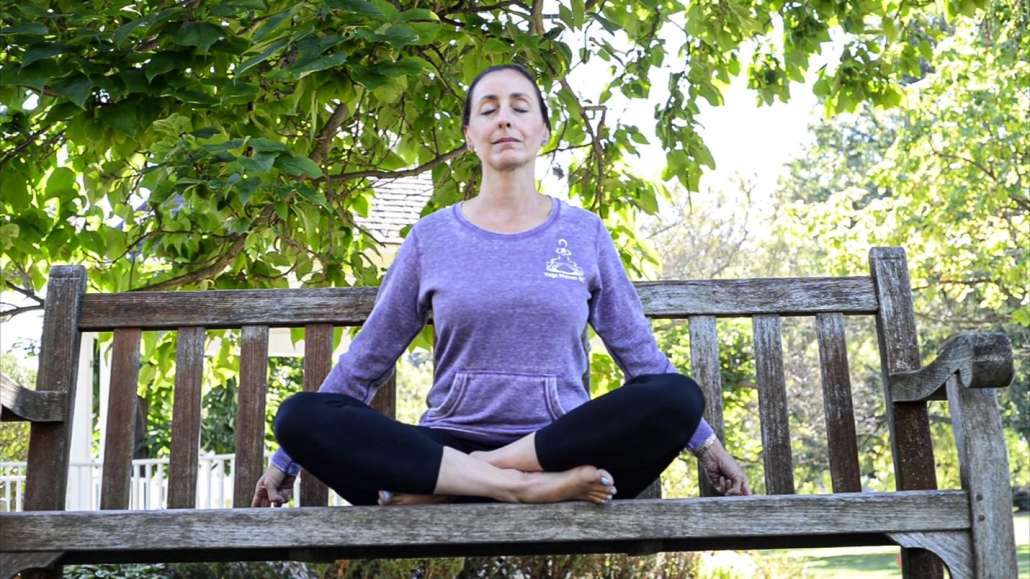
Begin with Awareness of Breath: Start by placing your hands on your belly or in your lap, either seated or lying down. Pay attention to your breath. Feel the sensation of breathing as the air enters your nostrils on the inhale and expels out on the exhale. Notice how your belly expands and descends as you inhale and exhale. You may focus on the movement of your belly or the air moving in and out of your nose. When your mind wanders, keep bringing your attention back to your breath.
A slow and soft breath relaxes the nervous system. On the inhale, the breath should be slow and light. On the exhale, the breath is ideally about one and half times to double the inhale, passive and gentle. Resist trying to force, push, or pull the breath.
Practice Humming Breath: Bhramari (bee breath): Inhale through the nose and exhale by humming. This technique can be particularly soothing and helps to extend the exhalation naturally. Click the link below to watch Mindy demonstrates Bee’s Breath:
Integrating Mudras and Mantras
As suggested by Amy Weintraub, author of Yoga for Depression, incorporating mudras and mantras can further enhance the calming effects of mindfulness and adaptive yoga.
Polishing the Diamond of the Heart (Vajrapradama Mudra) is one example:
- Interlock all ten fingers, release the thumbs, and hold the hands with open palms a few inches from the heart.
- Try the mantras, “Unshakable confidence and trust flow through me now,” and “I have everything I need to manage my life.”
- Then bring the hands to the heart center.
The Power of Adaptive Yoga
Adaptive yoga tailors poses and practices to meet the unique needs of each individual, ensuring safety and effectiveness. This approach not only improves physical mobility and strength but also provides significant mental and emotional benefits.
By integrating mindfulness and adaptive yoga into your routine, you can create a powerful, holistic approach to managing anxiety. These practices offer valuable tools for calming the nervous system, improving emotional regulation, and fostering a deeper sense of peace and well-being.